Overview
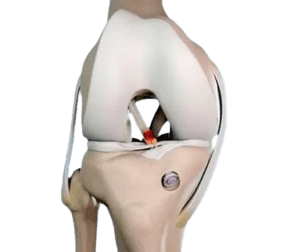
Revision ACL reconstruction surgery is an advanced orthopedic procedure performed when a previous anterior cruciate ligament reconstruction has failed or the knee remains unstable. The surgery aims to rebuild the torn ligament again, restore knee stability, improve movement, and allow patients to safely return to sports or active daily life.
Key Clinical Highlights
- Advanced Arthroscopy: Minimally invasive arthroscopic revision allows precise graft placement with less tissue damage.
- Complex Structural Correction: Addresses tunnel widening, malalignment, and associated meniscus or cartilage injuries together.
- Restored Knee Stability: Improves joint control, pivot strength, and confidence during movement.
When to Consider
Revision ACL reconstruction should be considered when the previously reconstructed ligament fails due to reinjury, improper tunnel placement, graft stretching, infection, or poor healing. Patients who experience repeated knee buckling, inability to pivot, pain during activity, swelling after movement, or loss of confidence while walking or running may require a revision procedure. It is especially important when MRI or clinical examination confirms graft rupture, tunnel malposition, meniscus damage, or associated ligament injuries. Athletes who want to return to high-demand sports and individuals with active lifestyles often need revision surgery to restore knee function. Delaying treatment in unstable knees may increase cartilage wear, accelerate early arthritis, and cause further meniscal damage, making future correction more difficult.
Rebuild Knee Stability After Failed ACL Surgery
Revision ACL surgery restores structural integrity of the knee and helps prevent further joint damage caused by repeated instability.
- Prevents Further Damage: Reduces the risk of cartilage wear and meniscus tears from unstable movement.
- Restores Athletic Function: Helps active individuals return to sports safely after rehabilitation.
- Improves Confidence: Provides better knee control during walking, pivoting, and high-impact activity.
Symptoms and Indications
- Knee Buckling: Repeated episodes of the knee giving way during walking or sports.
- Persistent Instability: Feeling of looseness or lack of support after previous ACL surgery.
- Swelling After Activity: Joint swelling can indicate graft failure or associated damage.
- Pain with Pivoting: Sharp discomfort during twisting or turning movements.
Types of Revision ACL Reconstruction Surgery
Single Stage Revision
Revision surgery completed in one operation when bone tunnels are suitable for immediate graft placement.
- Autograft Revision: Uses the patient’s own tissue for reconstruction.
- Allograft Revision: Uses donor tissue when patient graft options are limited.
Two Stage Revision
Performed in complex cases where bone grafting is needed before final ACL reconstruction.
- Tunnel Bone Grafting: First stage restores bone stock before ligament revision.
Pre-Procedure Preparation
- MRI Evaluation: Assess graft condition and associated injuries.
- CT Scan: Evaluate tunnel placement and bone quality.
- Strength Assessment: Review muscle strength and knee stability.
- Prehabilitation: Improve motion and reduce swelling before surgery.
Treatment Stages
- Pre Arrival (Before Travel): Virtual consultation and scan review
- Admission (Day 1): Detailed examination and surgical planning
- Surgery (Day 2): Revision ACL reconstruction and correction
- Recovery (Day 3-4): Physiotherapy initiation and discharge
Recovery Guidelines
- Follow Physiotherapy Strictly: Structured rehabilitation is critical for successful recovery.
- Protect the Knee: Avoid twisting and high-impact activity in early healing.
- Use Bracing if Advised: Helps stabilize the knee during the recovery phase.
- Maintain Strength Training: Gradual muscle strengthening improves long-term outcomes.
Life After Treatment
- Most patients regain improved knee stability and function after rehabilitation.
- Athletes may gradually return to sports after medical clearance.
- Long-term joint preservation improves with successful revision and rehab.
A successful revision ACL reconstruction can restore both movement confidence and long-term knee durability.
Potential Risks
- Graft Failure: A repeat injury or healing problem can affect the new graft.
- Stiffness: Scar tissue may limit knee motion if rehab is delayed.
- Infection: Rare surgical infection may require antibiotics or further care.
Cost Estimation in India
Estimated procedure package range: $4,500 to $8,500 USD.
Package Inclusions:
- Pre-surgery imaging
- Revision ACL surgery
- Hospital stay
- Surgeon fees
Global Cost Comparison
- USA: $22,000 USD
- UK: $18,000 USD
- Germany: $16,000 USD
- Thailand: $11,000 USD
- India: $6,500 USD