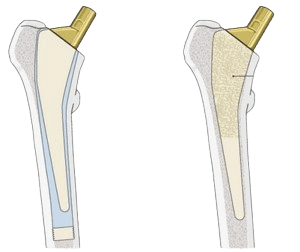
Overview
Cemented Total Hip Replacement is an advanced orthopedic joint reconstruction procedure used to replace severely damaged hip joints using specialized bone cement to secure the artificial implant components. The surgery is commonly recommended for patients with advanced osteoarthritis, rheumatoid arthritis, fractures, or degenerative hip conditions causing persistent pain and major mobility limitations. By firmly fixing the prosthetic components within the bone, cemented hip replacement provides immediate implant stability, especially in elderly patients or individuals with weaker bone quality. Modern surgical techniques and improved implant technology have significantly enhanced pain relief, joint function, walking ability, and long term recovery outcomes following cemented hip replacement surgery.
Key Clinical Highlights
- Immediate Implant Stability: Bone cement provides secure fixation and early joint stability after surgery.
- Suitable for Weak Bone Quality: The technique is highly effective for elderly patients and osteoporotic bone.
- Enhanced Mobility Recovery: Modern rehabilitation protocols support faster walking and movement restoration.
When to Consider
Cemented Total Hip Replacement is considered when patients experience severe hip pain, stiffness, restricted movement, difficulty walking, or reduced quality of life due to advanced arthritis or joint destruction that no longer responds to medications, injections, physiotherapy, or lifestyle modifications. The procedure is often recommended for elderly individuals and patients with weaker bone quality who require stable implant fixation and improved joint support. Early orthopedic evaluation is important when chronic hip symptoms begin affecting sleep, mobility, balance, and independence in daily activities.
Restore Hip Function and Reduce Pain
The procedure helps replace damaged joint surfaces, improve stability, and restore smoother movement.
- Significant Pain Reduction: Replacing damaged cartilage and bone surfaces helps relieve chronic hip pain.
- Improved Joint Stability: Bone cement fixation supports stable and secure implant positioning.
- Enhanced Daily Mobility: Patients often regain better walking ability and independence after rehabilitation.
Symptoms and Indications
- Persistent Hip Pain: Chronic pain during walking or rest may indicate severe hip joint degeneration.
- Hip Stiffness: Arthritis can reduce flexibility and make movement difficult.
- Difficulty Walking: Joint damage may affect balance, walking distance, and physical activity.
- Reduced Daily Function: Advanced hip disease may interfere with sleep, stairs, and daily tasks.
Types of Cemented Total Hip Replacement
Fully Cemented Hip Replacement
Both femoral and acetabular components are fixed using bone cement.
- Standard Cemented Prosthesis: Provides reliable fixation and durable joint support.
- Bipolar Cemented System: Designed for smoother movement and reduced stress distribution.
Hybrid Cemented Hip Replacement
Combines cemented and uncemented fixation techniques.
- Cemented Femoral Stem: The femoral component is fixed using medical bone cement.
- Hybrid Acetabular Fixation: Uses alternative fixation for the hip socket component.
Pre-Procedure Preparation
- Diagnostic Imaging: X rays and scans evaluate joint damage and bone quality.
- Medical Assessment: Patients undergo evaluation for anesthesia and surgical readiness.
- Implant Planning: The orthopedic team selects suitable cemented prosthetic components.
- Preoperative Instructions: Guidance is provided regarding fasting and medication adjustments.
Treatment Stages
- Orthopedic Evaluation (Day 1): Hip examination and imaging studies
- Surgical Planning (Week 1): Implant selection and preoperative preparation
- Surgery (Week 2): Cemented total hip joint replacement procedure
- Rehabilitation (Week 4): Walking support and physiotherapy recovery
Recovery Guidelines
- Start Early Walking: Supervised movement improves circulation and recovery progress.
- Continue Physiotherapy: Structured rehabilitation helps restore strength and flexibility.
- Avoid High Impact Stress: Excessive strain should be limited during the healing period.
- Attend Follow Up Visits: Regular orthopedic reviews help monitor implant stability and healing.
Life After Treatment
- Many patients experience major pain relief and improved mobility after recovery.
- Modern rehabilitation programs support better balance, walking, and independence.
- Advanced implant systems can provide durable hip function and improved quality of life.
Cemented total hip replacement can restore mobility and stability while improving comfort and long term joint performance.
Potential Risks
- Joint Infection: Although uncommon, infection around the implant may require additional treatment.
- Hip Dislocation: Improper movement during recovery can increase dislocation risk.
- Blood Clot Formation: Reduced movement after surgery may increase clot risk without preventive care.
Cost Estimation in India
Estimated procedure package range: $6,000 to $13,000 USD.
Package Inclusions:
- Orthopedic consultation and diagnostic imaging
- Cemented total hip replacement surgery
- Hospital stay and implant charges
- Postoperative physiotherapy and rehabilitation
Global Cost Comparison
- USA: $42,000 USD
- UK: $30,000 USD
- Germany: $28,000 USD
- Thailand: $18,000 USD
- India: $9,500 USD