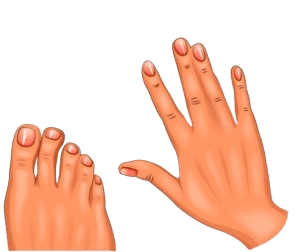
Overview
Syndactyly surgery is an advanced reconstructive procedure performed to separate fused or webbed fingers or toes, restoring normal anatomical shape, improving function, and enhancing movement. This surgery is commonly recommended for congenital syndactyly where two or more digits are joined by skin, soft tissue, or bone, affecting hand function, grip strength, or foot development.
Key Clinical Highlights
- Microsurgical Precision: Advanced reconstruction ensures safe separation of fused digits while preserving nerves and blood vessels.
- Functional Restoration: Improves grip, movement, and independent finger function for better daily activity performance.
- Growth Optimization: Early intervention supports proper skeletal and soft tissue development in children.
When to Consider
Syndactyly surgery should be considered when webbed fingers or toes begin to interfere with normal function, development, or daily activities. Early surgical correction is often advised during infancy, especially between 6 to 18 months of age, to support proper growth and reduce long-term functional limitations. Surgery becomes particularly important when the fused digits involve fingers of unequal length, as this can cause growth restriction, angular deformity, or abnormal pulling of tissues over time. Complex syndactyly involving bones, joints, or nails often requires earlier intervention to prevent permanent structural problems. Adults with untreated syndactyly may also seek correction for pain, limited mobility, social discomfort, difficulty with footwear, reduced grip control, or cosmetic concerns. Delaying treatment in severe cases may increase surgical complexity and affect long-term hand or foot function.
Restore Independent Digit Function
Surgical correction allows separated fingers or toes to function independently, improving hand use, walking comfort, and overall quality of life.
- Improves Dexterity: Allows better finger movement and coordination.
- Supports Normal Growth: Prevents deformity caused by uneven digit growth.
- Enhances Appearance: Creates a more natural and functional hand or foot structure.
Symptoms and Indications
- Visible Webbing: Two or more fingers or toes appear joined together at birth.
- Restricted Finger Movement: Difficulty moving affected digits independently.
- Grip Difficulty: Reduced ability to hold objects properly due to fused fingers.
- Footwear Discomfort: Webbed toes may cause shoe fitting problems or walking discomfort.
Types of Syndactyly (Webbed Fingers or Toes) Surgery
Simple Syndactyly
Fusion involves only skin and soft tissue without bone involvement.
- Complete Simple Syndactyly: Webbing extends to the fingertip or toe tip.
- Incomplete Simple Syndactyly: Webbing affects only part of the digit length.
Complex Syndactyly
Fusion includes deeper structures such as bones, joints, or nails.
- Complicated Syndactyly: Severe form involving abnormal bones and shared tendons or vessels.
Pre-Procedure Preparation
- Physical Examination: Assess severity and type of syndactyly.
- Imaging Studies: X-rays may be needed to evaluate bone involvement.
- Anesthesia Planning: Prepare child or adult for safe surgical care.
- Skin Assessment: Plan for possible grafting if required.
Treatment Stages
- Pre Arrival (Before Travel): Specialist consultation and treatment planning
- Admission (Day 1): Clinical assessment and imaging
- Surgery (Day 2): Separation and reconstruction of webbed digits
- Recovery (Day 3-5): Dressing care and discharge planning
Recovery Guidelines
- Keep Dressing Intact: Protect surgical site until doctor removes dressings.
- Avoid Trauma: Prevent pressure or injury on operated digits.
- Attend Follow-Ups: Monitor healing and ensure proper finger separation.
- Hand Therapy: May be needed in complex cases for improved mobility.
Life After Treatment
- Most patients regain improved hand or foot function after healing.
- Children often adapt quickly and achieve normal developmental milestones.
- Long-term follow-up ensures proper growth and movement.
Early syndactyly correction can significantly improve function, development, and confidence for life.
Potential Risks
- Scar Formation: Some scarring may develop after reconstruction but often improves over time.
- Skin Graft Complications: Rare graft healing issues may require additional care.
- Web Creep: The web space may gradually move back during growth in some children.
Cost Estimation in India
Estimated procedure package range: $3,000 to $7,000 USD.
Package Inclusions:
- Pre-surgery evaluation
- Surgical correction
- Hospital stay
- Surgeon fees
Global Cost Comparison
- USA: $18,000 USD
- UK: $14,000 USD
- Germany: $12,000 USD
- Thailand: $8,500 USD
- India: $5,000 USD