Overview
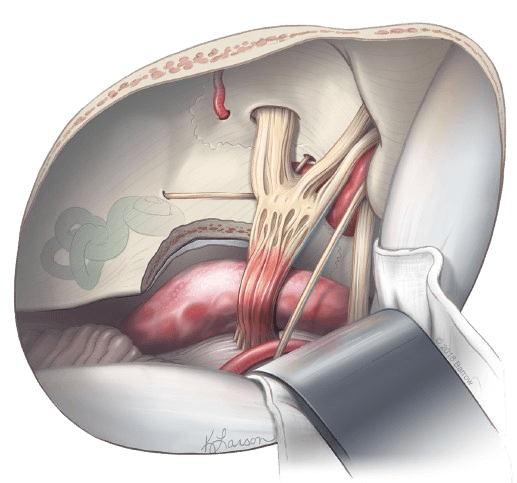
Microvascular decompression (MVD) is a surgical intervention performed to relieve abnormal compression of a cranial nerve causing trigeminal neuralgia, glossopharyngeal neuralgia, or hemifacial spasm. Specifically, MVD in India is a surgery that is performed to relieve symptoms of pain and muscle twitching caused due to nerve compression by an artery or vein. To achieve this, the surgery procedure involves the direct access of the skull by opening and exposing the nerve at the base of the brainstem to insert a small sponge between the compressing vessel and the nerve. In this process, the small incision or cut is made behind the ear. Then, while viewing the trigeminal nerve through a microscope, the surgeon places a soft cushion between the nerve and injured blood vessels. Ultimately, the main goal of MVD is to identify and relieve pressure from one or more blood vessels. This step is crucial in finding blood vessels pressing on the trigeminal nerve and gently shifting them away. Finally, a small cushion is placed between them to prevent the pressure and relieve pain.
Understanding the reason when MVD is recommended
Microvascular decompression (MVD) in Delhi is considered for the patients with trigeminal neuralgia meaning the person facing severe facial pain and when the other non-surgical treatment fails to relieve the symptoms.
MVD is recommended over other surgical treatments for the patients who have longer life expectancy and it is a long term relief procedure that provides long lasting relief from pain.
MVD is recommended for the patients with certain conditions that include:
Compression by other structures: In some cases the trigeminal nerve compressed by other structures such as cyst and tumor. MVD is recommended in these cases to relieve pressure on the nerve and reduce pain.
Primary trigeminal neuralgia: This is one of the most impactful treatments for primary trigeminal neuralgia that is caused due to the compression of the trigeminal nerve by blood vessels.
Risk of microvascular decompression (MVD)
Surgical procedure always comes with risks, if it is safe procedure but still contains some risk and complications such as:
- Bleeding
- Infection
- Blood clots
- Side effects of anesthesia
- Nerve damage
- Hearing loss
- Blur or double vision
- Dysphagia
- Unsteady gait
Some of the specific complications related to craniotomy include:
- Paralysis
- Facial numbness
- Hoarseness
- Stroke
- Seizures
- Venous sinus occlusion
- Swelling of the brain
- CSF leak
Understanding the procedure to perform microvascular decompression (MVD)
Before making an incision and starting the procedure, an anesthesia is given to the patient by detailing the patient with the side effects of the anesthesia.
- Next, once the patient is in a deep sleep state after giving anesthesia, the head will be placed in a three pin skull fixation device. This helps the surgeon to hold the head in position during the procedure.
- Then, an incision of 3 inches is made behind the ear. The skin and muscles are lifted away from the bone and folded back. After that, the removal of bone is performed to access the protective covering of the brain that is also known as dura. The dura is opened with a surgical instrument and exposed to the brain.
- The surgeon makes an incision to the exact size of the teflon sponge and inserts it between the nerve and the vessel. In some cases the vein is cauterized and moved away.
- After placing the sponge the retractor is removed and the brain returns to its original position.
- Then the dura is closed with sutures and made tight with tissue sealant.
Cost of microvascular decompression (MVD) in India
India is a hub for medical care and services. The cost of microvascular decompression (MVD) in India is not only affordable but also high in class for providing best medical services and facilities.
However, the overall cost of the treatment may vary depending on several factors. These factors include the surgeon’s expertise, the type of implant, the location of the hospital, and more.
India serves the patients with the most reasonable cost and that too without compromising on the quality of care.
Summary
MVD is a surgery that is performed to relieve symptoms of pain and muscle twitching caused due to nerve compression by an artery or vein.
The main goal of MVD is to identify and relieve pressure from one or more blood vessels. This step is crucial in finding blood vessels pressing on the trigeminal nerve and gently shifting them away.

B.U.M.S, M.D. (NAT) | Reg No. 9153 | Ex. Secretary & Treasurer, N.I.M.A.
Qualified healthcare professional in Unani and Naturopathic medicine with deep expertise in traditional healthcare systems, patient-centered clinical care, and medical content review.