Overview
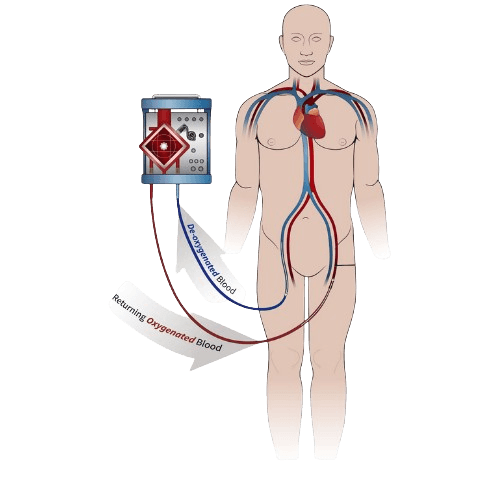
ECMO support, also known as Extracorporeal Membrane Oxygenation, is an advanced life support therapy used for patients with severe heart or lung failure when conventional treatments are no longer effective. The system temporarily takes over the function of the heart, lungs, or both by circulating blood through an external machine that adds oxygen and removes carbon dioxide before returning it to the body. ECMO support is commonly used in critical care situations such as severe cardiac failure, respiratory collapse, post cardiac surgery complications, or life threatening infections, helping stabilize patients while recovery or further treatment is planned.
Key Clinical Highlights
- Advanced Organ Support: ECMO temporarily supports heart and lung function during critical illness.
- Continuous Intensive Monitoring: Specialized ICU teams monitor circulation, oxygenation, and organ stability around the clock.
- Bridge to Recovery: Provides critical time for healing, transplantation, or further cardiac intervention.
When to Consider
ECMO support is considered for critically ill patients with severe heart or lung failure who are not responding adequately to medications, ventilator therapy, or standard intensive care measures. It may be recommended in cases of cardiogenic shock, severe pneumonia, acute respiratory distress syndrome, cardiac arrest recovery, pulmonary embolism, myocarditis, or complications following major cardiac surgery. ECMO is often used as a temporary bridge to recovery, transplantation, or additional advanced treatment while vital organs are stabilized.
Support Vital Organ Function During Critical Illness
ECMO helps maintain oxygen delivery and blood circulation when the heart or lungs cannot function adequately on their own.
- Temporary Life Support: Provides advanced circulatory and respiratory support during medical emergencies.
- Improves Organ Oxygenation: Maintains oxygen supply to the brain, kidneys, and other vital organs.
- Allows Time for Recovery: Supports the body while underlying cardiac or respiratory conditions improve.
Symptoms and Indications
- Severe Breathing Difficulty: Critical respiratory distress may require ECMO support.
- Cardiogenic Shock: Severe heart failure can lead to dangerously low circulation.
- Low Oxygen Levels: Persistent oxygen deficiency despite ventilator support may indicate advanced intervention need.
- Organ Failure Signs: Reduced kidney, brain, or liver function may occur during critical illness.
Types of ECMO Support
Veno Arterial ECMO
Provides support for both heart and lung function in severe cardiac failure.
- Peripheral VA ECMO: Cannulas are placed through peripheral blood vessels for emergency support.
- Central VA ECMO: Direct surgical cannulation used in complex cardiac cases.
Veno Venous ECMO
Supports lung function in severe respiratory failure while heart function remains stable.
- Dual Lumen VV ECMO: Advanced cannula configuration designed for respiratory support.
Pre-Procedure Preparation
- Critical Care Evaluation: Doctors assess heart, lung, and organ function before ECMO initiation.
- Imaging and Blood Tests: Investigations help determine suitability for ECMO support.
- Cannulation Planning: Specialists identify optimal blood vessel access sites.
- ICU Stabilization: Continuous monitoring is established before ECMO therapy begins.
Treatment Stages
- Emergency Assessment (Day 1): Critical care evaluation and stabilization
- ICU Admission (Day 1): Cannulation and ECMO preparation
- ECMO Support (Week 1): Advanced heart and lung support therapy
- Recovery Phase (Week 2): Weaning and rehabilitation planning
Recovery Guidelines
- Gradual Weaning: ECMO support is reduced carefully as heart or lung function improves.
- Physical Rehabilitation: Recovery exercises help regain strength after prolonged ICU stay.
- Nutritional Support: Balanced nutrition supports healing and organ recovery.
- Regular Monitoring: Follow up care evaluates heart, lung, and neurological recovery.
Life After Treatment
- Many patients recover sufficient heart or lung function after ECMO support.
- Long term rehabilitation may improve mobility and physical endurance.
- Ongoing cardiac and pulmonary follow up is important after critical illness.
ECMO provides advanced temporary support when the body needs critical time to recover.
Potential Risks
- Bleeding: Blood thinning medications used during ECMO may increase bleeding risk.
- Infection: Prolonged ICU support can increase the risk of infection.
- Blood Clots: Careful monitoring is required to reduce clot related complications.
Cost Estimation in India
Estimated procedure package range: $12,000 to $30,000 USD.
Package Inclusions:
- Critical care evaluation
- ECMO machine support
- ICU stay and monitoring
- Specialist and procedural charges
Global Cost Comparison
- USA: $150,000 USD
- UK: $100,000 USD
- Germany: $95,000 USD
- Thailand: $45,000 USD
- India: $22,000 USD