Overview
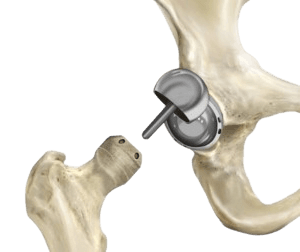
Birmingham Hip Resurfacing Surgery is an advanced bone preserving orthopedic procedure designed for patients with severe hip arthritis or degenerative hip damage who require joint reconstruction while maintaining more of their natural bone structure. Unlike traditional total hip replacement, this technique reshapes and caps the damaged surfaces of the hip joint rather than removing the entire femoral head. The procedure is especially beneficial for younger, active individuals seeking long term mobility, improved joint stability, and the ability to return to physically demanding activities. Modern hip resurfacing techniques help reduce pain, improve movement, preserve bone stock, and provide durable joint function while supporting a more natural range of motion.
Key Clinical Highlights
- Bone Preserving Technique: Maintains more natural bone structure compared to traditional hip replacement surgery.
- Enhanced Joint Stability: Larger resurfacing components may reduce the risk of hip dislocation.
- Active Lifestyle Recovery: Supports improved mobility and return to higher activity levels in selected patients.
When to Consider
Birmingham Hip Resurfacing Surgery is considered when patients experience chronic hip pain, stiffness, reduced mobility, limping, or difficulty performing daily activities due to advanced arthritis or hip joint degeneration that no longer responds to medications, physiotherapy, or injections. It is often recommended for younger active patients with good bone quality who wish to preserve more natural hip mechanics and maintain higher physical activity levels. Early orthopedic evaluation can help determine whether hip resurfacing is more suitable than conventional total hip replacement based on joint condition, age, bone strength, and lifestyle goals.
Preserve Hip Function and Improve Mobility
The procedure restores smoother hip movement, reduces pain, and maintains more natural joint mechanics.
- Bone Conservation: Preserving femoral bone stock may support future revision options if needed.
- Improved Mobility: Restored joint surfaces help improve walking and daily movement.
- Enhanced Stability: Hip resurfacing implants provide improved joint balance and control.
Symptoms and Indications
- Chronic Hip Pain: Persistent pain during walking or activity may indicate advanced hip degeneration.
- Hip Stiffness: Reduced flexibility and restricted movement commonly occur with arthritis.
- Difficulty Walking: Joint damage can affect balance, mobility, and normal walking ability.
- Reduced Physical Activity: Hip discomfort may limit exercise, sports participation, and daily routines.
Types of Birmingham Hip Resurfacing Surgery
Primary Birmingham Hip Resurfacing
Performed for advanced arthritis and degenerative hip joint disease.
- Osteoarthritis Hip Resurfacing: Treats severe cartilage degeneration and chronic hip pain.
- Avascular Necrosis Resurfacing: Used in selected patients with preserved femoral head structure.
Complex Hip Reconstruction
Advanced resurfacing approaches for selected complicated hip conditions.
- Bilateral Hip Resurfacing: Resurfacing procedures performed for both hip joints.
- Combined Corrective Procedures: Addresses associated deformities or structural abnormalities.
Pre-Procedure Preparation
- Hip Imaging: X rays and MRI scans assess joint degeneration and bone quality.
- Orthopedic Consultation: The surgeon evaluates suitability for hip resurfacing surgery.
- Physical Conditioning: Preoperative strengthening may improve postoperative recovery.
- Medical Clearance: Routine testing ensures fitness for anesthesia and surgery.
Treatment Stages
- Orthopedic Evaluation (Day 1): Hip examination and advanced imaging
- Preoperative Planning (Week 1): Implant selection and surgical preparation
- Surgery (Week 2): Hip resurfacing and joint reconstruction procedure
- Rehabilitation (Week 4): Physiotherapy and mobility restoration
Recovery Guidelines
- Attend Physiotherapy Sessions: Rehabilitation exercises help restore hip strength and flexibility.
- Avoid Excessive Strain: High impact activities should be limited during early healing.
- Follow Weight Bearing Instructions: Controlled movement protects the healing joint during recovery.
- Maintain Regular Follow Up: Orthopedic monitoring helps evaluate implant stability and recovery progress.
Life After Treatment
- Many patients experience significant pain relief and improved hip movement after surgery.
- Structured rehabilitation supports better mobility, strength, and long term joint performance.
- Selected active individuals may gradually return to sports and physically demanding activities.
Modern hip resurfacing techniques can restore mobility while preserving more of the natural hip structure for long term function.
Potential Risks
- Femoral Neck Fracture: Rare fractures can occur around the preserved femoral bone after surgery.
- Metal Ion Complications: Metal on metal implants require monitoring in selected patients.
- Infection or Implant Loosening: Although uncommon, joint infection or implant instability may occur.
Cost Estimation in India
Estimated procedure package range: $7,000 to $14,000 USD.
Package Inclusions:
- Orthopedic consultation and imaging
- Birmingham hip resurfacing implant procedure
- Hospital stay and surgical charges
- Postoperative rehabilitation and physiotherapy
Global Cost Comparison
- USA: $45,000 USD
- UK: $32,000 USD
- Germany: $30,000 USD
- Thailand: $18,000 USD
- India: $11,000 USD