Overview
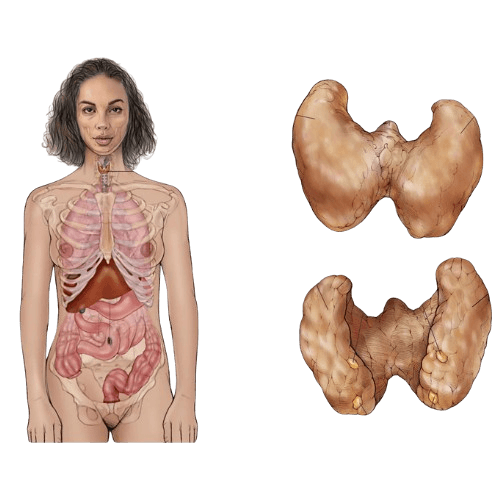
Thyroid cancer occurs when abnormal cells develop in the thyroid gland.
It is commonly detected through neck lumps or imaging.
Most types are slow-growing and highly curable with surgery and hormone management.
Overview And Clinical Background
Thyroid cancer is categorized into papillary, follicular, medullary, and anaplastic types.
It primarily affects women and can often be treated effectively with surgery.
- Common type:: Papillary thyroid cancer represents the majority and grows slowly.
- Most patients live normal lives post-treatment with hormone replacement.
- Clinical relevance:: Timely detection and complete surgical removal ensure high cure rates.
Symptoms, Signs And Presentation
Thyroid nodules are the most common sign, often detected by chance.
Some experience voice change or swallowing difficulty.
- Neck lump:: A painless swelling at the front of the neck may indicate malignancy.
- Hoarseness or difficulty swallowing can appear in advanced cases.
- Red flag:: Any rapidly enlarging thyroid mass or associated lymph node swelling.
Diagnosis Methods And Investigations
Imaging And Laboratory Tests
Evaluation involves ultrasound, fine needle aspiration biopsy, and thyroid function tests.
Imaging helps assess nodal or distant spread.
- Imaging:: Ultrasound and CT scans map nodule size, composition, and lymph node involvement.
- Lab tests:: Thyroid function and calcitonin levels assist in diagnosis and post-surgical monitoring.
- Fine needle aspiration confirms cellular type for targeted therapy planning.
Treatment Options And Surgical Techniques
Surgical removal of the thyroid gland is the mainstay treatment.
Radioactive iodine and thyroid hormone therapy are added for certain cases.
- Surgery:: Total or partial thyroidectomy depending on tumor size and spread.
- Radioactive iodine:: Destroys residual thyroid cells and prevents recurrence.
- Thyroid hormone replacement ensures metabolism and hormonal balance.
Recovery, Risks And Prognosis
Most patients recover fully and live healthy lives with proper follow-up.
Prognosis is excellent for early-stage cancers.
Why Choose Us
CureU Healthcare offers advanced endocrine oncology surgery, precision imaging, and personalized post-operative care with ongoing hormone monitoring.
Conclusion
Thyroid cancer is among the most manageable malignancies when detected early.
Lifelong monitoring ensures continued well-being.

B.U.M.S, M.D. (NAT) | Reg No. 9153 | Ex. Secretary & Treasurer, N.I.M.A.
Qualified healthcare professional in Unani and Naturopathic medicine with deep expertise in traditional healthcare systems, patient-centered clinical care, and medical content review.