
Overview
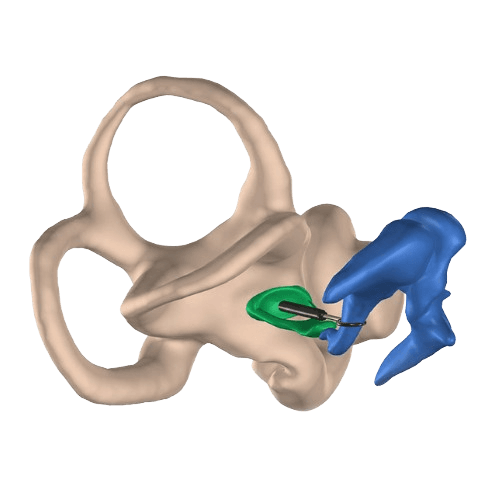
Stapedectomy is a specialized microsurgical ear procedure performed to improve hearing in patients with otosclerosis, a condition where abnormal bone growth affects the stapes bone in the middle ear.
This fixation prevents sound vibrations from reaching the inner ear effectively, leading to progressive conductive hearing loss.
During the procedure, the immobilized stapes bone is partially or completely removed and replaced with a prosthesis.
Stapedectomy is known for its high success rates and significant improvement in hearing when performed by experienced ENT surgeons.
What is Stapedectomy
Surgery for Otosclerosis Explained
Stapedectomy involves removing the fixed stapes bone and replacing it with a tiny prosthetic device that restores sound conduction to the inner ear.
The surgery is performed under high magnification using a microscope or endoscope to ensure precision.
It is considered one of the most effective treatments for conductive hearing loss caused by otosclerosis.
- Primary indication: Conductive hearing loss due to otosclerosis
- Surgical approach: Microscopic or endoscopic ear surgery through the ear canal
- Anesthesia: Performed under local or general anesthesia
- Procedure duration: Usually completed within 1–2 hours
Benefits and Hearing Outcomes
How Stapedectomy Improves Hearing
Stapedectomy can lead to dramatic improvement in hearing levels, often reducing or eliminating the need for hearing aids.
Most patients notice hearing improvement within days to weeks after surgery.
The procedure significantly enhances speech clarity and overall auditory function.
- Improved sound conduction: Prosthesis allows sound vibrations to reach the inner ear effectively
- Hearing gain: Significant closure of the air-bone gap on hearing tests
- Better speech understanding: Improved clarity in conversations and daily communication
- Quality of life: Enhanced social interaction and reduced listening effort
Recovery and Postoperative Care
Healing After Stapedectomy
Recovery after Stapedectomy requires careful adherence to postoperative instructions.
Mild dizziness, ear fullness, or altered taste may occur temporarily.
Avoiding pressure changes, water entry, and strenuous activity is crucial during early healing.
- Hospital stay: Usually discharged the same day or after overnight observation
- Activity restrictions: Avoid heavy lifting, flying, or nose blowing for a few weeks
- Hearing improvement: Gradual improvement over several weeks
- Follow-up: Regular hearing tests and ENT reviews to monitor recovery
Why Choose CureU Healthcare
CureU Healthcare provides advanced ear surgery services with a strong emphasis on precision, safety, and hearing preservation.
Our ENT surgeons are experienced in complex middle ear microsurgery, including stapedectomy and stapedotomy.
Patients receive detailed preoperative counseling, realistic outcome expectations, and structured postoperative follow-up.
CureU Healthcare integrates advanced surgical technology with compassionate, patient-focused care to achieve optimal hearing outcomes.
- Expert ear surgeons: Specialists trained in microscopic and endoscopic ear surgery
- Advanced technology: High-magnification optics and precision prosthetic systems
- Comprehensive hearing care: Integrated audiology support before and after surgery
- Patient-centered approach: Clear communication, safety-focused care, and long-term follow-up
Conclusion
Stapedectomy is a highly effective surgical option for patients with hearing loss due to otosclerosis.
By restoring sound transmission through the middle ear, the procedure offers substantial and lasting hearing improvement.
When performed by skilled ENT surgeons using modern techniques, complication rates are low and success rates are high.
Choosing CureU Healthcare ensures expert surgical care, advanced technology, and a holistic approach to hearing restoration and patient well-being.

B.U.M.S, M.D. (NAT) | Reg No. 9153 | Ex. Secretary & Treasurer, N.I.M.A.
Qualified healthcare professional in Unani and Naturopathic medicine with deep expertise in traditional healthcare systems, patient-centered clinical care, and medical content review.