Overview
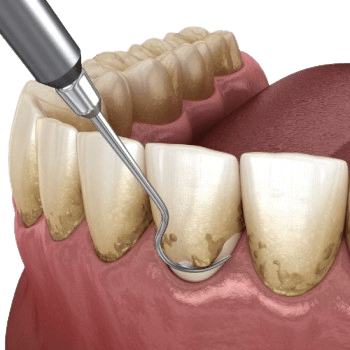
Scaling and root planing is a non-surgical dental procedure designed to treat gum disease by thoroughly cleaning below the gumline.
It removes hardened tartar (calculus) and smoothens root surfaces to promote healing of gum tissue.
This deep cleaning procedure is essential in controlling periodontal disease and preventing tooth loss.
Overview And Clinical Background
Deep Cleaning For Gum Health
Scaling and root planing targets plaque and tartar buildup beneath the gums where regular brushing cannot reach.
The goal is to eliminate bacterial colonies causing inflammation and to allow the gums to reattach to clean root surfaces.
It’s a cornerstone therapy for early to moderate periodontitis.
- Purpose:: To remove bacteria and calculus deposits that irritate gums and contribute to bone loss.
- Performed under local anesthesia for comfort, usually completed in one or two sessions.
- Outcome:: Promotes gum healing, reduces bleeding, and prevents progression to severe gum disease.
Symptoms, Signs And Presentation
Scaling and root planing is recommended for patients showing signs of gum inflammation, bleeding, or deep periodontal pockets.
Ignoring these signs can lead to tooth mobility and bone damage.
- Common symptom:: Bleeding gums while brushing or flossing, persistent bad breath.
- Gum recession or loose teeth in later stages.
- Red flag:: Severe pain, swelling, or pus discharge indicating an advanced infection requiring urgent care.
Diagnosis Methods And Investigations
Periodontal Assessment
Diagnosis is based on clinical examination and probing of gum pockets.
Radiographs are used to assess bone levels and monitor disease severity.
- Imaging:: Dental X-rays identify tartar buildup beneath the gums and bone loss extent.
- Lab tests:: Rarely required, though bacterial cultures can guide advanced periodontal therapy.
- Probing pocket depth helps determine if non-surgical cleaning is sufficient or surgery is required.
Treatment Options And Surgical Techniques
Scaling removes surface tartar, while root planing smoothens the root to prevent bacterial reattachment.
Depending on severity, multiple sessions or adjunctive antibiotic therapy may be needed.
- Conservative:: Used for mild to moderate periodontitis, focusing on deep cleaning alone.
- Minimally invasive options:: Laser-assisted cleaning enhances precision and minimizes discomfort.
- Surgical flap cleaning may be performed if deep pockets persist despite scaling.
Recovery, Risks And Prognosis
Patients may experience mild sensitivity or soreness for 1–2 days.
With proper oral hygiene, inflammation subsides, and gums reattach firmly.
Regular maintenance visits are key to long-term success.
Why Choose Us
At CureU Healthcare, we use ultrasonic scalers, laser therapy, and expert periodontal techniques to restore gum health gently and effectively.
Our personalized care ensures both comfort and lasting results.
Conclusion
Scaling and root planing is a vital step in preventing gum disease progression.
With proper follow-up, it restores gum health and protects natural teeth.