Overview
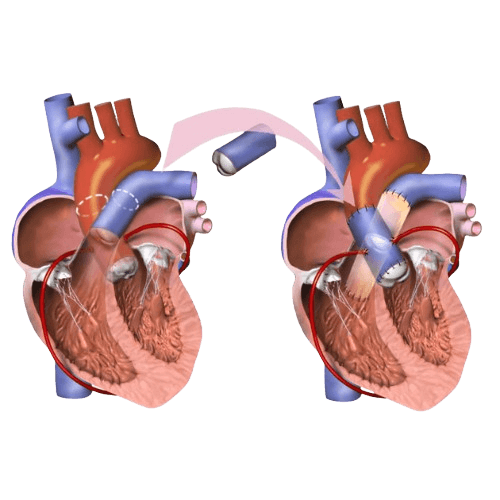
The Ross Procedure is a specialized type of heart surgery used to treat aortic valve disease. During this operation, the patient’s own pulmonary valve is moved to replace the damaged aortic valve. A donor valve (homograft) is then used to replace the pulmonary valve.
This unique approach provides patients with a living, functioning valve that grows naturally with the body, making it especially beneficial for younger individuals.
Who Needs the Ross Procedure?
Doctors may recommend the Ross Procedure in cases of:
- Severe aortic valve stenosis (narrowing)
- Severe aortic valve regurgitation (leakage)
- Patients with congenital aortic valve abnormalities
- Younger patients who wish to avoid long-term anticoagulation therapy
How is the Ross Procedure Performed?
The surgery is performed under general anesthesia and involves:
- Removing the diseased aortic valve.
- Replacing it with the patient’s own pulmonary valve.
- Inserting a donor valve (homograft) in place of the pulmonary valve.
Benefits of the Ross Procedure
Compared to traditional aortic valve replacement, the Ross Procedure offers several advantages:
- A living valve that grows with the patient (ideal for children and young adults)
- No need for lifelong blood thinners (unlike mechanical valves)
- Excellent long-term survival rates
- Improved quality of life with fewer restrictions
Risks and Considerations
As with any major heart surgery, there are risks, such as:
- Bleeding or infection
- Arrhythmias (irregular heartbeat)
- Pulmonary valve complications over time
- Need for reoperation in some cases
Recovery After Ross Procedure
Recovery usually includes:
- Hospital stay of about 5-7 days
- Gradual return to daily activities in 6-8 weeks
- Regular follow-up with a cardiologist
- Adopting a heart-healthy lifestyle to support long-term outcomes
Conclusion
The Ross Procedure is a life-changing solution for many patients with aortic valve disease, particularly younger individuals. By using the patient’s own pulmonary valve, this surgery provides natural, durable results without the need for lifelong anticoagulation. At CureU Healthcare, our expert cardiac surgeons offer world-class care and advanced surgical options to ensure the best possible outcomes.

