
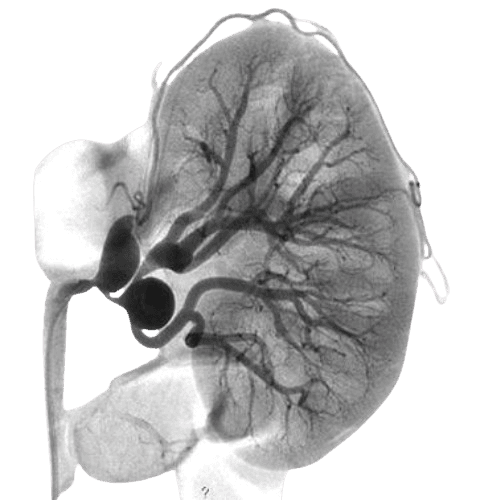
Overview
A Renal Angiogram is an imaging procedure that uses contrast dye to examine the arteries supplying the kidneys.
It helps identify blockages, narrowing, aneurysms, or abnormal blood flow patterns.
The test is crucial for diagnosing renovascular hypertension and planning surgical or interventional procedures.
Overview And Clinical Background
Renal angiography provides detailed visualization of kidney blood vessels using fluoroscopy.
It’s vital for diagnosing renal artery stenosis and vascular malformations.
- Purpose:: Assess renal circulation and detect arterial blockages.
- Type:: Invasive diagnostic procedure using catheter and contrast dye.
- Indication:: Persistent hypertension, kidney failure of unknown cause.
Symptoms, Signs And Presentation
Performed in patients suspected of having vascular kidney disease.
Symptoms often include uncontrolled hypertension or declining kidney function.
- Typical cases:: Severe or treatment-resistant high blood pressure.
- Possible causes:: Renal artery narrowing or thrombosis.
- Complications detected:: Aneurysms or vascular anomalies.
Diagnosis Methods And Investigations
Imaging Evaluation
Contrast dye is injected through a catheter inserted into the femoral artery, and X-ray images track kidney blood flow.
- Imaging type:: Fluoroscopic real-time angiography.
- Alternatives:: CT or MR angiography for non-invasive assessment.
- Post-procedure check:: Monitor for allergic reaction or bleeding at insertion site.
Treatment Options And Surgical Techniques
If a blockage is found, interventional techniques can be performed during the same session.
- Angioplasty:: Balloon widening of narrowed renal arteries.
- Stenting:: Metal mesh placement to maintain artery patency.
- Surgery:: Used in complex or recurrent stenosis cases.
Recovery, Risks And Prognosis
Most patients recover within hours after observation.
Minor bruising or temporary discomfort may occur.
Serious risks are rare with modern techniques.
Why Choose Us
CureU Healthcare uses advanced imaging systems for safe, accurate renal angiography with experienced interventional nephrologists ensuring precision.
Conclusion
Renal Angiogram is a key diagnostic tool for vascular kidney conditions, helping prevent long-term damage through early detection.

B.U.M.S, M.D. (NAT) | Reg No. 9153 | Ex. Secretary & Treasurer, N.I.M.A.
Qualified healthcare professional in Unani and Naturopathic medicine with deep expertise in traditional healthcare systems, patient-centered clinical care, and medical content review.