Overview
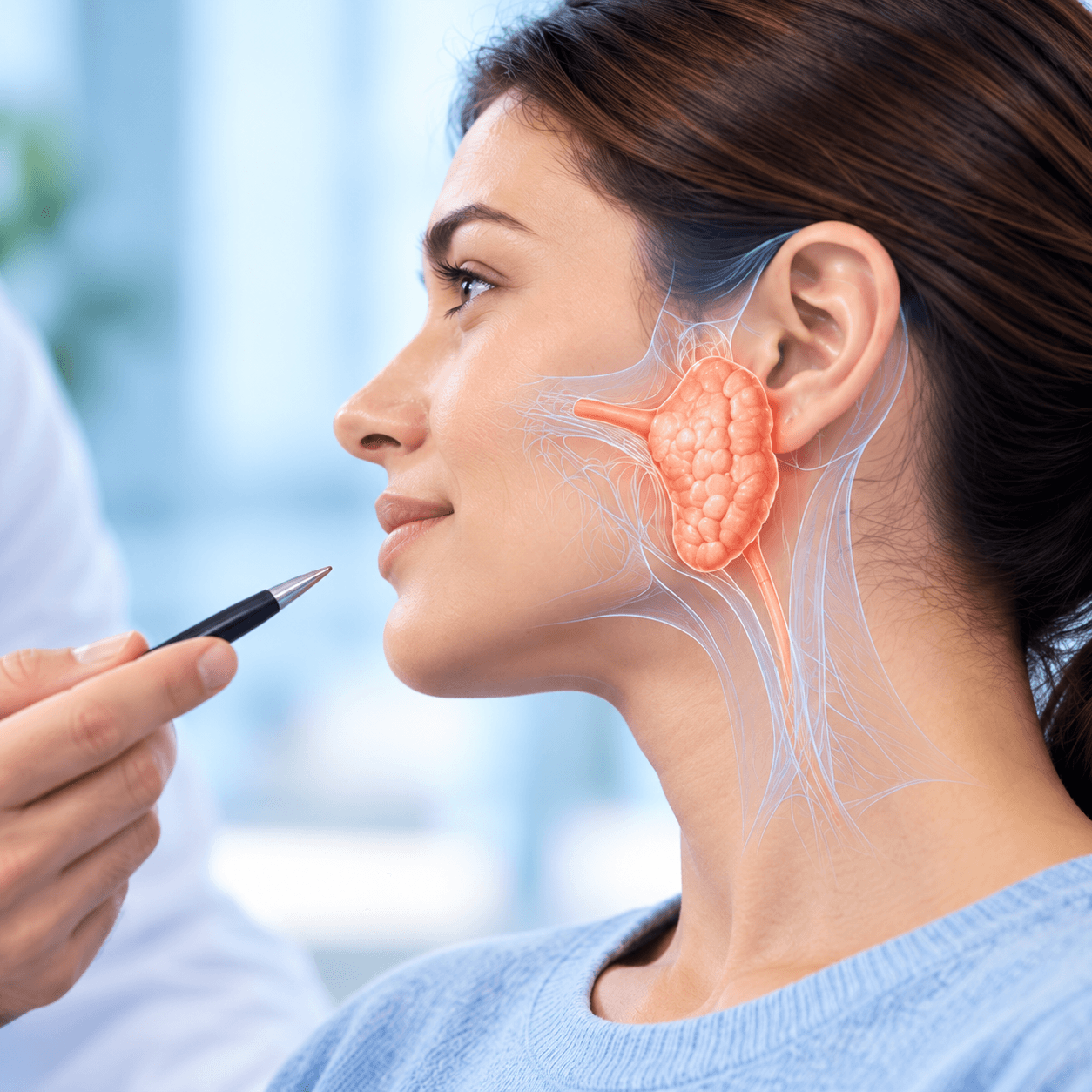
Parotidectomy is a specialized ENT surgical procedure performed to remove part or the entire parotid gland, the largest salivary gland located in front of and below the ear.
It is most commonly indicated for benign or malignant parotid tumors, chronic infections, inflammatory conditions, or salivary gland disorders not responding to medical management.
The surgery requires exceptional precision due to the facial nerve running through the parotid gland, which controls facial movements.
Depending on the disease extent, the procedure may be superficial, total, or radical parotidectomy.
With experienced ENT surgeons, modern nerve monitoring, and structured postoperative care, parotidectomy offers excellent disease control while preserving facial function and quality of life.
Understanding Parotid Gland Disorders
Why parotid surgery may be required
The parotid gland plays a vital role in saliva production and oral health. Disorders affecting this gland include benign tumors such as pleomorphic adenoma, malignant tumors, recurrent infections, autoimmune conditions, and obstructive salivary diseases. Many parotid swellings are painless and slow-growing, which can delay diagnosis. ENT specialists rely on clinical examination, imaging, and cytology to assess the nature of the disease and plan timely surgical intervention when indicated.
- Benign Tumors: Commonly pleomorphic adenoma and Warthin’s tumor, which require removal to prevent growth or malignant transformation
- Malignant Tumors: Cancers of the parotid gland that need prompt surgical management often combined with adjuvant therapy
- Chronic Infections: Recurrent parotitis unresponsive to antibiotics may necessitate surgical removal
- Diagnostic Workup: Ultrasound, MRI or CT scan, and FNAC to determine tumor type and extent
Types and Surgical Technique of Parotidectomy
Tailored surgery based on disease extent
Parotidectomy is customized according to the location and nature of the pathology. Superficial parotidectomy removes the outer portion of the gland, while total parotidectomy involves complete gland removal. In advanced malignancies, radical parotidectomy may be required. The procedure is performed under general anesthesia with continuous facial nerve monitoring to minimize nerve injury and ensure functional preservation.
- Superficial Parotidectomy: Removal of the superficial lobe while preserving the facial nerve, commonly done for benign tumors
- Total Parotidectomy: Complete gland removal indicated in deeper or malignant lesions
- Facial Nerve Monitoring: Intraoperative nerve monitoring to identify and protect facial nerve branches
- Reconstruction: Use of flaps or grafts when required to restore contour and function
Recovery and Postoperative Care
Healing, monitoring, and long-term outcomes
Recovery after parotidectomy varies based on the extent of surgery. Patients may experience temporary facial weakness, numbness around the ear, or mild pain, which usually improves over time. Hospital stay is typically short, and drains are removed once fluid output decreases. Regular follow-up is essential to monitor nerve recovery, wound healing, and detect any recurrence early.
- Hospital Stay: Usually 1 to 3 days depending on surgical complexity
- Facial Nerve Recovery: Temporary weakness may occur and often resolves over weeks to months
- Wound Care: Proper incision care and drain management to prevent infection or fluid collection
- Follow-Up: Scheduled ENT visits for nerve assessment and pathology review
Why Choose CureU Healthcare
CureU Healthcare provides advanced, patient-focused care for parotid gland disorders. Our ENT surgeons have extensive experience in salivary gland surgery and utilize modern facial nerve monitoring to ensure safety and precision. We emphasize thorough preoperative counseling, meticulous surgical planning, and comprehensive postoperative rehabilitation. Patients benefit from multidisciplinary collaboration, advanced diagnostics, and compassionate care that prioritizes both disease control and quality of life.
- Expert ENT Surgeons: Specialists trained in complex parotid and facial nerve surgeries
- Advanced Nerve Monitoring: Technology-driven nerve protection to minimize facial weakness
- Multidisciplinary Care: Collaboration with oncology, radiology, and pathology teams
- Patient-Centered Approach: Transparent communication, emotional support, and individualized recovery plans
Conclusion
Parotidectomy is a highly specialized ENT procedure that plays a crucial role in the management of parotid gland tumors and chronic diseases. When performed by experienced surgeons, it offers excellent outcomes with preservation of facial nerve function and long-term disease control. Early diagnosis, precise surgical technique, and structured follow-up are key to minimizing complications and optimizing recovery. Choosing a dedicated ENT center ensures safe surgery, holistic care, and meaningful improvement in both health and quality of life.