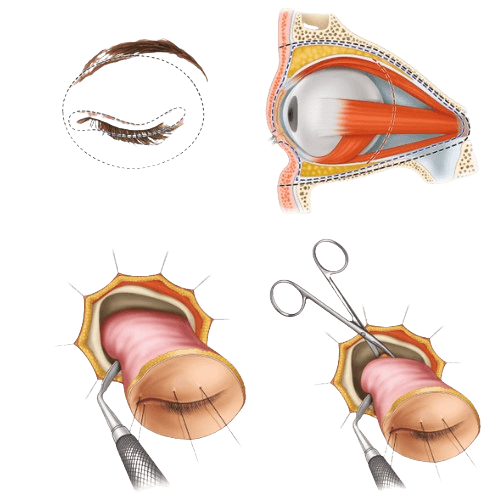
Overview
Orbital Exenteration is a complex surgical procedure that removes the eye and surrounding orbital contents to treat life-threatening or aggressive conditions.
It’s typically performed for malignant tumors, extensive trauma, or severe infections unresponsive to other treatments.
Though a radical surgery, reconstruction and prosthetic options allow patients to regain facial balance and confidence.
Overview And Clinical Background
Life-saving surgery for orbital diseases
Orbital exenteration is a last-resort surgery for severe or malignant orbital conditions.
The goal is to remove diseased tissues completely while preserving as much structure as possible for reconstruction.
- Purpose:: To remove cancerous or severely infected orbital tissues.
- Common indications:: Orbital malignancies, invasive sinus tumors, or advanced infections.
- Approach:: May be total, subtotal, or extended, depending on tissue involvement.
Symptoms, Signs And Presentation
Conditions requiring exenteration often present with severe pain, swelling, or visible deformity around the eye.
Vision is usually already lost or unsalvageable.
- Pain or pressure:: Persistent discomfort due to tumor growth or infection.
- Bulging or immobile eye:: Caused by mass effect within the orbit.
- Visible lesion:: Ulcerated or discolored mass extending beyond the eyelids.
Diagnosis Methods And Investigations
Detailed preoperative evaluation
Accurate diagnosis and staging are vital before proceeding with surgery.
Imaging defines tumor extent and helps plan reconstruction.
- CT/MRI scans:: Determine tumor boundaries and adjacent tissue involvement.
- Biopsy:: Confirms malignancy and histopathological type.
- Blood and systemic work-up:: Assesses overall health and surgical fitness.
Treatment Options And Surgical Techniques
Surgery involves complete removal of orbital contents through a tailored approach.
Reconstruction is done using skin grafts or flaps to restore contour.
- Total exenteration:: Removes entire orbital contents including eyelids.
- Subtotal exenteration:: Preserves eyelid skin or surrounding tissues for better cosmetic outcome.
- Reconstruction:: Skin grafts or prostheses restore appearance post-surgery.
Recovery, Risks And Prognosis
Hospital stay is typically a few days.
Recovery includes wound healing, prosthetic fitting, and psychological adaptation.
When combined with adjuvant therapy, survival outcomes improve significantly.
Why Choose Us
CureU Healthcare provides multidisciplinary management with advanced surgical planning, reconstructive expertise, and compassionate postoperative care for exenteration patients.
Conclusion
Orbital Exenteration is a life-preserving surgery performed with precision and dignity.
CureU Healthcare ensures complete care—from tumor removal to aesthetic and emotional rehabilitation.