Overview
Myopia, or nearsightedness, is a common refractive error where distant objects appear blurry while near vision remains clear.
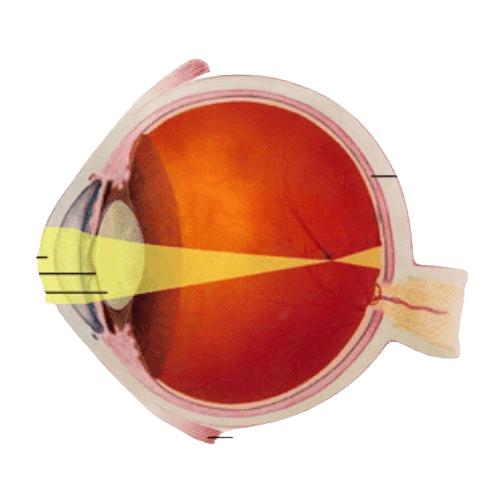
It occurs when the eyeball is too long or the cornea too curved, causing light to focus in front of the retina.
The condition is easily managed with corrective lenses, medications, or laser treatments.
Overview And Clinical Background
Understanding nearsightedness
Myopia often develops in childhood and progresses during adolescence.
Lifestyle factors like prolonged near work or genetics may influence its onset and progression.
- Cause:: Light focuses in front of the retina instead of on it.
- Risk factors:: Family history, excessive screen time, limited outdoor activity.
- Prevalence:: Affects over 30% of the global population.
Symptoms, Signs And Presentation
Myopia typically causes blurry distance vision but clear near vision.
Eye strain and headaches may occur with uncorrected cases.
- Blurred distance vision:: Difficulty seeing distant signs or boards clearly.
- Eye strain:: Frequent squinting or headaches after visual effort.
- Progressive worsening:: Vision gradually blurs without correction.
Diagnosis Methods And Investigations
Eye examination and refraction
A routine comprehensive eye exam is key to diagnosing myopia.
It measures how light focuses in your eyes and determines the corrective prescription.
- Visual acuity test:: Checks clarity at various distances.
- Refraction assessment:: Determines the lens power for correction.
- Ocular biometry:: Measures eye length to monitor progression.
Treatment Options And Surgical Techniques
Treatment ranges from optical correction to surgical options for lasting improvement.
The goal is clear vision and reduced progression risk.
- Eyeglasses:: Most common and safe correction method.
- Contact lenses:: Provide a wider visual field and natural look.
- LASIK or PRK:: Laser procedures that reshape the cornea permanently.
Recovery, Risks And Prognosis
With correction, vision normalizes immediately.
Myopia stabilizes by adulthood, and laser correction offers long-term clarity with minimal risk.
Why Choose Us
CureU Healthcare provides comprehensive eye testing and advanced laser correction with precision diagnostics.
We focus on comfort, safety, and customized visual outcomes.
Conclusion
Myopia is common but easily manageable.
With CureU Healthcare’s expertise, you can enjoy clear distance vision and protect your eyesight for the future.