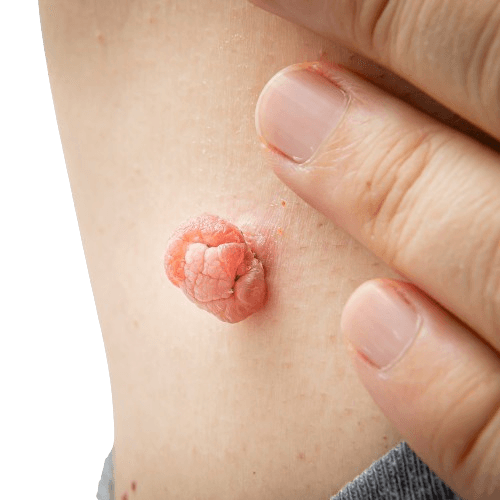
Overview
Mole removal is a safe dermatologic or cosmetic procedure performed to eliminate unwanted, bothersome, or potentially harmful moles from the skin.
Depending on the mole’s type, size, and depth, it can be removed using surgical excision, laser, or shaving methods.
The procedure not only enhances appearance but can also prevent complications if a mole shows signs of malignancy.
Overview And Clinical Background
Understanding Moles
Moles, or nevi, are common skin growths caused by clusters of pigmented cells.
While most are harmless, some can become cancerous.
Mole removal ensures both cosmetic improvement and health protection through early detection and treatment.
- Types of moles:: Congenital, acquired, or atypical moles with varying risk levels.
- Removal can be cosmetic or medically necessary based on dermatologist evaluation.
- Goal:: To achieve smoother skin and eliminate potential precancerous lesions.
Symptoms, Signs And Presentation
Patients often present with raised, pigmented, or irregular moles that may change over time.
Any mole showing asymmetry, uneven color, or rapid growth warrants medical evaluation.
- Common sign:: Small brown or black spot on skin that may grow or darken.
- Mole causing irritation from clothing or shaving.
- Red flag:: Bleeding, itching, or irregular edges may indicate melanoma risk.
Diagnosis Methods And Investigations
Dermoscopic And Histologic Assessment
Dermatologists examine moles visually and with dermoscopy to identify suspicious features.
In certain cases, removed tissue is sent for biopsy to rule out malignancy.
- Imaging:: Dermoscopy magnifies mole structure for accurate diagnosis.
- Lab tests:: Histopathology after removal determines cellular nature.
- Photographic documentation helps monitor mole evolution over time.
Treatment Options And Surgical Techniques
Mole removal can be performed using surgical excision, laser ablation, or shaving.
The technique depends on the mole’s type and size.
- Conservative:: Monitoring benign moles with regular check-ups is often recommended.
- Minimally invasive options:: Laser or shave removal minimizes scarring and recovery time.
- Full surgical excision is done when malignancy risk is suspected.
Recovery, Risks And Prognosis
Most patients heal within one to two weeks.
Minor redness or scabbing may occur temporarily.
Results are usually excellent, with minimal scarring and low recurrence rates.
Why Choose Us
CureU Healthcare ensures mole removal is both safe and aesthetically precise.
Our dermatologists combine diagnostic expertise with cosmetic finesse for clear, healthy skin.
Conclusion
Mole removal is a simple yet vital procedure for both beauty and skin safety.
With expert care, it leaves your skin clearer and your mind at ease.


