Overview
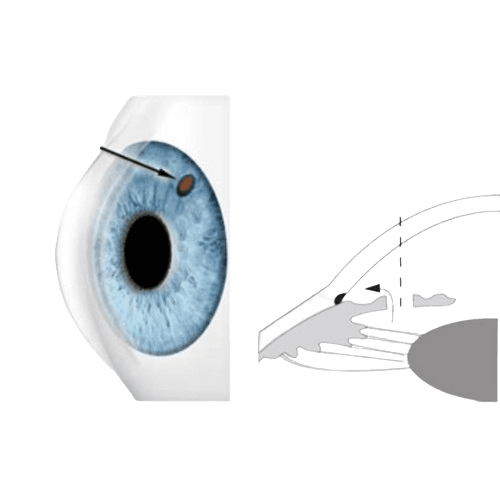
Laser Peripheral Iridotomy (LPI) is a safe, office-based laser procedure that makes a tiny hole in the outer edge of the iris.
This allows fluid to flow normally, reducing pressure and preventing sudden glaucoma attacks. It’s a standard preventive treatment for patients with narrow or closed angles.
Overview And Clinical Background
Peripheral iris hole to balance fluid dynamics
LPI reduces the risk of acute angle closure by restoring communication between the posterior and anterior chambers.
It’s recommended for those with anatomically narrow angles or angle crowding detected during eye exams.
- Mechanism:: Creates alternate route for fluid passage to prevent iris blockage.
- Indication:: Used to prevent or manage angle-closure glaucoma.
- Laser type:: Nd:YAG or argon laser commonly used.
Symptoms, Signs And Presentation
Usually done in patients without major symptoms but with narrow angles found on gonioscopy.
May also be performed in the fellow eye of someone who’s had acute closure.
- Preventive measure:: Performed before symptoms appear.
- Glaucoma risk reduction:: Stops fluid buildup before pressure spikes occur.
- Follow-up use:: After Gonioplasty or Iridotomy if angle remains shallow.
Diagnosis Methods And Investigations
Angle imaging and pressure check
Diagnosis confirms narrow angles or plateau iris configuration needing preventive treatment.
- Gonioscopy:: Evaluates angle width and depth.
- Anterior segment OCT:: High-resolution imaging of iris and corneal interface.
- Tonometry:: Checks intraocular pressure stability.
Treatment Options And Surgical Techniques
LPI is quick and minimally invasive, often completed in minutes with excellent outcomes.
- Anesthesia:: Topical numbing drops only.
- Procedure:: Laser applied at peripheral iris to form a drainage hole.
- Aftercare:: Anti-inflammatory drops prevent mild irritation or swelling.
Recovery, Risks And Prognosis
Patients resume normal activity immediately.
Slight light sensitivity or redness resolves quickly.
The procedure effectively prevents future acute glaucoma attacks.
Why Choose Us
CureU Healthcare’s glaucoma care team uses precision-guided lasers and imaging for accurate, safe results.
We focus on prevention, comfort, and lifelong vision preservation.
Conclusion
Laser Peripheral Iridotomy offers peace of mind for those at risk of angle-closure glaucoma.
With expert laser care, it ensures open angles and stable vision for years to come.