Overview
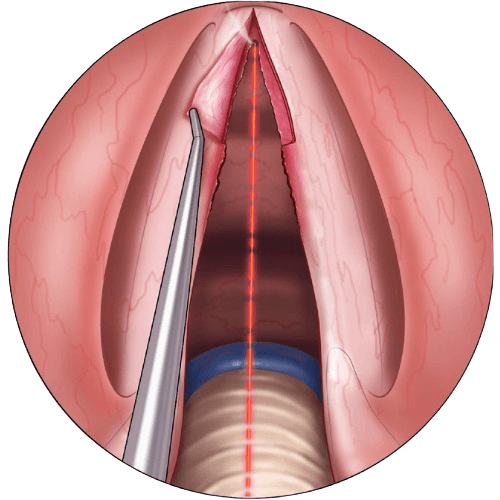
Laryngeal web excision is a specialized surgical procedure used to remove abnormal tissue bands known as laryngeal webs that form across the vocal cords. These webs can partially block the airway and interfere with normal voice production. The procedure aims to restore proper airflow and improve vocal function using precise minimally invasive techniques.
Key Clinical Highlights
- Precision Surgery: High accuracy removal of laryngeal webs while preserving delicate vocal cord structures.
- Minimally Invasive: Performed using endoscopic techniques without external incisions for faster recovery.
- Voice Restoration: Improves vocal clarity and airway function with targeted tissue correction.
When to Consider
Laryngeal web excision is recommended when patients experience persistent hoarseness, weak voice, breathing difficulty, or stridor due to partial airway obstruction. It is particularly indicated in congenital laryngeal webs seen in infants or acquired cases following trauma, prolonged intubation, or infection. The procedure is considered when conservative treatments fail to improve symptoms and airway compromise affects quality of life or respiratory function.
Restore Airway and Voice Function
The procedure eliminates obstructive tissue in the larynx, improving breathing and vocal performance.
- Airway Clearance: Removes obstruction to ensure smooth airflow through the larynx.
- Voice Improvement: Enhances sound production by restoring normal vocal cord movement.
- Prevent Complications: Reduces risk of chronic breathing issues and voice disorders.
Symptoms and Indications
- Hoarseness: Persistent weak or rough voice due to vocal cord restriction.
- Breathing Difficulty: Shortness of breath caused by partial airway blockage.
- Stridor: High pitched breathing sound indicating airway narrowing.
- Voice Fatigue: Quick tiring of voice during speaking or singing.
Types of Laryngeal Web Excision
Congenital Web Excision
Performed in infants or children born with laryngeal webs affecting airway and voice.
- Thin Web Removal: Simple excision for mild obstruction cases.
- Thick Web Reconstruction: Requires advanced techniques to prevent recurrence.
Acquired Web Excision
Treatment for webs formed due to injury, infection, or prolonged intubation.
- Laser Assisted Excision: Uses laser technology for precise removal and minimal bleeding.
Pre-Procedure Preparation
- Laryngoscopy: Detailed airway examination to assess web severity.
- Imaging: CT or endoscopic imaging for surgical planning.
- Medication Review: Adjust medications prior to surgery.
- Fasting: Avoid food before anesthesia.
Treatment Stages
- Pre Arrival (Day 1): ENT consultation and airway evaluation
- Admission (Week 1): Endoscopy and surgical planning
- Procedure (Week 2): Laryngeal web excision surgery
- Recovery (Weeks 2-4): Voice rest and follow up care
Recovery Guidelines
- Voice Rest: Limit speaking to allow healing of vocal cords.
- Hydration: Keep throat moist to support recovery.
- Avoid Irritants: Stay away from smoke or pollutants.
- Follow Up: Regular ENT visits to monitor healing.
Life After Treatment
- Improved breathing and vocal clarity after recovery.
- Enhanced quality of life with restored airway function.
- Reduced risk of recurring airway obstruction.
Precise removal of laryngeal webs restores both voice and breathing with lasting results.
Potential Risks
- Scar Formation: Scar tissue may develop and require monitoring.
- Recurrence: Web may reform in rare cases requiring further treatment.
- Voice Changes: Temporary or mild voice alteration after surgery.
Cost Estimation in India
Estimated procedure package range: $3,000 to $8,000 USD.
Package Inclusions:
- Pre-surgery tests
- Surgical excision procedure
- Hospital stay
- Surgeon fees
Global Cost Comparison
- USA: $25,000 USD
- UK: $18,000 USD
- Germany: $15,000 USD
- Thailand: $9,000 USD
- India: $5,000 USD