Overview
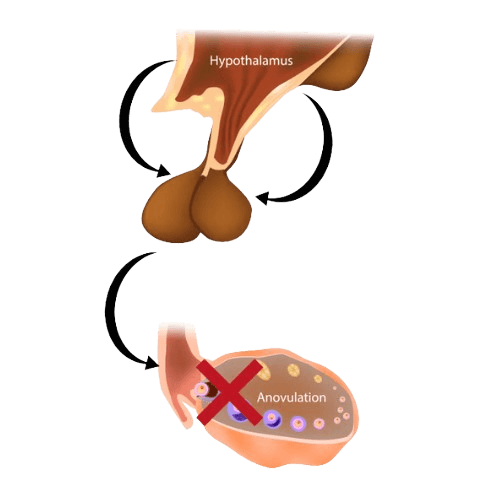
Hyperprolactinemia occurs when the hormone prolactin rises beyond normal, causing menstrual changes, infertility, or galactorrhea.
It may result from pituitary tumors, stress, medications, or systemic illness.
Overview And Clinical Background
Prolactin is secreted by the pituitary gland and regulates reproduction and lactation.
Its excess disrupts normal hormonal balance and fertility.
- Causes:: Pituitary adenoma, hypothyroidism, or certain psychotropic drugs.
- Clinical role:: Affects reproductive function and menstrual regularity.
- Often reversible once underlying cause is addressed.
Symptoms, Signs And Presentation
Symptoms depend on sex and duration of elevation.
Reproductive and neurological effects are common.
- In women:: Irregular periods, infertility, or breast discharge.
- In men:: Reduced libido, erectile dysfunction, or gynecomastia.
- Red flag:: Severe headaches or vision loss from macroadenoma.
Diagnosis Methods And Investigations
Hormonal Assay And Imaging
Diagnosis involves measuring serum prolactin and imaging the pituitary.
Other causes must be ruled out.
- Lab test:: Serum prolactin repeated to confirm elevation.
- Imaging:: MRI brain to detect pituitary adenoma.
- Thyroid profile to exclude secondary causes.
Treatment Options And Surgical Techniques
Most cases respond to medication; surgery is reserved for resistant tumors.
Treatment normalizes hormone levels and fertility.
- Medical therapy:: Dopamine agonists like cabergoline or bromocriptine.
- Surgical option:: Transsphenoidal resection for large adenomas.
- Radiotherapy if tumor persists post-surgery.
Recovery, Risks And Prognosis
Medical therapy usually restores hormonal balance within weeks.
Prognosis is excellent for most patients with compliance.
Why Choose Us
CureU Healthcare offers advanced neuroendocrine imaging and expert endocrinologists for precise diagnosis and tailored treatment.
Conclusion
Hyperprolactinemia is highly treatable when diagnosed early.
With modern therapy, hormonal balance and fertility are restored effectively.