
Overview
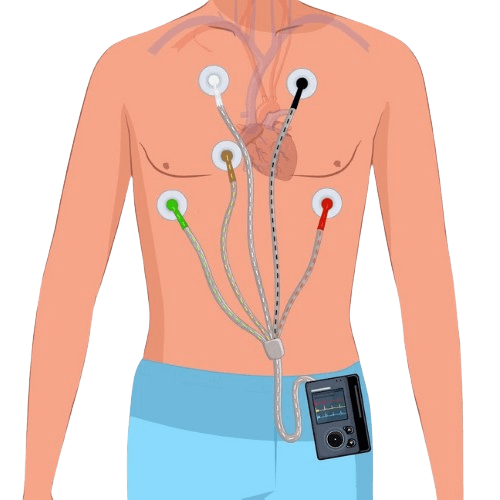
Holter Monitoring is a non-invasive ambulatory ECG test that records the heart’s electrical activity continuously for 24 hours (or longer) while the patient goes about normal activities.
It detects episodic arrhythmias, pauses, or transient ischemic changes that a standard ECG might miss, helping clinicians tailor therapy accurately.
Overview And Clinical Background
Ambulatory rhythm surveillance
Holter is used to capture intermittent rhythm disturbances and correlate them with symptoms like palpitations or syncope.
It is a cornerstone test when surface ECGs are inconclusive.
- Duration:: Standard recording is 24 hours, extended monitoring available if needed.
- Indications:: Palpitations, unexplained fainting, syncope, or intermittent dizziness.
- Goal:: Identify arrhythmias and their frequency to guide treatment.
Symptoms, Signs And Presentation
Patients typically report intermittent palpitations, lightheadedness, or unexplained near-syncope.
The Holter test helps capture transient electrical events during everyday life.
- Palpitations:: Sensation of fast or irregular heartbeat.
- Dizziness or presyncope:: Brief lightheaded episodes without clear cause.
- Unexplained fatigue:: May be related to intermittent arrhythmia or pauses.
Diagnosis Methods And Investigations
Recording and analysis
Electrodes are placed on the chest and connected to a portable recorder; data are reviewed by cardiologists with specialized software.
Event diaries kept by the patient enhance correlation between symptoms and recorded rhythms.
- Electrode setup:: Non-invasive adhesive leads placed on the chest with a small recorder.
- Activity diary:: Patient logs symptoms, activities, and time of episodes.
- Analysis:: Automated and manual review detects arrhythmias, pauses, and ischemic changes.
Treatment Options And Surgical Techniques
Holter itself is diagnostic; findings drive therapy from medical management to device implantation or ablation when indicated.
- No arrhythmia found:: Reassurance and symptomatic management or extended monitoring.
- Medical therapy:: Antiarrhythmic drugs or rate control agents based on rhythm type.
- Interventional options:: Catheter ablation or pacemaker/ICD placement for actionable findings.
Recovery, Risks And Prognosis
There is no recovery period — the test is safe and well tolerated.
Diagnostic yield is high for frequent but intermittent symptoms; extended monitoring increases detection of rarer events.
Why Choose Us
CureU Healthcare provides accurate ambulatory ECG services with rapid analysis by cardiologists and clear, actionable reports.
We offer extended patch monitoring when 24-hour recording is insufficient.
Conclusion
Holter monitoring is a simple, powerful tool to catch intermittent heart rhythm problems and guide effective treatment.
Early diagnosis prevents complications and targets therapy precisely.

B.U.M.S, M.D. (NAT) | Reg No. 9153 | Ex. Secretary & Treasurer, N.I.M.A.
Qualified healthcare professional in Unani and Naturopathic medicine with deep expertise in traditional healthcare systems, patient-centered clinical care, and medical content review.