
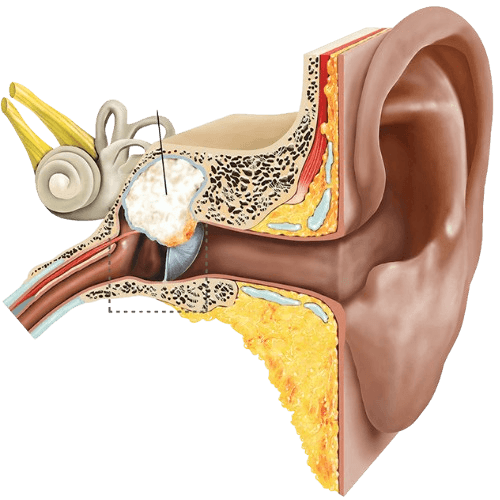
What Is Excision of Ear Tumor?
Excision of an ear tumor is a surgical procedure in which a surgeon removes an abnormal growth from the outer ear, ear canal, or, in selected cases, deeper structures surrounding the ear. The primary goals are to remove the growth, obtain tissue for an accurate diagnosis, relieve symptoms, and treat cancer when present.
An ear tumor does not automatically mean cancer. Some growths are benign (non-cancerous), while others are malignant (cancerous). Treatment depends on the tumor's type, location, size, depth, growth pattern, and effect on hearing or nearby structures.
The procedure may involve a simple excision of a small lesion or a more extensive operation with reconstruction. Some benign tumors can be monitored or treated without conventional surgery, while suspected or confirmed cancers require appropriate specialist assessment.
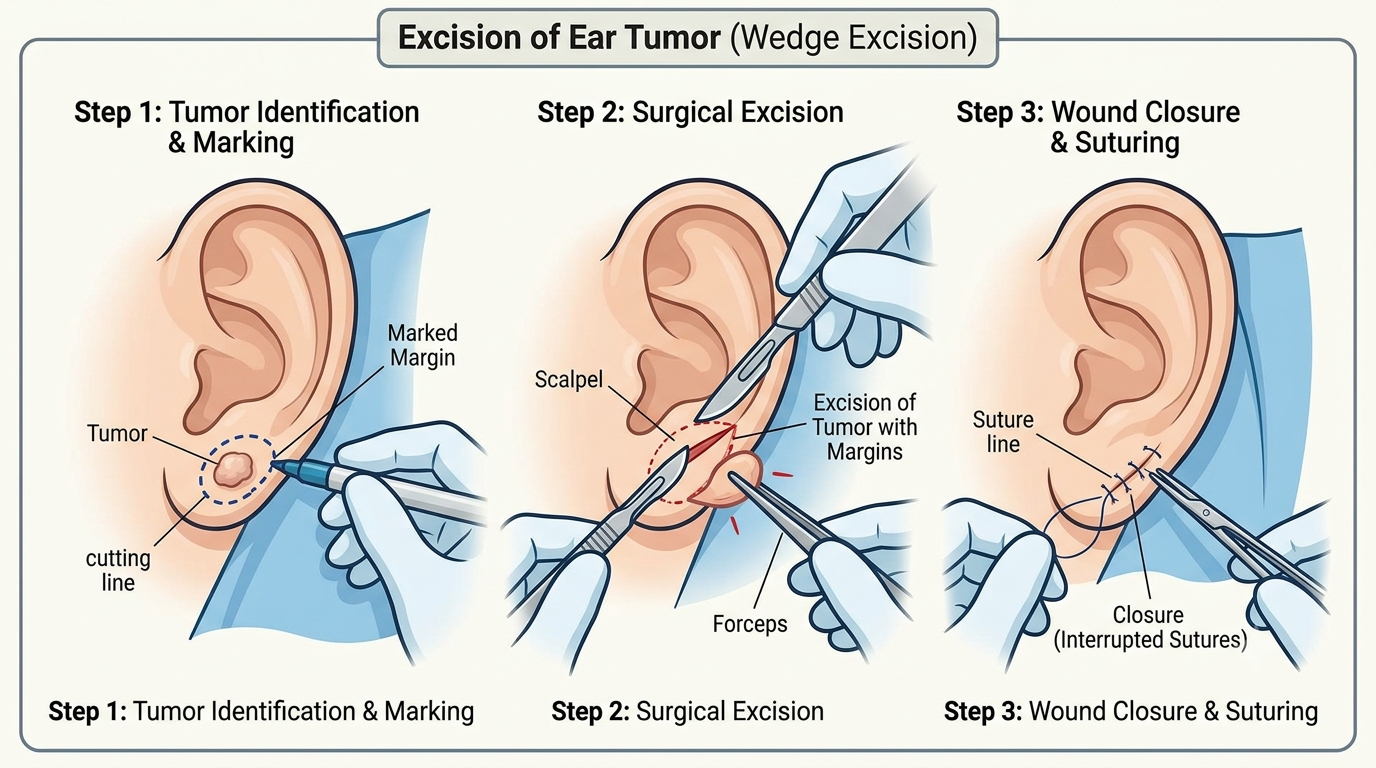
When Is Ear Tumor Removal Surgery Necessary?
An ENT specialist, dermatologist, or head-and-neck surgeon may recommend removal when a growth requires treatment or a definitive diagnosis. The decision depends on clinical examination and, when appropriate, biopsy and imaging findings.
Common reasons for considering ear tumor excision include:
- Suspected or confirmed cancer: Removal may be necessary to treat a malignant growth and obtain clear surgical margins.
- Increasing size: A growing lesion may require further investigation and treatment.
- Hearing problems: A growth in the ear canal or middle ear may interfere with hearing.
- Persistent symptoms: Pain, bleeding, discharge, or recurrent inflammation may warrant investigation.
- Obstruction or structural damage: Some growths can block the ear canal or affect nearby structures.
- Diagnostic uncertainty: A biopsy or surgical removal may be needed to establish the exact diagnosis.
Not every ear growth needs surgery. Selected benign tumors that are small and asymptomatic may be monitored, depending on their type and location.
A new or changing lump, a persistent sore, unexplained ear bleeding, or progressive hearing loss should be assessed by a qualified medical professional. These symptoms do not necessarily indicate cancer, but they should not be ignored.
Types of Ear Tumors Treated With Surgical Excision
The appropriate treatment depends on the specific diagnosis rather than simply the presence of a lump.
Benign Ear Tumors and Growths
Benign growths do not invade distant organs like cancer, but some can cause local complications or affect hearing and balance.
Examples include:
- Epidermoid cysts: Sac-like growths containing keratin that may develop on or around the ear.
- Osteomas and exostoses: Benign bony growths that can develop in the external ear canal and sometimes obstruct it.
- Schwannomas: Usually benign tumors arising from nerve-related cells; treatment depends on their location and symptoms.
- Keloids: Excess scar tissue that can develop after ear piercing or injury. Treatment may involve injections, surgery, or a combination of approaches.
The term ear tumor can also be used broadly for conditions that are not true tumors. For example, cholesteatoma is an abnormal accumulation of skin cells in the middle ear or mastoid that can damage nearby structures and commonly requires surgical treatment.
Malignant Ear Tumors
Cancers affecting the ear include skin cancers of the outer ear and rarer cancers involving the ear canal or deeper structures.
Important examples include:
- Basal cell carcinoma (BCC): A common skin cancer that can locally invade surrounding tissue.
- Squamous cell carcinoma (SCC): A skin cancer that can invade deeper structures and, in some cases, spread to lymph nodes or other sites.
- Melanoma: A potentially aggressive skin cancer arising from pigment-producing cells.
Cancers arising in the ear canal, middle ear, or temporal bone require a different assessment from many superficial outer-ear skin cancers.
The exact tumor type must be established whenever possible. Benign growths, skin cancers, and deeper ear tumors do not all require the same operation or follow-up plan.
How Is an Ear Tumor Diagnosed Before Surgery?
Accurate diagnosis helps the medical team determine whether removal is necessary and which surgical technique is appropriate.
Clinical Examination
The specialist reviews the patient's symptoms, medical history, previous treatments, and any changes in the growth. An examination may include direct inspection of the outer ear and the use of an otoscope or microscope to assess the ear canal and eardrum.
Biopsy and Histopathology
A biopsy involves taking a tissue sample for examination under a microscope by a pathologist. It is a key method for determining whether a suspected skin tumor is benign or malignant and identifying its type.
In selected cases, the surgeon may remove the entire lesion as an excisional biopsy. The need for a separate biopsy before surgery depends on the suspected diagnosis, location, and planned treatment.
For confirmed or suspected cancer, the final pathology report may assess tumor characteristics and whether cancer cells are present at the surgical margins.
Imaging and Hearing Tests
Depending on the suspected tumor and its location, investigations may include:
- Audiometry: To assess hearing before treatment and establish a baseline.
- CT scan: To evaluate bony involvement, particularly in the ear canal or temporal bone.
- MRI: To assess soft tissues, nearby nerves, or possible extension into deeper structures.
Not every patient requires all these tests. The specialist selects investigations according to the clinical findings.
Types of Ear Tumor Excision Procedures
The surgical approach depends on the pathology, anatomical location, extent of the growth, and the need to preserve hearing and surrounding structures.
Simple Excision
Simple excision removes a localized growth through a surgical incision. It may be suitable for selected benign lesions or small tumors confined to accessible tissue. The wound may be closed with stitches or managed using another appropriate wound-care technique.
Wide Local Excision
Wide local excision removes a tumor along with a surrounding margin of tissue. It is used for selected cancers when the diagnosis and required surgical margins have been established.
The necessary margin depends on the cancer type, tumor characteristics, anatomical site, and applicable treatment guidelines. If the pathology report shows cancer cells at the margins, additional treatment may be necessary.
Mohs Micrographic Surgery
Mohs surgery is a specialized technique used for selected skin cancers, particularly certain basal cell and squamous cell carcinomas in areas such as the ear where preserving healthy tissue is important.
The surgeon removes the cancer in stages and examines the removed tissue microscopically. Additional tissue is removed from areas where cancer cells remain until the required margin clearance is achieved.
Mohs surgery is not appropriate for every ear tumor. Its suitability depends on the cancer type, location, risk, and specialist assessment.
Ear Canal or Temporal Bone Surgery
Tumors involving the ear canal or temporal bone may require more extensive procedures. Depending on the disease, surgery may involve removing part or all of the ear canal, selected middle-ear structures, or affected temporal bone.
These operations are complex and may affect hearing, balance, or facial nerve function. They require assessment by an appropriately experienced ENT or head-and-neck surgical team.
Reconstruction After Tumor Removal
If removing a tumor leaves a defect that cannot be closed directly, reconstruction may be required. Options include a skin graft, a local tissue flap, or more complex reconstructive surgery.
The reconstructive plan depends on the size and depth of the defect, the structures removed, the need for further treatment, and the patient's overall health.
What Happens During Ear Tumor Removal Surgery?
The exact steps vary according to the tumor and surgical technique. A typical treatment pathway may include the following stages:
- Preoperative assessment: The medical team reviews the diagnosis, investigations, medications, allergies, and general health.
- Anesthesia: Local anesthesia may be sufficient for selected superficial lesions. General anesthesia may be required for more extensive operations.
- Tumor removal: The surgeon removes the growth using the planned technique and takes care to protect relevant surrounding structures.
- Tissue examination: The specimen is sent for histopathological examination. For Mohs surgery, tissue is examined in stages during the procedure.
- Wound closure or reconstruction: The wound is stitched, covered with a graft or flap, or managed using another appropriate technique.
- Postoperative monitoring: The patient receives instructions for wound care, pain management, activity, and follow-up.
The procedure may be performed as day surgery or require hospital admission. The decision depends on the extent of surgery, anesthesia, medical needs, and postoperative monitoring requirements.
Risks and Complications of Ear Tumor Excision
As with any operation, ear tumor excision has potential risks. Their likelihood and severity depend on the tumor's location, the procedure performed, the patient's health, and the experience of the treating team.
Possible complications include:
- Bleeding or infection: These can occur at the surgical site.
- Scarring or changes in appearance: Removing tissue from the outer ear may alter its shape or contour.
- Wound-healing problems: Some wounds require prolonged dressing care or reconstructive procedures.
- Hearing changes: Risk varies according to whether the operation involves only the outer ear or deeper auditory structures.
- Balance problems: These may occur with selected operations involving structures responsible for balance.
- Facial nerve injury: This is a particular concern in certain complex operations involving deeper structures.
- Incomplete removal or recurrence: Further treatment may be necessary if tumor cells remain or the growth returns.
Patients should discuss the risks specific to their diagnosis and proposed operation with their surgeon. New facial weakness, significant bleeding, rapidly worsening pain, or other serious postoperative symptoms require prompt medical assessment.
Recovery After Ear Tumor Removal Surgery
Recovery varies considerably between a small outer-ear excision and a major operation involving the ear canal or temporal bone. There is no single recovery timeline that applies to every patient.
Wound Care and Pain Management
Patients should follow the surgeon's instructions for keeping the wound clean, changing dressings, taking prescribed medication, and protecting the operated area. Stitches may need removal or may dissolve, depending on the closure method.
Increasing redness, swelling, warmth, worsening pain, fever, or discharge from the wound should be reported to the medical team.
Return to Normal Activities
After a minor excision, normal activities may resume relatively quickly, subject to medical advice. More extensive surgery may require a longer recovery period, restrictions on strenuous activity, and additional rehabilitation or hearing assessment.
Patients should not swim, expose the wound to water beyond the permitted wound-care instructions, or undertake strenuous activities until their treating team confirms that it is appropriate.
Pathology Results and Follow-Up
The final pathology report is essential for confirming the diagnosis and determining whether further treatment is required. Follow-up may include wound assessment, review of surgical margins, hearing evaluation, and surveillance for recurrence.
Some patients need additional surgery, radiotherapy, or other cancer treatment. Others may require only routine postoperative care and monitoring.
Cost of Ear Tumor Excision in India
The cost of ear tumor excision in India varies according to the diagnosis, complexity of surgery, hospital, surgeon's fees, anesthesia, and postoperative requirements. A reliable estimate should be based on the patient's medical records and proposed treatment plan rather than a single price applied to every case.
Factors that may affect the total cost include:
- Tumor type and location: A small superficial lesion generally requires a different level of care from a tumor involving the ear canal or temporal bone.
- Surgical technique: Simple excision, Mohs surgery, extensive cancer surgery, and reconstruction have different resource requirements.
- Diagnostic investigations: Biopsy, histopathology, imaging, and hearing tests may contribute to the total.
- Hospitalization: Day surgery and procedures requiring inpatient monitoring have different costs.
- Reconstruction: Skin grafts, tissue flaps, or other reconstructive procedures may add to the treatment cost.
- Additional cancer treatment: Radiotherapy or other recommended treatments may be charged separately.
International patients should request an itemized estimate that clarifies what is included and excluded, including consultations, investigations, surgery, pathology, hospital stay, medicines, reconstruction, and follow-up.
A final cost should be confirmed by the treating hospital after reviewing the patient's diagnosis and clinical requirements.
Why Choose India for Ear Tumor Removal Surgery?
India offers treatment options across ENT surgery, dermatologic surgery, head-and-neck oncology, and reconstructive surgery. The appropriate hospital depends on the tumor type, the complexity of the procedure, and the expertise required.
Patients considering treatment in India should evaluate:
- Relevant specialist expertise: Confirm that the surgeon regularly treats the specific type and location of tumor.
- Multidisciplinary care: Complex or malignant tumors may require coordination between surgeons, radiologists, pathologists, medical oncologists, and radiation oncologists.
- Diagnostic and pathology services: Confirm that the hospital can provide the investigations and tissue analysis required for treatment planning.
- Reconstructive support: Ask whether reconstructive surgery is available if removal creates a significant defect.
- Transparent cost estimates: Request a written treatment plan and an itemized estimate before making travel arrangements.
- Continuity of care: Ensure that pathology results, postoperative instructions, and a follow-up plan will be available after discharge.
Patients should compare hospitals and specialists on the basis of relevant qualifications, experience, facilities, and the proposed treatment plan. No hospital or treatment outcome should be considered superior without appropriate evidence.
Medical Travel and Aftercare for International Patients
International patients need to plan for more than the operation itself. Their itinerary should account for diagnostic review, treatment, postoperative monitoring, pathology results, and any additional care that may be required.
Before Traveling to India
Patients should share available biopsy reports, imaging, hearing test results, medical history, medication lists, and previous treatment records with the treating team. The hospital may arrange a remote consultation to assess the case and determine whether further investigations are required.
Patients should obtain a proposed treatment plan and written cost estimate before confirming travel.
During Treatment
Depending on the diagnosis, patients may need consultations with several specialists, preoperative tests, surgery, postoperative wound assessment, and a review of pathology findings. The duration of the visit cannot be determined accurately until the extent of treatment and expected recovery are known.
After Discharge and Returning Home
Before leaving India, patients should obtain copies of their operative report, pathology report, investigation results, medication instructions, and follow-up recommendations.
Do not book a return flight solely on the basis of a standard number of recovery days. The treating surgeon should confirm when travel is medically appropriate, considering the operation, wound condition, complications, and any planned additional treatment.
International patients should also arrange follow-up with a suitable doctor in their home country. If radiotherapy, further surgery, or other cancer treatment is recommended, the treatment schedule must be coordinated before travel plans are finalized.
Medical disclaimer: This article provides general educational information and does not replace a clinical examination or individualized medical advice. Diagnosis, treatment selection, surgical risks, and recovery expectations must be determined by qualified healthcare professionals.
Medical References

B.U.M.S, M.D. (NAT) | Reg No. 9153 | Ex. Secretary & Treasurer, N.I.M.A.
Qualified healthcare professional in Unani and Naturopathic medicine with deep expertise in traditional healthcare systems, patient-centered clinical care, and medical content review.