
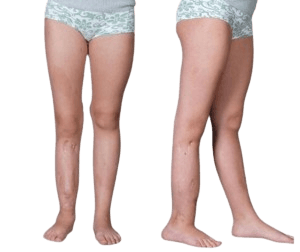
Congenital Pseudarthrosis of the Tibia Surgery-CPT
Congenital Pseudarthrosis of the Tibia (CPT) is a medical condition where the shin bone fractures in toddlers and has not been cured properly. It is generally seen in toddlers before the age of two years. Although it is not a common condition, it is a rare disorder that has been spotted in 1 out of 250,000 children. This condition occurs when a shin bone gets fractured due to minor trauma or happens naturally.
Moreover, it is rooted in the periosteum, a bone covered with a membrane, which becomes abnormal and creates a hurdle in complete healing. As a result, while the bone has not been cured completely, it remains unstable and becomes flexible instead of solid. Consequently, this leads to instability in the leg and difficulty in functioning.
Candidate of Congenital Pseudarthrosis of the Tibia
As earlier discussed, this is a rare condition in children. Additionally, this condition is also diagnosed as neurofibromatosis, a genetic disorder that may have severe possible manifestations.
Moreover, Congenital Pseudarthrosis of the Tibia is one of the symptoms seen in Fibrous Dysplasia, Osteofibrous Dysplasia, and Cleidocranial Dysostosis. However, the exact reason for this condition is still unidentified.
Diagnosis of Congenital Pseudarthrosis
Congenital Pseudarthrosis of the Tibia can only be identified through X-rays or physical examination.
Additionally, patients with neurofibromatosis can be detected through X-rays, as this is a high-risk condition that can be diagnosed at an early age.
Treatment Procedure for Congenital Pseudarthrosis of the Tibia
The main objective of the treatment is to achieve and maintain the union of the shin bone (tibia).
Treatment for Congenital Pseudarthrosis of the Tibia is usually surgical, with the primary goal of achieving long-term bone union. Additionally, the treatment aims to:
Surgical options such as intramedullary nailing, vascularized fibula graft, and external fixator have shown excellent results in achieving primary bone union.
Cost of Congenital Pseudarthrosis of the Tibia surgery in India
Congenital Pseudarthrosis of the Tibia surgery requires top orthopedic surgeons in India for better outcomes. In fact, high-quality equipment is used to ensure long-term results.
The cost of Congenital Pseudarthrosis of the Tibia in India is affordable and cost-effective, while the services and facilities provided at the best orthopedic hospitals are top-notch.
Cities like Mumbai, Delhi, Chennai, and Bangalore are among the top destinations offering the best medical healthcare support for this condition.
Summary
Congenital Pseudarthrosis of the Tibia (CPT) is a medical condition where the shin bone fractures in toddlers and has not been cured properly. It is generally seen in toddlers before the age of two years.
Additionally, this condition is also diagnosed as neurofibromatosis, a genetic disorder that may have severe possible manifestations.
As a result, while the bone has not been cured completely, it remains unstable and becomes flexible instead of solid