Overview
Cataract implant surgery is one of the most common and successful procedures in modern ophthalmology.
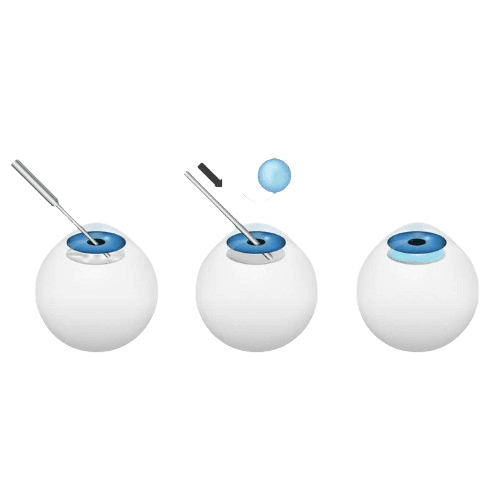
It involves removing the eye’s cloudy natural lens and replacing it with a clear artificial intraocular lens (IOL).
The procedure helps restore sharp vision, improve color perception, and reduce glare sensitivity, allowing patients to return to daily life with renewed confidence.
Overview And Clinical Background
Understanding Cataract Implantation
Cataract implant surgery is typically performed when clouding of the natural lens affects daily activities like reading or driving.
The cloudy lens is removed using ultrasound-based phacoemulsification and replaced with a transparent artificial lens that provides lasting vision correction.
- Procedure Type:: Daycare surgery performed under local anesthesia.
- Technology:: Modern phacoemulsification and foldable intraocular lenses for quicker recovery.
- Outcome:: Significant improvement in visual clarity and quality of life.
Symptoms, Signs And Presentation
Cataracts develop gradually, often starting with mild visual disturbances.
Early symptoms can be subtle but progress over time.
- Common symptom:: Blurry or cloudy vision affecting reading or driving.
- Additional signs:: Difficulty with night vision and sensitivity to bright light.
- Red flag:: Sudden drop in vision or light perception, requiring urgent evaluation.
Diagnosis Methods And Investigations
Comprehensive Eye Examination
Diagnosis involves detailed eye evaluation and optical measurements to plan surgery precisely.
Preoperative testing ensures accurate lens selection and surgical safety.
- Slit-lamp exam:: Evaluates lens opacity and cataract grade.
- Ocular biometry:: Measures eye length and corneal curvature to select the right IOL power.
- Retinal evaluation:: Ensures the retina is healthy before surgery.
Treatment Options And Surgical Techniques
Cataract implant surgery offers both traditional and advanced options depending on vision goals and lifestyle.
The goal is to restore sight with minimal discomfort and downtime.
- Phacoemulsification:: Ultrasound breaks the cataract into fragments, which are gently removed.
- Femtosecond laser-assisted surgery:: Provides bladeless precision with quicker recovery.
- Lens options:: Monofocal, multifocal, and toric IOLs tailored to patient needs.
Recovery, Risks And Prognosis
Recovery is usually quick, with most patients regaining clear vision within days.
Risks such as infection or inflammation are rare and manageable.
Long-term outcomes are excellent when proper postoperative care is followed.
Why Choose Us
CureU Healthcare brings together expert ophthalmic surgeons, cutting-edge laser systems, and personalized care to deliver superior results.
From preoperative counseling to aftercare, our focus is on comfort, safety, and lasting visual success.
Conclusion
Cataract implant surgery restores clarity, color, and confidence.
With CureU Healthcare, patients can trust a seamless experience and a brighter outlook on life.