Overview
Body lift surgery is an extensive reconstructive-aesthetic operation that removes redundant skin and recontours the lower trunk, hips, thighs, and buttocks to re-establish harmonious body proportions.
It is frequently performed after substantial weight loss and may be tailored as lower, circumferential, or total body lifts depending on the areas involved.
The procedure improves comfort, mobility, and appearance by addressing sagging tissues in a coordinated, anatomically respectful manner.
Overview And Clinical Background
Comprehensive Rejuvenation Of The Lower Trunk
A body lift restores shape by excising excess skin and tightening soft tissues across the abdomen, flanks, and posterior torso.
It is more extensive than an abdominoplasty and often incorporates thigh and buttock reshaping to achieve proportional results.
Surgical planning focuses on balancing scar placement with maximal contour improvement.
- Indication:: Large circumferential skin excess after massive weight loss, symptomatic pannus, or severe tissue laxity impairing function and hygiene.
- Procedure scope:: May include abdominoplasty, flank tightening, buttock lift, and thigh lift in a circumferential fashion to address 360° excess.
- Multidisciplinary care:: Coordination with nutrition, anesthesia, and rehab teams optimizes perioperative safety for extensive procedures.
Symptoms, Signs And Presentation
Patients present with circumferential loose skin, clothing fit problems, recurrent rashes in skin folds, and functional limitations.
The goal is to restore a smooth, supportive trunk and lower body contour that supports daily activity and comfort.
- Common issues:: Hanging tissue around the waist, buttock descent, lateral thigh excess, and skin fold irritation or intertrigo.
- Functional impact:: Difficulty exercising, hygiene problems, and discomfort when sitting or wearing fitted clothes.
- Red flag:: Uncontrolled medical conditions, active infection, or unstable weight must be corrected before surgery.
Diagnosis Methods And Investigations
Preoperative Mapping And Safety Checks
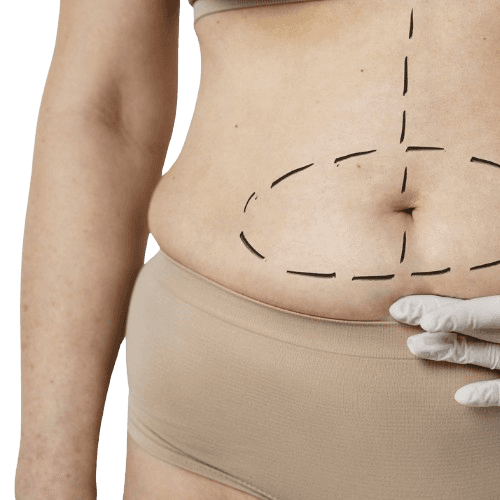
Thorough mapping of excess tissue with photographs and marking in standing position guides excision patterns.
Medical clearance, labs, and sometimes cardiopulmonary testing ensure safe anesthesia for prolonged procedures.
- Surgical mapping:: Standing markings and photographic documentation define the resection patterns needed to restore circumferential contour.
- Medical clearance:: Pre-op labs, nutritional assessment, and cardiopulmonary evaluation reduce perioperative risk in extensive surgeries.
- Patient optimization:: Smoking cessation, weight stabilization, and correction of anemia or vitamin deficiencies improve healing outcomes.
Treatment Options And Surgical Techniques
Techniques include circumferential lower body lifts, belt lipectomy, or staged upper and lower body procedures.
Surgeons employ progressive tension sutures, layered closures, and selective liposuction to sculpt smooth transitions between treated zones.
- Procedure types:: Lower body lift (circumferential), belt lipectomy (removes tissue around the waist), and combined thigh-buttock lifts depending on the distribution of excess.
- Surgical principles:: Tension-free closure, preservation of lymphatics when possible, and layered reconstruction minimize complications and improve contour.
- Adjuncts:: Intraoperative drains, compression garments, and staged operations when necessary to limit operative time and support recovery.
Recovery, Risks And Prognosis
Recovery is more prolonged than isolated procedures and typically involves inpatient observation for 1–3 days followed by weeks of limited activity.
Risks include seroma, wound complications, DVT, and prolonged swelling; careful perioperative management greatly reduces these risks.
- Recovery timeline:: Hospital stay of 1–3 days, return to light activities in 3–4 weeks, and gradual resumption of full activities over 8–12 weeks with ongoing scar maturation.
- Possible complications:: Wound separation, seroma, infection, venous thromboembolism, and need for minor revisions in a subset of patients.
- Expected benefit:: Substantial improvement in body contour, reduced skin-fold problems, and enhanced ability to exercise and wear normal clothing.
Why Choose Us
CureU Healthcare’s body lift program combines experienced cosmetic surgeons, perioperative medicine, and rehabilitation to deliver safe, comprehensive contouring.
We emphasize patient optimization, evidence-based protocols, and attentive postoperative support to achieve durable, natural-appearing results.
- Comprehensive team:: Surgical, anesthesia, nutrition, and rehab teams collaborate for safe, efficient care and optimized recovery pathways.
- Safety-first protocols:: Enhanced recovery, DVT prevention, and meticulous wound care reduce complications and speed rehabilitation.
- Aesthetic planning:: Individualized incision design and contour strategy focus on proportion and long-term harmony across treated areas.
Conclusion
Body lift surgery is a powerful reconstructive and aesthetic option for patients with circumferential tissue excess, restoring function and form.
With careful selection, thorough planning, and multidisciplinary support at CureU Healthcare, patients achieve meaningful, long-lasting improvements in contour and quality of life.


