Overview
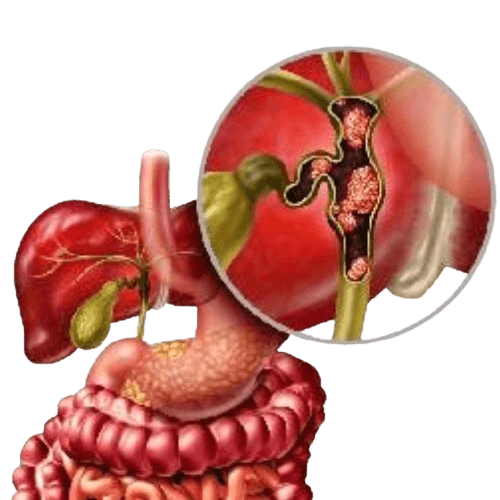
Bile duct cancer, or cholangiocarcinoma, develops in the ducts that carry bile from the liver to the intestine.
It can occur inside or outside the liver and often presents late with jaundice and weight loss.
Multidisciplinary management with surgery, biliary drainage, and systemic therapy offers the best outcomes.
Overview And Clinical Background
Pathology and risk factors
Cholangiocarcinoma arises from bile duct epithelial cells.
Risk factors include chronic biliary inflammation, gallstones, primary sclerosing cholangitis, and liver flukes.
- Classification: Intrahepatic, perihilar, and distal types based on location.
- Risk factors: PSC, liver fluke infection, hepatolithiasis, chronic hepatitis.
- Epidemiology: More frequent in Asia; often diagnosed at an advanced stage.
Symptoms, Signs And Presentation
Patients usually present with progressive jaundice and itching.
Other symptoms include weight loss and abdominal pain.
- Jaundice: Yellowing of skin and eyes due to bile duct blockage.
- Pruritus: Severe itching from bile salt accumulation.
- Systemic: Fatigue, dark urine, pale stools, and abdominal pain.
Diagnosis Methods And Investigations
Imaging and biopsy
Diagnosis is established with imaging and tissue confirmation.
MRCP, CT, and ERCP are crucial for locating and staging the tumor.
- Imaging: MRCP and CT scan to define obstruction and local invasion.
- Endoscopic procedures: ERCP for stenting and tissue biopsy.
- Histology: Confirms adenocarcinoma type and guides therapy.
Treatment Options And Surgical Techniques
Curative treatment is surgical resection; however, many present late and need palliative stenting and systemic therapy.
- Surgery: Bile duct resection, hepatic resection, or Whipple procedure based on site.
- Stenting: Biliary drainage to relieve jaundice in inoperable cases.
- Adjuvant therapy: Chemotherapy or radiotherapy for residual or recurrent disease.
Recovery, Risks And Prognosis
Survival depends on stage and resectability.
Even with surgery, recurrence is common, but early diagnosis improves outcomes.
Why Choose Us
CureU Healthcare provides advanced hepatobiliary surgical expertise and interventional endoscopy, supported by precision oncology for systemic management.
We focus on comprehensive care from diagnosis to recovery.
Conclusion
Bile duct cancer requires expert coordination for optimal outcomes.
Early multidisciplinary management improves survival and comfort.