Overview
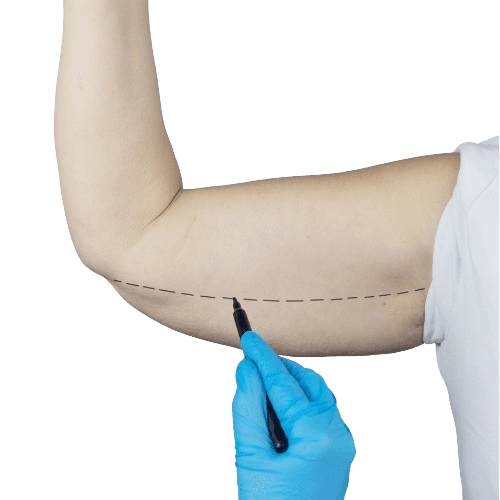
An arm lift (brachioplasty) is a surgical procedure to remove loose, hanging skin and localized fat from the upper arms and to tighten the underlying tissue.
It restores a more youthful, proportionate arm silhouette after significant weight change or age-related skin laxity.
The operation can be combined with liposuction to refine contours and is tailored to minimize visible scarring while optimizing shape and function.
Overview And Clinical Background
Why Brachioplasty Works
Brachioplasty addresses redundant skin and soft tissue laxity that exercise alone cannot correct.
It is commonly performed after massive weight loss or when aging produces unacceptable skin sagging that interferes with clothing choices and comfort.
The procedure balances aesthetic goals with functional improvement, aiming for smooth contours and durable tightening.
- Indication:: Excess skin and localized fat of the upper arm causing cosmetic concern, chafing, clothing fit issues, or hygiene difficulties; often after major weight loss or with age-related skin laxity.
- Technique overview:: Excision of redundant skin through an incision typically placed on the inner or posterior arm, combined with tightening of the underlying tissue and optional liposuction for contour refinement.
- Patient goals:: Restore a sleeker arm contour, reduce irritation, and improve confidence while planning incisions to keep scars as inconspicuous as possible.
Symptoms, Signs And Presentation
Patients seek an arm lift for visible sagging, a 'batwing' appearance, or persistent fullness despite diet and exercise.
They may report rubbing or discomfort from overhanging tissue and avoidance of sleeveless clothing due to self-consciousness.
- Common presentation:: Loose, pendulous skin along the inner arm with variable fat deposits and diminished skin elasticity, most noticeable when the arm is raised or during movement.
- Functional impact:: Chafing, irritation, or difficulty with hygiene in extreme cases; psychosocial impact includes reduced confidence and limited clothing choices.
- Red flag:: Recent unexplained arm swelling, lymphatic issues, or active skin infection should be assessed and managed before elective surgery.
Diagnosis Methods And Investigations
Preoperative Assessment
Evaluation includes a focused physical exam of skin quality, fat distribution, and scar placement planning.
Medical history, comorbidity screening, and appropriate blood tests or imaging ensure safety under anesthesia.
- Clinical exam:: Measure skin redundancy and skin pinch tests to decide incision length and pattern; assess muscle tone and overall arm contour to plan adjunctive liposuction if needed.
- Medical review:: Assess cardiovascular risk, smoking status, diabetes control, and medications that affect healing; labs and ECG are ordered as indicated by medical history.
- Photography and planning:: Standardized preoperative photographs and markings in standing position help plan incision placement and set realistic outcome expectations.
Treatment Options And Surgical Techniques
Surgical options range from limited incision (mini
achioplasty) for mild laxity to full-length excisions for extensive excess.
Liposuction is frequently combined to sculpt the arm and reduce fatty volume while limiting incision length when appropriate.
- Conservative:: Non-surgical skin-tightening devices may offer modest improvement but do not replace surgical excision for significant excess.
- Surgical techniques:: Mini-brachioplasty for localized laxity with short scars, standard brachioplasty with long incisions for extensive skin removal, and posterior or medial incision choices based on patient anatomy and scar placement preferences.
- Adjunctive measures:: Liposuction for contouring, quilting sutures to reduce dead space and fluid accumulation, and meticulous layered closure to optimize scar quality.
Recovery, Risks And Prognosis
Recovery includes a period of swelling and bruising with gradual improvement over weeks.
Compression garments reduce swelling and support tissues; drains may be used temporarily to prevent fluid collections.
Most patients regain routine activities in 2–4 weeks and full exercise after 6–8 weeks; scars mature over 6–12 months.
- Typical recovery:: Initial rest, wound checks in the first week, progression to light activity over 2–3 weeks, and return to full exercise by 6–8 weeks depending on surgeon guidance.
- Potential complications:: Scarring, seroma, infection, poor wound healing, contour irregularity, or sensory changes; risk is reduced with careful technique and adherence to postoperative care.
- Long-term outlook:: Durable contour improvement when weight is maintained; scars typically fade but remain a permanent, improving trade-off for the aesthetic benefit.
Why Choose Us
CureU Healthcare offers board-certified cosmetic surgeons experienced in brachioplasty planning and scar optimization.
We combine precise preoperative mapping, modern liposuction adjuncts, and attentive aftercare including scar therapy and rehabilitation to maximize outcomes and patient comfort.
- Expert surgical team:: Surgeons trained in aesthetic proportions and scar-minimizing closures ensure balanced, natural results tailored to each patient.
- Comprehensive care:: Pre-op optimization, perioperative safety protocols, and structured follow-up with scar management and physiotherapy support recovery.
- Personalized planning:: Individualized incision placement and contour strategy to meet aesthetic goals while respecting each patient’s lifestyle and preferences.
Conclusion
An arm lift restores smoother, firmer upper-arm contours and improves comfort and confidence.
When performed by experienced cosmetic surgeons with careful planning and follow-up, brachioplasty delivers reliable, long-term aesthetic and functional benefits.

B.U.M.S, M.D. (NAT) | Reg No. 9153 | Ex. Secretary & Treasurer, N.I.M.A.
Qualified healthcare professional in Unani and Naturopathic medicine with deep expertise in traditional healthcare systems, patient-centered clinical care, and medical content review.