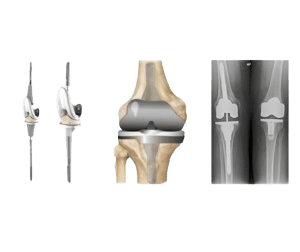
Overview
Revision single knee replacement is a specialized orthopedic procedure performed to replace or repair a previously implanted knee prosthesis that has failed or caused complications. The surgery involves removing the old implant and replacing it with a new prosthetic component to restore joint stability, reduce pain, and improve mobility.
Key Clinical Highlights
- Advanced Reconstruction: Specialized implants and techniques address bone loss and joint instability.
- Customized Implants: Revision prostheses are tailored to match patient anatomy and restore alignment.
- Improved Function: Restores mobility and reduces pain after failed primary knee replacement.
When to Consider
Revision single knee replacement is considered when a previously implanted knee prosthesis fails to perform adequately or causes ongoing symptoms. Common indications include persistent or worsening knee pain, implant loosening due to wear or bone loss, infection around the joint, instability, stiffness, or mechanical complications such as implant misalignment or breakage. It may also be required when the original implant has worn out over time or when the patient experiences reduced function that affects daily activities. Early evaluation is important to prevent further joint damage, and timely revision surgery can help restore stability, improve mobility, and prevent complications associated with a failed implant.
Restore Failed Knee Replacement
Revision surgery is essential when the original implant fails and causes pain or dysfunction.
- Pain Relief: Eliminates persistent pain caused by implant failure.
- Joint Stability: Improves alignment and stability of the knee joint.
- Functional Recovery: Helps regain mobility and daily activity performance.
Symptoms and Indications
- Persistent Knee Pain: Ongoing pain after initial knee replacement.
- Swelling: Inflammation around the joint indicating possible issues.
- Instability: Feeling of knee giving way or lack of support.
- Limited Mobility: Difficulty bending or straightening the knee.
Types of Revision Single Knee Replacement
Partial Revision
Only specific components of the knee implant are replaced.
- Femoral Component Revision: Replacement of the femoral part of the implant.
- Tibial Component Revision: Replacement of the tibial part of the prosthesis.
Total Revision
Complete removal and replacement of the entire knee prosthesis.
- Full Implant Replacement: Used when multiple components have failed or infection is present.
Pre-Procedure Preparation
- Imaging Tests: X-rays or scans to assess implant condition.
- Infection Screening: Blood tests to rule out infection.
- Medication Review: Adjust medications before surgery.
- Physical Preparation: Strengthening exercises before procedure.
Treatment Stages
- Pre Arrival (Day 1): Consultation and evaluation
- Admission (Week 1): Imaging and surgical planning
- Surgery (Week 2): Revision knee replacement
- Recovery (Weeks 4-8): Rehabilitation and follow up
Recovery Guidelines
- Start Physiotherapy: Essential for regaining strength and movement.
- Follow Instructions: Adhere to surgeon guidance for safe recovery.
- Avoid Strain: Limit stress on knee during early healing.
- Regular Follow Ups: Monitor implant function and healing progress.
Life After Treatment
- Reduced pain and improved joint function.
- Better mobility with rehabilitation support.
- Enhanced quality of life after recovery.
Revision knee replacement offers a second chance to restore mobility and live pain free.
Potential Risks
- Infection: Higher risk compared to primary surgery but manageable.
- Implant Failure: Rare but possible over long term use.
- Stiffness: May occur without proper rehabilitation.
Cost Estimation in India
Estimated procedure package range: $6,000 to $12,000 USD.
Package Inclusions:
- Pre-surgery evaluation
- Revision knee surgery
- Hospital stay
- Surgeon fees
Global Cost Comparison
- USA: $50,000 USD
- UK: $30,000 USD
- Germany: $28,000 USD
- Thailand: $15,000 USD
- India: $9,000 USD