Overview
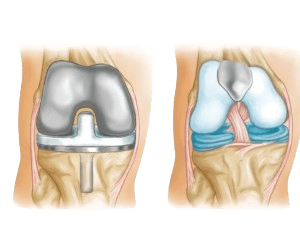
Patellofemoral replacement is a specialized knee surgery that targets damage limited to the front compartment of the knee, specifically between the kneecap and the femur. Instead of replacing the entire joint, only the affected surfaces are resurfaced with prosthetic components. This focused approach helps relieve pain, restore joint alignment, and preserve healthy bone and ligaments, making it an effective option for selected patients with isolated patellofemoral arthritis.
Key Clinical Highlights
- Bone Preserving: Only the damaged compartment is replaced, preserving healthy bone and ligaments.
- Natural Movement: Maintains more natural knee kinematics compared to total knee replacement.
- Faster Recovery: Less invasive approach allows quicker rehabilitation and return to daily activity.
When to Consider
Patellofemoral replacement is considered when knee pain is specifically localized to the front of the knee and is caused by isolated patellofemoral arthritis that does not respond to medications, physiotherapy, or injections. It is especially suitable for patients who experience pain while climbing stairs, squatting, or sitting for long periods. Candidates typically have preserved cartilage in other parts of the knee, stable ligaments, and proper alignment. It is also recommended for younger or moderately active individuals who want to maintain more natural knee movement while delaying or avoiding a full knee replacement. Careful imaging and clinical assessment are essential to confirm that arthritis is limited to the patellofemoral compartment before proceeding.
Targeted Knee Pain Relief
This procedure addresses localized joint damage while preserving overall knee function.
- Pain Reduction: Removes damaged cartilage causing anterior knee pain.
- Joint Preservation: Keeps unaffected compartments intact.
- Improved Function: Enhances movement and stability during daily activities.
Symptoms and Indications
- Front Knee Pain: Pain around the kneecap especially during movement.
- Grinding Sensation: Rough feeling while bending the knee.
- Difficulty Climbing Stairs: Pain worsens with stairs or squatting.
- Swelling: Inflammation around the kneecap area.
Types of Patellofemoral Replacement
Inlay Technique
Implant is fitted within the natural groove of the femur preserving bone structure.
- Custom Fit: Designed to match patient anatomy closely.
- Standard Inlay: Uses predefined implant sizes.
Onlay Technique
Damaged surface is replaced with a prosthetic component placed over the bone.
- Trochlear Resurfacing: Reshapes and replaces the femoral groove.
Pre-Procedure Preparation
- Imaging Tests: X-ray or MRI to confirm isolated damage.
- Medication Review: Adjust medications before surgery.
- Fitness Prep: Strengthening exercises before procedure.
- Fasting: Avoid food prior to surgery.
Treatment Stages
- Pre Arrival (Day 1): Consultation and imaging
- Admission (Week 1): Evaluation and preparation
- Surgery (Week 2): Patellofemoral replacement
- Recovery (Weeks 2-6): Rehabilitation and discharge
Recovery Guidelines
- Early Movement: Start gentle movement soon after surgery.
- Physiotherapy: Structured rehab improves outcomes.
- Pain Control: Use medications as prescribed.
- Weight Management: Maintain healthy weight for joint longevity.
Life After Treatment
- Improved knee function and reduced pain.
- Return to daily activities faster than total knee replacement.
- Better preservation of natural joint movement.
A targeted solution that restores knee comfort while preserving what still works.
Potential Risks
- Implant Wear: Over time the implant may wear requiring revision.
- Progression of Arthritis: Other compartments may develop arthritis later.
- Persistent Pain: Some patients may continue to experience discomfort.
Cost Estimation in India
Estimated procedure package range: $4,000 to $9,000 USD.
Package Inclusions:
- Pre-surgery tests
- Implant and procedure
- Hospital stay
- Surgeon fees
Global Cost Comparison
- USA: $35,000 USD
- UK: $22,000 USD
- Germany: $20,000 USD
- Thailand: $12,000 USD
- India: $7,000 USD