Overview
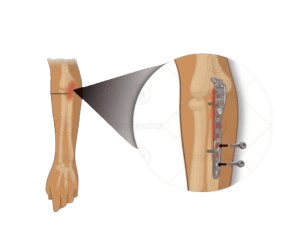
Open reduction of fracture is a surgical procedure used to realign and stabilize broken bones when they cannot be properly corrected using non surgical methods. In this technique, the surgeon makes a precise incision to directly access the fractured bone, reposition it into its normal anatomical alignment, and secure it using internal fixation devices such as plates, screws, or rods. This approach is essential in complex, displaced, or unstable fractures where accurate alignment is critical for proper healing. By restoring bone structure and stability, the procedure helps reduce pain, prevent deformity, and enable early mobilization, ultimately improving long term functional outcomes.
Key Clinical Highlights
- Precise Alignment: Direct visualization allows accurate repositioning of fractured bones.
- Stable Fixation: Implants provide strong support for proper healing and early movement.
- Improved Outcomes: Reduces risk of deformity and enhances long term joint function.
When to Consider
Open reduction is recommended when a fracture is displaced, unstable, involves joint surfaces, or cannot be aligned properly using casting or traction. It is also indicated in cases of multiple fractures, open fractures, or when delayed healing and functional impairment are expected without surgical intervention.
Restore Bone Structure and Function
This procedure ensures proper alignment and healing of complex fractures that cannot be managed conservatively.
- Correct Alignment: Restores normal bone position and anatomy.
- Stable Healing: Provides strong internal support during recovery.
- Prevent Complications: Reduces risk of improper healing or deformity.
Symptoms and Indications
- Severe Pain: Intense pain at fracture site especially with movement.
- Deformity: Visible misalignment or abnormal bone position.
- Swelling and Bruising: Inflammation around the injured area.
- Loss of Function: Inability to move or bear weight on affected limb.
Types of Open Reduction of Fracture
Plate and Screw Fixation
Metal plates and screws are used to stabilize the fracture externally along the bone.
- Compression Plating: Applies pressure to hold bone fragments tightly together.
- Locking Plates: Provides stability in complex or osteoporotic fractures.
Intramedullary Fixation
A rod is inserted inside the bone canal to stabilize long bone fractures.
- Nailing Technique: Commonly used for femur and tibia fractures.
Pre-Procedure Preparation
- Imaging Tests: X-rays or CT scans to assess fracture severity.
- Medical Evaluation: Check overall health and anesthesia fitness.
- Medication Review: Adjust blood thinners or other drugs.
- Fasting: Avoid food before surgery as instructed.
Treatment Stages
- Pre Arrival (Day 1): Consultation and imaging review
- Admission (Week 1): Preoperative tests and preparation
- Surgery (Week 2): Open reduction and fixation
- Recovery (Weeks 3-8): Rehabilitation and follow up
Recovery Guidelines
- Follow Weight Limits: Avoid putting pressure on affected area initially.
- Physiotherapy: Exercises to restore movement and strength.
- Wound Care: Keep surgical site clean and dry.
- Regular Checkups: Monitor healing and implant position.
Life After Treatment
- Gradual return to normal activities with rehabilitation.
- Improved bone stability and alignment.
- Long term recovery depends on fracture severity and care.
Proper surgical fixation restores structure and enables safe and effective bone healing.
Potential Risks
- Infection: Possible at surgical site but manageable with treatment.
- Implant Issues: Rare loosening or irritation from hardware.
- Delayed Healing: Bone may take longer to heal in some cases.
Cost Estimation in India
Estimated procedure package range: $3,000 to $9,000 USD.
Package Inclusions:
- Pre-surgery evaluation
- Surgical procedure and implants
- Hospital stay
- Surgeon fees
Global Cost Comparison
- USA: $25,000 USD
- UK: $18,000 USD
- Germany: $15,000 USD
- Thailand: $9,000 USD
- India: $5,000 USD