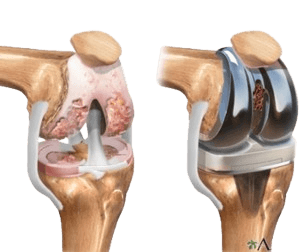
Overview
Knee replacement surgery is a highly effective orthopedic procedure used to treat severe knee joint damage. It involves replacing worn out joint surfaces with artificial components, helping patients regain mobility and achieve long term pain relief.
Key Clinical Highlights
- Precision Surgery: Modern techniques ensure accurate implant placement and better joint alignment for improved outcomes.
- Minimally Invasive Approach: Smaller incision reduces tissue damage, blood loss, and speeds up recovery.
- Enhanced Recovery: Early mobilization protocols allow patients to walk within a short time after surgery.
When to Consider
Knee replacement is considered when persistent knee pain limits daily activities, conservative treatments fail, and imaging confirms significant joint damage or advanced arthritis affecting mobility and quality of life.
Relieve Pain and Restore Function
Knee replacement is essential for patients with severe joint damage to reduce pain and restore normal movement and independence.
- Pain Reduction: Eliminates chronic knee pain caused by cartilage loss.
- Improved Mobility: Restores the ability to walk and perform daily activities comfortably.
- Better Quality of Life: Allows patients to return to active and independent living.
Symptoms and Indications
- Chronic Knee Pain: Persistent pain that worsens with movement and affects daily routine.
- Joint Stiffness: Difficulty bending or straightening the knee joint.
- Swelling: Inflammation around the knee joint causing discomfort.
- Reduced Mobility: Limited ability to walk, climb stairs, or stand for long periods.
Types of Knee Replacement Surgery
Total Knee Replacement
Complete replacement of the knee joint for patients with advanced joint damage affecting all compartments.
- Cemented Implant: Implant fixed using special bone cement for immediate stability.
- Cementless Implant: Implant allows natural bone growth for long term fixation.
Partial Knee Replacement
Replacement of only the damaged portion of the knee while preserving healthy structures.
- Medial Compartment: Focuses on the inner side of the knee where damage is most common.
Pre-Procedure Preparation
- Medical Evaluation: Blood tests and imaging assess joint damage and overall fitness for surgery.
- Medication Adjustment: Doctors review and adjust medications before the procedure.
- Pre Surgery Fasting: Patients avoid food and drink as instructed before surgery.
- Physical Preparation: Strengthening exercises help improve recovery outcomes.
Treatment Stages
- Pre Arrival (Day 1): Consultation and travel planning
- Admission (Week 1): Evaluation and preparation
- Surgery (Week 2): Knee joint replacement procedure
- Recovery (Weeks 3): Physiotherapy and follow up care
Recovery Guidelines
- Early Movement: Start walking with support soon after surgery to improve circulation.
- Physiotherapy: Regular exercises are essential to regain strength and flexibility.
- Avoid Strain: Limit heavy activities during the early healing phase.
- Follow Up Care: Attend regular checkups to monitor healing and implant function.
Life After Treatment
- Most patients regain mobility and resume normal activities within weeks.
- Significant reduction in pain improves daily comfort and independence.
- Consistent physiotherapy ensures long term joint performance.
Knee replacement allows patients to move freely again and live without constant joint pain.
Potential Risks
- Infection: Rare but manageable with early medical treatment.
- Blood Clots: Prevented with medication and early mobilization.
- Implant Wear: May occur over time and rarely require revision surgery.
Cost Estimation in India
Estimated procedure package range: $4,000 to $8,000 USD.
Package Inclusions:
- Pre surgery tests
- Knee replacement procedure
- Hospital stay
- Surgeon fees
Global Cost Comparison
- USA: $40,000 USD
- UK: $25,000 USD
- Germany: $22,000 USD
- Thailand: $12,000 USD
- India: $6,000 USD