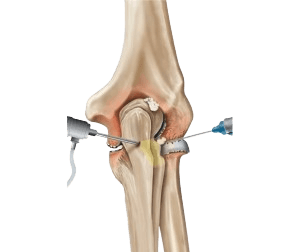
Overview
Elbow arthroscopy is a minimally invasive surgical procedure used to diagnose and treat conditions affecting the elbow joint. A small camera called an arthroscope is inserted through tiny incisions, allowing the surgeon to visualize internal structures and perform precise repairs. This technique helps reduce pain, improve joint mobility, and restore function with less tissue damage compared to traditional open surgery.
Key Clinical Highlights
- Minimally Invasive Precision: Small incisions and camera guidance allow accurate treatment with minimal tissue disruption.
- Faster Recovery: Reduced trauma leads to quicker rehabilitation and early return to daily activities.
- Comprehensive Joint Access: Enables treatment of multiple joint conditions in a single procedure.
When to Consider
Elbow arthroscopy is recommended when patients experience chronic elbow pain, stiffness, limited range of motion, or mechanical symptoms such as locking or clicking that do not improve with medication or physical therapy. It is particularly useful in cases of loose bone fragments, cartilage damage, tennis elbow resistant to treatment, arthritis, or post-traumatic joint issues affecting daily function or athletic performance.
Restore Joint Function and Reduce Pain
Elbow arthroscopy addresses underlying joint problems that limit mobility and cause persistent discomfort.
- Pain Relief: Removes inflamed tissue and loose fragments causing irritation.
- Improved Mobility: Releases stiffness and restores range of motion.
- Targeted Treatment: Directly treats the root cause without affecting surrounding structures.
Symptoms and Indications
- Chronic Elbow Pain: Persistent discomfort that does not improve with rest or medication.
- Joint Stiffness: Limited ability to bend or extend the elbow.
- Locking or Clicking: Mechanical symptoms caused by loose bodies in the joint.
- Swelling: Inflammation around the elbow joint affecting movement.
Types of Elbow Arthroscopy
Diagnostic Arthroscopy
Used to evaluate unexplained elbow pain and identify internal joint abnormalities.
- Basic Joint Inspection: Visualization of cartilage, ligaments, and synovial lining.
- Targeted Assessment: Focused examination of suspected damaged areas.
Therapeutic Arthroscopy
Performed to treat confirmed joint conditions and restore function.
- Debridement and Repair: Removal of loose bodies and repair of damaged cartilage or soft tissues.
Pre-Procedure Preparation
- Imaging Tests: X-rays or MRI scans to assess joint condition.
- Medication Review: Adjust blood thinners or anti-inflammatory drugs.
- Fasting: Avoid food before anesthesia.
- Physical Assessment: Evaluate joint mobility and overall health.
Treatment Stages
- Pre Arrival (Day 1): Consultation and imaging evaluation
- Admission (Week 1): Pre-operative tests and preparation
- Procedure (Week 2): Elbow arthroscopy surgery
- Recovery (Weeks 3-6): Physiotherapy and follow-up
Recovery Guidelines
- Early Movement: Start gentle exercises to prevent stiffness.
- Physiotherapy: Structured rehab improves strength and flexibility.
- Ice Therapy: Reduces swelling and discomfort after surgery.
- Activity Control: Avoid heavy lifting during initial recovery phase.
Life After Treatment
- Most patients regain improved joint function within weeks.
- Reduced pain allows return to normal daily activities.
- Rehabilitation ensures long-term joint stability and strength.
Elbow arthroscopy offers precise treatment that restores movement while minimizing surgical impact.
Potential Risks
- Infection: Rare but possible at incision sites, usually manageable.
- Nerve Irritation: Temporary numbness due to proximity of nerves around the elbow.
- Stiffness: May occur if rehabilitation is delayed or incomplete.
Cost Estimation in India
Estimated procedure package range: $3,000 to $7,000 USD.
Package Inclusions:
- Pre-surgery tests
- Elbow arthroscopy procedure
- Hospital stay
- Surgeon fees
Global Cost Comparison
- USA: $20,000 USD
- UK: $15,000 USD
- Germany: $12,000 USD
- Thailand: $8,000 USD
- India: $5,000 USD