Overview
Rhizotomy is a minimally invasive procedure that is performed to kill the nerve fibres and remove painful nerves that send pain signals to the brain. The nerve fibres can be finished and destroyed by cutting off with a surgical instrument or burning them with a chemical or electrical current. Rhizotomy is proven to give instant relief from pain that can be long lasting for years until the nerves recover and are able to send pain signals again.
Rhizotomy- neurotomy also known as ablation or neurotomy, these terms are used to describe the removal or destroying of tissue that is causing pain.
Types of rhizotomy
There are different types of rhizotomy that include removal or destroying of the fibres within a nerve that is a cause of pain signals. Rhizotomies are performed according to the location of the nerve, on the basis of nerve location, general or local anesthesia or sometimes used X-ray or another imaging technique to ensure precision.
- Glycerin/glycerol rhizotomy: Surgeon uses a needle to induce a small amount of chemical to the location and root of the affected nerve. The chemical destroys the pain fibres in the nerve over the treatment of around 45-60 minutes.
- Radiofrequency rhizotomy: This type of rhizotomy also known as radiofrequency ablation is almost like the glycerin rhizotomy but the difference is inducing chemical instead of using chemical to destroy the nerve fibers, a radiofrequency current is used to destroy and burn the fibres. This type of rhizotomy process is performed on the patient who does not get relief from glycerin or those who have frequent pain.
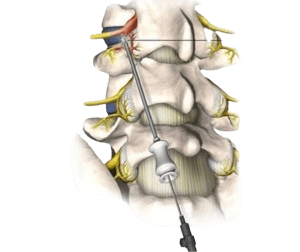
- Endoscopic rhizotomy: With endoscopic rhizotomy, this process is done under a camera attached device known as endoscope to find out the exact place of the nerve that affected and sever its fibers. A small incision is made, to insert the endoscope through a series of tubes called a tubular retractor system. This helps the surgeon to get the nerve while protecting the healthy organs and tissues.
Risks and side effects of rhizotomy
The risk of rhizotomy depends and varies upon the type of procedure and on which nerve it is being performed:
Glycerin/glycerol rhizotomy risks include:
- Bleeding
- Infection
- Nausea
- Vomiting
- Risk of sensory change
- Numbness
- Side effects of anesthesia
Risk associated with radiofrequency rhizotomy include:
- Risk of sensory change
- Numbness
Conditions under rhizotomy
Rhizotomy treats different types of pain and abnormal nerve conditions some of them include:
- Pain in joints like hip and knee that may lead to arthritis.
- Trigeminal neuralgia is a facial pain that is caused due to irritation of the trigeminal nerve.
- Conditions that are affecting the peripheral nerves
- Conditions of arthritis, herniated discs, spinal stenosis and other degenerative spine conditions that are the reason for back and neck pain.
- The procedure for such issues is called facet rhizotomy.
Understanding who needs radiofrequency neurotomy
The person experiencing facet joint syndrome that increases with age, there can be other causes for this condition. The doctor may recommend radiofrequency neurotomy in India treatment when surgery is not the option to relieve pain. Some of the factors that influence the procedure include:
- Pain in both or the single side of the back.
- Pain extends from thighs and buttocks as sciatica.
- Unable to lift anything due to severe pain.
- Pain becomes better when lying down
- Multiple concurrent spinal conditions.
Cost of radiofrequency neurotomy in India
The cost of radiofrequency neurotomy in India is affordable and cost effective, and serves better facilities than western nations. No doubt India is among those who are providing best medical care and services and that too at most affordable as cheap rates.
However, the overall cost of the treatment may vary depending on several factors. These factors include the surgeon’s expertise, the type of implant, the location of the hospital, and more.
Summary
Rhizotomy is a minimally invasive procedure that is performed to kill the nerve fibres and remove painful nerves that send pain signals to the brain. Rhizotomy is proven to give instant relief from pain that can be long lasting for years until the nerves recover and are able to send pain signals again.
There are different types of rhizotomy that include removal or destroying of the fibres within a nerve that is a cause of pain signals.