Overview
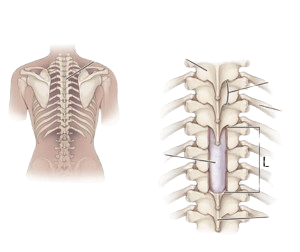
A laminectomy is a surgical procedure performed on the spine to remove the lamina. The bony arch or lamina helps to support and protect the back part of the spinal cord on the vertebrae. Removal of lamina relieves pressure on the nerves and spinal cord by making more space on the spinal cord.
A laminectomy is performed in the lower spine that is lumbar laminectomy for spine, this is helpful in identifying the cause of nerve pain. This procedure is helpful in treating pain that is developed in the neck or in the middle of the back.
Understand the conditions that laminectomy treat
Some specific conditions are treated with laminectomy, conditions that decompress or reduce pressure on the nerves. Conditions that are treated by laminectomy include:
- Arthritis
- Bone fracture
- Bone spurs
- Degenerative back conditions
- Herniated disk
- Spinal tumor or Abscesses
- Spinal stenosis
Some of the other conditions that are necessary to treat under laminectomy include:
- Neck, shoulder or back pain
- Weakness or numbness in the arms or legs
- Bowel or bladder problems
- Surgery can be a better decision if the symptoms don't relieve non-surgical treatments
Procedure to treat laminectomy
- Before starting the procedure, the patient is given general anaesthesia, this will help the patient feel no pain during the surgery.
- The patient will lie face down on special pads to protect the front part of the body, as the surgery is performed on the back part of the spine.
- The surgeon makes an incision in the back or neck.
- The doctor will separate the skin, ligaments and muscles to get the direct access of the spine.
- A microscope which is made for surgery gets a close look at the bone or area of the affected spine.
- The surgeon may remove all parts or some part of the lamina, along with damaged disc, bone growth or soft tissue.
- If needed they might make more room for the nerves or join the spine bones together to keep them stable.
- Perform the foraminotomy or spinal fusion in case needed.
- They place back the muscles, ligaments and skin back.
- Sew or stitch the skin closed.
Risk of lumbar laminectomy for spine
Here are some possible risks of laminectomy include:
- Infection
- Nerve damage
- Little or no pain relief after surgery
- Back pain has a chance to return
- Bleeding
- Headaches
- Blood clots
- Bowel or bladder problems
A laminectomy in India with spinal fusion has higher chances of future spine problems that may require more surgery.
This surgery may not have permanent cure or solve the underlying cause of the pain in some cases like spinal tissues wearing down.
Benefits of lumbar laminectomy for spine
A laminectomy can have several benefits that includes:
- Relieve from pain symptoms
- Relieve the conditions that affect the nerves and spinal column
- Sometimes a minimally invasive procedure can be wonderful option
- Faster recovery
- Reduce recovery time
Diagnostic tests for laminectomy
Surgeons will have some diagnostic tests to see the condition of the laminectomy. This will also know about symptoms and previous medical history. These tests include:
- An X- rays
- An MRI
- A myelogram
Cost of lumbar laminectomy for spine in India
The cost of lumbar laminectomy for spine in India is affordable and cost effective compared to other nations. In fact, India is a hub of medical treatments that is serving not only its own nation but also the patients coming from western nations too.
However, the overall cost of the treatment may vary depending on several factors. These factors include the surgeon’s expertise, the type of implant, the location of the hospital, and more.
Summary
A laminectomy is a surgical procedure performed on the spine to remove the lamina. The bony arch or lamina helps to support and protect the back part of the spinal cord on the vertebrae.
Some specific conditions are treated with laminectomy, conditions that decompress or reduce pressure on the nerves.