Overview
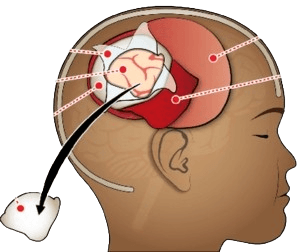
A craniotomy is a surgery that gives access to the brain; in fact, the surgery is performed to remove a piece of skull to get proper access to the brain. Furthermore, the surgery is performed under the top neurosurgeon in India, and during the same surgery, the surgeon re-applies the piece of skull.
In addition, a craniotomy is a major surgery. Moreover, this type of condition is usually diagnosed during the treatment of a brain tumor or some type of traumatic brain injury.
Understanding the difference between craniotomy and craniectomy
Craniotomy and craniectomy are both types of brain surgery, but they are performed with different procedures.
A craniotomy in India, for instance, is a surgical procedure that removes and replaces a piece of the skull to gain access to the brain. On the other hand, a craniectomy is a surgical procedure that removes a piece of the skull, but unlike a craniotomy, the removed piece of skull is not immediately replaced after surgery. Instead, a separate surgery called cranioplasty is performed later to replace the missing part of the skull.
Understanding the conditions that craniotomy treat
Some of the conditions that craniotomy treats include:
- A tumor
- A blood clot
- Abnormal collection of blood vessels ( vascular malformations)
- Tangled blood vessels (arteriovenous malformation)
- A skull fracture
- Aneurysm ( an artery enlargement)
- Swelling or pressure in the brain
- Epilepsy
Types of craniotomy
Generally there are several types of craniotomy procedures. The name of the craniotomy is related to the location where the surgeon will remove the piece of skull to access the brain. Some of the types of craniotomy surgery include:
- Frontal: This is the front side of the skull near the hairline.
- Temporal: This is a place next to the eyes and in front of the ear.
- Parietal: The top middle and upper back of the skull.
- Orbitozygomatic: This area is the part of the skull near the eye socket and cheek.
- Retrosigmoid: A very small incision is made in the part of the skull behind the ear.
- Suboccipital: It is the main base of the skull above the neck.
Surgical procedure to perform craniotomy
- The patient is given anesthesia before making any incision. This helps the patient be in a deep sleep state and not be able to feel any pain during the procedure.
- A surgical team will help the patient to adjust the head and body accordingly so there is no pressure at any point.
- The shaving of hair near the incision site is the second step of the procedure. Then the incision site is sterilized to kill the germs and avoid the risk of infection.
- Then the incision is made to open the skin.
- The location of the craniotomy depends upon the types of craniotomy that has to be performed.
- Then the surgeon will move the muscles to get the access.
- After that, the surgeon will drill some holes and cut in between each hole with a medical saw to remove a piece of skull.
- Later, the surgical team will place a surgical instrument so that the same piece of the skull can be used to close the skull after completing the surgery.
Advantages of craniotomy surgery
Benefits and advantages vary based on the reason and types of surgery. The main advantage of the surgery is the cause of surgery. Some of the common benefits and causes of craniotomy surgery include:
- Removing a tumor
- Repairing blood vessels, bones, or parts of the brain
- Treating underlying conditions.
Risk of the craniotomy surgery
Some of the common risks of craniotomy surgery include:
- Bleeding
- Pain
- Hematoma
- Seizures
- Stroke
- Coma
- Hydrocephalus
- Infection
- Headache
Cost of the craniotomy surgery in India
The cost of the craniotomy surgery in India is affordable and cost effective without compromising the quality of the treatment.
India is a hub of medical treatment with experienced skilled surgeons. Even the staff of the reputed hospitals are not only well trained but also multilingual that help to avoid language barriers and give transparent communication.
Summary
A craniotomy is a surgery that gives access to the brain; in fact, the surgery is performed to remove a piece of skull to get proper access to the brain.
Craniotomy and craniectomy are both types of brain surgery, but they are performed with different procedures. That is discussed in the above article.