Overview
A carotid endarterectomy is a surgical procedure that involves the treatment of carotid artery disease. The carotid arteries, in fact, are one of the main blood vessels that transfer oxygen and blood to the brain. When these arteries become narrowed, it reduces the blood flow to the brain, which can eventually lead to a stroke.
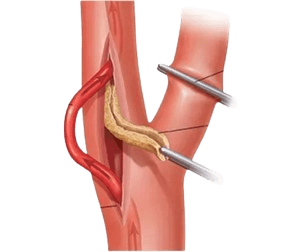
During a carotid endarterectomy, using a surgical approach, the surgeon removes plaque that has formed inside the carotid artery. This is done by making an incision on the side of the neck over the affected carotid artery. After opening the artery, the plaque is carefully removed. Once the plaque is removed, the artery is stitched back as before. This procedure helps restore the normal flow of blood to the brain.
It is important to note that this procedure is performed under general anesthesia, although the patient is not completely in a sleep state.
Risk and complications of a carotid endarterectomy
Some of the possible risks of carotid endarterectomy include:
- Heart attack
- Stroke or TIS
- Accumulation of blood in the tissue surrounding the incision site that results in swelling.
- Nerve problems with some certain functions of the eyes, nose, tongue or ears
- Bleeding into the brain (intracerebral hemorrhage)
- Bleeding the at site of incision on the neck
- Repeated blockage of the carotid
- New blockage that forms in the artery on the opposite side of the neck
- Seizures (rare)
- Infection
- High blood pressure
- Abnormal heartbeat
It is important to tell everything about the past medical history or if the patient is allergic to any medicine. There may be other risks that depend on health conditions.
Carotid Artery Disease: A Key Factor in Stroke and Brain Health
Atherosclerosis is the main cause of narrowing the carotid arteries. In the inner lining of the artery, a development of plaque is formed. Plaque develops due to fatty substances such as cholesterol, cellular waste products, calcium, and fibrin. Another name for atherosclerosis is hardening of the arteries. This condition can have a severe impact throughout the body. Carotid artery disease is similar to coronary artery disease; however, the only difference is that in coronary artery disease, blockage forms in the arteries of the heart and may cause a heart attack. On the other hand, in the brain, the blockage can lead to a stroke.
The brain, in fact, constantly needs a supply of blood and oxygen to work in proper rhythm. Even a small break in blood supply can cause serious problems. If the blood supply stops for any reason, the brain cells start to die after just a few minutes of lack of blood or oxygen.
A stroke may occur due to the blockage of blood flow, either when the carotid arteries become narrow or when a piece of plaque breaks off and blocks the blood flow to the brain.
Cost of carotid endarterectomy in India
The cost of carotid endarterectomy in India is affordable and cheaper than in other nations. Indeed, India provides cost-effective medical care to all patients coming from other countries, without compromising the quality of treatment.
Furthermore, India has a vast number of skilled and experienced healthcare professionals. India is among the top leading countries providing the best medical facilities.
However, the total cost of the treatment may vary depending on various factors, such as the choice of hospital, the length of stay at the hospital, the expertise of the surgeon, the type of surgery, the components used in the surgery, and more.
Summary
A carotid endarterectomy is a surgical procedure that involves the treatment of carotid artery disease. The carotid arteries, in fact, are one of the main blood vessels that transfer oxygen and blood to the brain.
During a carotid endarterectomy, using a surgical approach, the surgeon removes plaque that has formed inside the carotid artery.