Overview
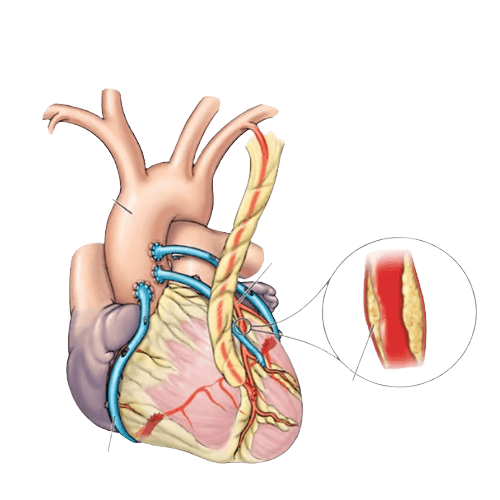
Coronary Artery Bypass Surgery (CABG) is one of the most common and effective treatments for patients suffering from severe coronary artery disease (CAD). When the coronary arteries become blocked or narrowed due to plaque buildup, blood flow to the heart muscle decreases, which can lead to chest pain, shortness of breath, or even a heart attack. CABG helps restore normal blood flow by creating a new pathway for blood to reach the heart.
At CureU Healthcare, we connect patients with world-class cardiac surgeons and hospitals in India that specialize in CABG, ensuring affordable and advanced care for both domestic and international patients.
What is Coronary Artery Bypass Surgery (CABG)?
CABG, also called heart bypass surgery, is a surgical procedure in which a surgeon uses a healthy blood vessel from another part of the body — such as the leg, arm, or chest — to bypass the blocked coronary artery. This new graft allows oxygen-rich blood to flow freely to the heart muscle, reducing symptoms and preventing life-threatening complications.
Unlike stenting or angioplasty, which are minimally invasive, CABG is an open-heart surgery performed when blockages are too severe or multiple arteries are affected.
When is CABG Recommended?
Doctors usually recommend CABG when:
- The patient has severe narrowing or blockage in one or more coronary arteries.
- Multiple arteries are blocked (multivessel disease).
- Angioplasty or stenting has failed or is not suitable.
- The patient suffers from serious chest pain (angina) or shortness of breath.
- There is a high risk of heart attack or cardiac arrest without surgery.
How is CABG Performed?
Coronary artery bypass surgery is typically performed under general anesthesia and may last 3–6 hours depending on the number of grafts required.
- Anesthesia and preparation: The patient is put under general anesthesia.
- Incision: A cut is made in the chest to access the heart.
- Heart-lung machine (if used): The heart may be temporarily stopped while a machine maintains circulation.
- Graft placement: A vein or artery (commonly the saphenous vein from the leg or the internal mammary artery from the chest) is used to bypass the blocked artery.
- Completion: Once all grafts are placed, blood flow is restored, and the chest is closed.
Benefits of CABG
CABG offers several life-saving benefits:
- Restores blood flow to the heart muscle.
- Reduces chest pain and improves breathing.
- Prevents heart attacks and improves survival rates.
- Enhances quality of life and energy levels.
- Long-lasting results, especially when combined with healthy lifestyle changes.
Risks and Complications
Like any major surgery, CABG carries certain risks, including:
- Infection at the incision site.
- Bleeding or blood clots.
- Irregular heart rhythms (arrhythmias).
- Stroke or heart attack (rare).
- Kidney complications.
Recovery After CABG
Recovery from coronary artery bypass surgery usually takes 6–12 weeks. Patients often spend 5–7 days in the hospital, with the first few days in the intensive care unit (ICU).
Why Choose CureU Healthcare for CABG in India?
At CureU Healthcare, we ensure patients receive:
- Treatment at top cardiac hospitals in India with advanced facilities.
- Experienced cardiac surgeons specializing in complex CABG cases.
- Affordable treatment packages for international patients.
- Personalized patient support, including pre-surgery counseling and post-surgery care.
- Comprehensive travel and medical assistance for foreign patients.
Conclusion
Coronary Artery Bypass Surgery (CABG) is a proven, life-saving treatment for individuals with severe coronary artery disease. By restoring blood flow to the heart, CABG not only relieves symptoms but also improves long-term survival and quality of life. At CureU Healthcare, we are committed to helping patients access the best CABG treatment in India with expert care and advanced technology.