Overview
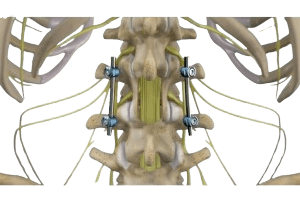
Posterior lumbar interbody fusion (PLIF) surgery involves inserting artificial elements like grafts, cages, screws, and rods and removing the damaged discs that cause pain. These elements help to stabilize the spine and aid fusion. Moreover, this surgery aims to treat severe lower back pain. This happens when the intervertebral disc puts pressure on the spinal nerves. Additionally, grafts help to join the vertebrae.
The main cause of leg pain and lower back pain is when the intervertebral disc disconnects from the vertebrae or is damaged or worn out. Consequently, this can create pain. These discs put pressure on the spinal nerve and cause pain.
Reason to perform PLIF surgery
These are the reasons use PLIF to treat:
- Spondylolisthesis
- Degenerative disk disease
- Spinal stenosis
- Recurring herniated disks
- Spinal condition like scoliosis
PLIF Surgery: A Solution for Persistent Leg and Lower Back Pain
PLIF surgery in India is a common treatment for patients suffering from persistent leg pain. Additionally, this surgery is recommended for lower back pain. However, PLIF surgery is only advisable if other non-surgical treatments and physical therapy fail to provide relief.
Furthermore, this surgery is performed as an open surgery, which means the surgeon makes a large incision to complete the procedure.
Surgical procedure to perform PLIF
On the day of surgery, the patient will receive anesthesia. The type of anesthesia should be decided by the anesthesiologist. It depends upon what you expect to recover from. The anesthesia helps to put the patient in a deep sleep state that helps to feel no pain during the surgery.
- The surgeon makes an incision in the lower back.
- Then they separate muscles to get better access to the spine by using surgical elements.
- Removing a portion of bone known as lamina, pulling back the membrane that is adjacent to your spinal cord, this helps in removing the damaged disk or disks.
- Placing the bone graft into the spacer that will keep the graft in place. This spacer works as a support system.
- Inserting the screws to hold the spacer in place.
- Revealing the back muscle so that it can set into place.
- Lastly closing the incision.
- Top orthopedic hospital in India gives all the facilities of grafting and surgeries under one roof.
Risk associated with PLIF
Some of the common risks of PLIF surgery include:
- Infection
- Bleeding
- Damage to nerve
- Nerve root injury such as dural tear and spinal fluid leak
- Epidural fibrosis
- Degeneration in the surrounding spinal segment
- Damage to back muscles
Activities to Avoid in the Initial Weeks After Surgery
Activities should be avoiding for initial weeks such as:
- Bending at the waist
- Twisting torso
- Driving that puts pressure on the surgical area.
- Lifting anything heavy
Activities avoided after a month of surgery include:
- Driving even if you have stopped prescribed pain killers.
- Long car drives or even sitting for a long time can put pressure on the lower leg and hip area.
- Bending and twisting
- Lifting anything more than 10 pounds.
Cost of Posterior lumbar interbody fusion (PLIF) surgery
Cost of Posterior lumbar interbody fusion (PLIF) in India offers affordable and reasonable medical care compared to other Western nations. It is among the leading countries providing the best medical care for international patients.
Top orthopedic hospitals in India offer cost-effective treatment with advanced technology to ensure the best possible care.
The total cost of treatment depends on various factors, including:
- Reputation of the hospital
- Choice of the surgeon
- Expertise of the doctor
- Type of procedure and facilities provided
Providing the facilities and service at the most reasonable fare makes it a more prominent and promising country.
Summary
Posterior lumbar interbody fusion (PLIF) surgery involves inserting artificial elements like grafts, cages, screws, and rods and removing the damaged discs that cause pain.
PLIF surgery is a common treatment for patients suffering from persistent leg pain. Additionally, this surgery is recommended for lower back pain.

B.U.M.S, M.D. (NAT) | Reg No. 9153 | Ex. Secretary & Treasurer, N.I.M.A.
Qualified healthcare professional in Unani and Naturopathic medicine with deep expertise in traditional healthcare systems, patient-centered clinical care, and medical content review.