
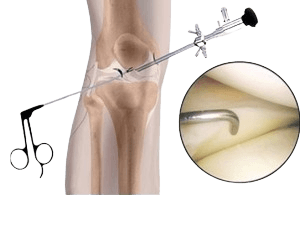
Overview
Knee arthroscopy is a minimally invasive surgical procedure used to diagnose and treat a wide range of conditions affecting the knee joint. It involves inserting a small camera called an arthroscope through tiny incisions, allowing the surgeon to view the internal structures of the knee in high detail. This technique is commonly used to manage ligament injuries, cartilage damage, meniscal tears, and inflammation. By avoiding large incisions, knee arthroscopy reduces tissue trauma, minimizes pain, and promotes faster recovery while restoring joint function effectively.
Key Clinical Highlights
- High Precision Visualization: Arthroscope provides real time detailed view of joint structures for accurate diagnosis and treatment.
- Minimally Invasive Approach: Small incisions reduce tissue damage, pain, and risk of complications.
- Faster Rehabilitation: Shorter recovery period allows early return to daily activities and sports.
When to Consider
Knee arthroscopy is recommended when patients experience persistent knee pain, swelling, instability, or mechanical symptoms such as locking or clicking that do not improve with conservative treatments like medication or physiotherapy. It is commonly considered in cases of meniscus tears, ligament injuries, cartilage damage, synovitis, or presence of loose fragments within the joint that interfere with normal knee function and mobility.
Restore Knee Function and Reduce Pain
Knee arthroscopy addresses internal joint problems to relieve symptoms and improve mobility.
- Accurate Diagnosis: Direct visualization ensures precise identification of joint issues.
- Targeted Treatment: Treats the exact cause of pain without unnecessary tissue disruption.
- Improved Mobility: Helps restore normal knee movement and flexibility.
Symptoms and Indications
- Persistent Knee Pain: Ongoing discomfort not relieved by rest or medication.
- Swelling: Recurrent fluid buildup within the knee joint.
- Joint Locking: Episodes where the knee gets stuck or cannot move freely.
- Instability: Feeling of knee giving way during movement.
Types of Knee Arthroscopy
Diagnostic Arthroscopy
Used to examine internal knee structures and confirm diagnosis.
- Visual Inspection: Direct assessment of cartilage, ligaments, and meniscus.
- Targeted Exploration: Focused evaluation of suspected problem areas.
Therapeutic Arthroscopy
Performed to treat identified knee conditions during the same procedure.
- Meniscus Treatment: Repair or removal of torn meniscal tissue.
Pre-Procedure Preparation
- Imaging Tests: MRI or X ray to evaluate internal structures.
- Medication Review: Adjust medications before surgery.
- Fasting: Avoid eating before the procedure.
- Physical Assessment: Check strength and joint condition.
Treatment Stages
- Pre Arrival (Day 1): Consultation and imaging
- Admission (Week 1): Evaluation and preparation
- Procedure (Week 2): Arthroscopic surgery
- Recovery (Weeks 2-6): Rehabilitation and follow up
Recovery Guidelines
- Physiotherapy: Essential for restoring strength and mobility.
- Rest and Elevation: Reduces swelling and discomfort.
- Cold Packs: Helps control inflammation post surgery.
- Gradual Activity: Return to normal routine step by step.
Life After Treatment
- Reduced pain and improved joint function.
- Faster return to daily activities.
- Better long term knee performance with rehab.
Knee arthroscopy offers a precise and effective solution for restoring joint health with minimal disruption.
Potential Risks
- Infection: Rare but possible at incision sites.
- Blood Clots: Low risk but monitored after surgery.
- Joint Stiffness: May occur without proper rehabilitation.
Cost Estimation in India
Estimated procedure package range: $3,000 to $7,000 USD.
Package Inclusions:
- Pre-surgery tests
- Arthroscopic procedure
- Hospital stay
- Surgeon fees
Global Cost Comparison
- USA: $20,000 USD
- UK: $15,000 USD
- Germany: $12,000 USD
- Thailand: $8,000 USD
- India: $5,000 USD

B.U.M.S, M.D. (NAT) | Reg No. 9153 | Ex. Secretary & Treasurer, N.I.M.A.
Qualified healthcare professional in Unani and Naturopathic medicine with deep expertise in traditional healthcare systems, patient-centered clinical care, and medical content review.