Overview
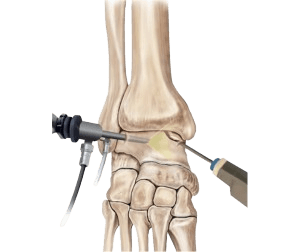
Ankle arthroscopy is a minimally invasive surgical procedure used to diagnose and treat disorders inside the ankle joint. It involves inserting a small camera through tiny incisions to visualize and repair damaged tissues, helping reduce pain, restore mobility, and improve joint function.
Key Clinical Highlights
- Minimally Invasive: Small incisions reduce tissue damage, pain, and recovery time compared to open surgery.
- Accurate Diagnosis: Direct visualization allows precise identification and treatment of joint problems.
- Faster Recovery: Patients recover quicker with less downtime and earlier return to activity.
When to Consider
Ankle arthroscopy is recommended when patients experience chronic ankle pain, swelling, stiffness, or locking that does not improve with medication or physiotherapy. It is commonly advised for conditions such as cartilage damage, loose fragments, impingement syndromes, synovitis, or post injury complications affecting joint movement.
Restore Joint Function and Relieve Pain
Ankle arthroscopy helps treat internal joint damage that causes pain and limits movement.
- Pain Relief: Removes damaged tissue causing chronic discomfort.
- Improved Mobility: Restores normal joint movement and flexibility.
- Targeted Treatment: Addresses specific joint problems with precision.
Symptoms and Indications
- Persistent Ankle Pain: Ongoing pain that does not improve with rest or medication.
- Joint Stiffness: Difficulty moving or bending the ankle normally.
- Swelling: Inflammation around the ankle joint after activity.
- Locking or Instability: Feeling of the ankle catching or giving way.
Types of Ankle Arthroscopy
Anterior Arthroscopy
Performed through the front of the ankle to treat impingement and cartilage lesions.
- Standard Approach: Commonly used for most ankle conditions.
- Extended Access: Provides wider visualization for complex cases.
Posterior Arthroscopy
Performed from the back of the ankle for deeper joint issues.
- Standard Posterior: Used for posterior impingement and tendon problems.
Pre-Procedure Preparation
- Imaging Tests: MRI or X-ray to assess joint damage.
- Medication Review: Adjust medications before surgery.
- Fasting: Avoid food before procedure.
- Physical Prep: Strengthening exercises before surgery.
Treatment Stages
- Pre Arrival (Day 1): Consultation and planning
- Admission (Week 1): Evaluation and preparation
- Procedure (Week 2): Arthroscopic surgery
- Recovery (Weeks 3-6): Rehabilitation and follow up
Recovery Guidelines
- Use Support: Crutches or brace may be needed initially.
- Physiotherapy: Exercises improve strength and mobility.
- Rest and Elevation: Reduce swelling and promote healing.
- Gradual Activity: Return to normal activity slowly.
Life After Treatment
- Patients return to daily activities within weeks.
- Improved joint movement and reduced pain.
- Sports activity resumes after proper rehabilitation.
Minimally invasive treatment restores ankle function with faster recovery and lasting results.
Potential Risks
- Infection: Rare but possible at incision sites.
- Nerve Injury: Temporary numbness or tingling may occur.
- Blood Clots: Uncommon but monitored after surgery.
Cost Estimation in India
Estimated procedure package range: $3,000 to $7,000 USD.
Package Inclusions:
- Pre-surgery tests
- Arthroscopy procedure
- Hospital stay
- Surgeon fees
Global Cost Comparison
- USA: $20,000 USD
- UK: $15,000 USD
- Germany: $12,000 USD
- Thailand: $8,000 USD
- India: $5,000 USD

B.U.M.S, M.D. (NAT) | Reg No. 9153 | Ex. Secretary & Treasurer, N.I.M.A.
Qualified healthcare professional in Unani and Naturopathic medicine with deep expertise in traditional healthcare systems, patient-centered clinical care, and medical content review.