Overview
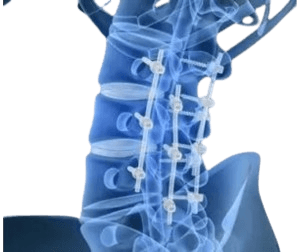
To start with, spine fusion surgery is a procedure that connects two or more vertebrae in the spine permanently and also stops movement to make the spine stabilize. In general, spinal fusion surgery aims to heal the process of broken bones.
Moreover, fusion surgery is one of the best treatments for the patient with serious spondylolisthesis, degenerative disc disease or nerve compression with low back pain. In some cases, the instability in the spine can be due to traumatic injury or accident. Additionally, another cause might be the spinal decompression procedure that has created spinal instability by removing bone, disc, soft tissue that needs a spinal fusion surgery.
Typically, surgical intervention includes instrument and fusion. Specifically, instrumentation leads to devices such as cages, metal plates, screws, and rods that are useful in holding the vertebrae together so that it heals and becomes solid together. Meanwhile, fusion involves autograft or allograft that is covered into or around instrumentation.
Spinal decompression surgery
Spinal decompression surgery is a surgical intervention that performs to relieve symptoms caused by pressure on the spinal cord and on the nerve roots. Bulging or collapsed disks, arthritic facet joints, thickened ligaments, and bony growths known as spurs can lead you to narrow the spinal canal and the spinal nerve opening, that may be a reason for irritation. Spinal decompression surgery can be performed either alone or in combination with spinal fusion.
Symptoms of spinal nerve compression
Some of the known symptoms of spinal nerve compression include:
- Pain
- Numbness
- Tingling
- Weakness
- Unsteadiness
Some of the serious cases of accidents and trauma that lead to pressure on the spinal nerve can cause paralysis and problems with the bladder and bowel function.
Treatment for spinal decompression and fusion
- Spinal decompression: Spinal decompression surgery is recommended when other non surgical and conservative therapies fail to relieve. In the case of injection of epidural steroids, drugs are not enough for the treatment, surgical decompression is performed for a spine for bulging or broken disks. In this procedure the surgeon makes a small cut called incision over the affected area of the spine and extracts the area that is misaligned and the nerve root is compressed that too without passing through any tissue or muscle.
- Spinal fusion: Spinal fusion is a procedure performed on the patients who experience back pain, here also spinal fusion is only recommended when other non surgical treatments fail to relieve the pain symptoms. -br Spinal fusion is considered for other treatments such as herniated disks and degenerative disk orders as well as it is performed together with minimally invasive procedures such as anterior lumbar interbody fusion (ALIF). Spinal fusion is capable of correcting various spinal disorders like narrowing of the spinal canal, spinal compression and fractures.
Risks and complications spinal fusion surgery
Some of the common risks of spinal fusion surgery include:
- Infection
- Bleeding
- Pain
- Side effects of anesthesia
- Healing issues of wound
- Nerve pain
- Muscle weakness
- Paralysis
- Reduce movement ability
Cost of spinal decompression and fusion in India
The cost of spinal decompression and fusion in India is affordable and cost effective that too without compromising on the quality of the treatment, the cost is lower than other western nations.
However, the overall cost of the treatment may vary depending on several factors. These factors include the surgeon’s expertise, the type of implant, the location of the hospital, and more.
Summary
To start with, spine fusion surgery is a procedure that connects two or more vertebrae in the spine permanently and also stops movement to make the spine stabilize.
Additionally, another cause might be the spinal decompression procedure that has created spinal instability by removing bone, disc, soft tissue that needs a spinal fusion surgery.

B.U.M.S, M.D. (NAT) | Reg No. 9153 | Ex. Secretary & Treasurer, N.I.M.A.
Qualified healthcare professional in Unani and Naturopathic medicine with deep expertise in traditional healthcare systems, patient-centered clinical care, and medical content review.