Overview
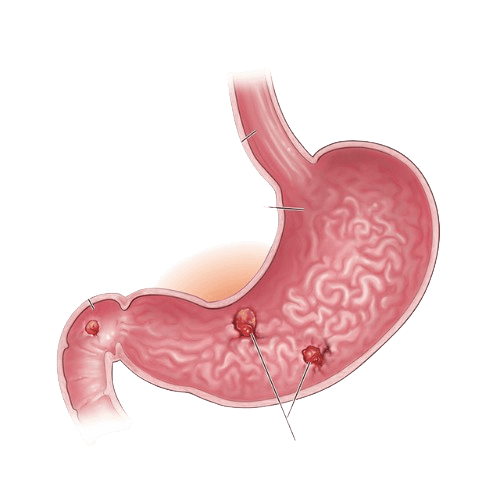
A peptic ulcer forms when acid and digestive enzymes erode the stomach or duodenal lining.
It’s often linked to H. pylori infection or NSAID use.
Overview And Clinical Background
Peptic ulcers arise from an imbalance between protective mucus and digestive acids.
They’re common yet easily treatable.
- Main causes:: Helicobacter pylori infection and NSAIDs.
- Stress and smoking worsen the risk.
- Sites:: Occur in stomach (gastric) or duodenum.
Symptoms, Signs And Presentation
Ulcers cause burning pain in the upper abdomen.
Symptoms may come and go.
- Common symptom:: Gnawing pain relieved by food or antacids.
- Nausea, bloating, and indigestion.
- Red flag:: Vomiting blood or black stools indicates bleeding.
Diagnosis Methods And Investigations
Endoscopy and Tests
Diagnosis includes endoscopy, breath tests, and stool antigen tests.
Imaging may help rule out perforation.
- Endoscopy:: Directly visualizes ulcer location and severity.
- H. pylori test:: Confirms bacterial cause.
- X-ray with contrast for complications.
Treatment Options And Surgical Techniques
Treatment heals the lining and eliminates infection.
Surgery is rare but may be required for complications.
- Conservative:: Diet modification and avoiding NSAIDs.
- Medical therapy:: Proton pump inhibitors and antibiotics for H. pylori.
- Surgery for perforated or bleeding ulcers.
Recovery, Risks And Prognosis
Most ulcers heal within weeks with proper care.
Recurrence prevention is crucial.
Why Choose Us
CureU Healthcare provides expert gastroenterologists and diagnostic precision for long-term ulcer healing.
Conclusion
Peptic ulcers heal well with early intervention.
Simple habits prevent relapse and restore comfort.