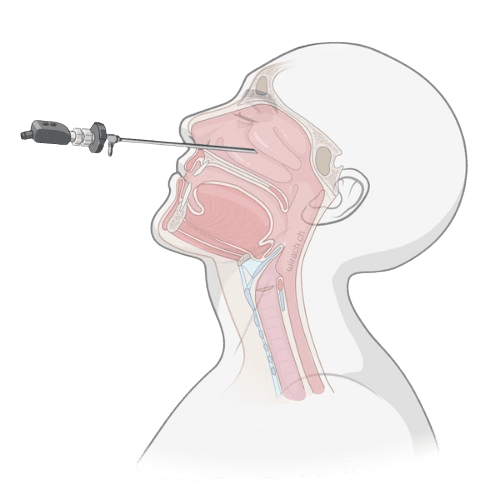
Overview
Nasal endoscopy is a minimally invasive diagnostic procedure used to examine the nasal passages and sinus openings with high precision. A thin flexible or rigid endoscope equipped with a light and camera is inserted into the nose, allowing direct visualization of internal structures. This procedure helps identify causes of chronic nasal symptoms such as blockage, sinusitis, bleeding, or growths, enabling accurate diagnosis and targeted treatment planning.
Key Clinical Highlights
- High Precision Visualization: Provides magnified real time view of nasal and sinus structures for accurate diagnosis.
- Minimally Invasive: Performed without incisions, ensuring minimal discomfort and quick recovery.
- Guided Intervention: Allows targeted biopsy or minor procedures during the same session.
When to Consider
Nasal endoscopy is recommended for patients with persistent nasal blockage, chronic sinus infections, unexplained nasal bleeding, facial pain, or reduced sense of smell. It is also advised when imaging studies are inconclusive or when detailed internal visualization is required for accurate diagnosis and treatment planning.
Accurate Diagnosis of Nasal Conditions
Nasal endoscopy helps identify underlying causes of chronic nasal and sinus symptoms with high accuracy.
- Direct Visualization: Allows doctors to see internal nasal structures clearly.
- Early Detection: Identifies infections, polyps, or tumors at an early stage.
- Targeted Treatment: Guides precise medical or surgical management.
Symptoms and Indications
- Chronic Nasal Blockage: Persistent difficulty in breathing through the nose.
- Sinus Infections: Frequent sinusitis with pain and discharge.
- Nasal Bleeding: Recurrent or unexplained nosebleeds.
- Loss of Smell: Reduced or absent sense of smell.
Types of Nasal Endoscopy
Flexible Nasal Endoscopy
Uses a flexible scope for better comfort and deeper access to nasal passages.
- Diagnostic Flexible Scope: Used for routine examination of nasal cavity and sinus openings.
- Pediatric Endoscopy: Specially designed for children with smaller nasal anatomy.
Rigid Nasal Endoscopy
Provides sharper images and is commonly used in detailed sinus evaluation.
- Standard Rigid Scope: Used for precise visualization and minor interventions.
Pre-Procedure Preparation
- Medical History: Review symptoms and prior treatments.
- Medication Check: Assess use of blood thinners or nasal sprays.
- Nasal Preparation: Apply decongestant or anesthetic spray.
- Patient Positioning: Seat patient comfortably for examination.
Treatment Stages
- Consultation (Day 1): Symptom evaluation and planning
- Preparation (Same Day): Nasal anesthesia and setup
- Procedure (15-30 mins): Endoscopic examination
- Post Procedure (Same Day): Review findings and discharge
Recovery Guidelines
- Resume Normal Activity: Most patients can continue daily routine immediately.
- Avoid Nose Blowing: Limit forceful blowing for a few hours.
- Follow Advice: Use prescribed medications if needed.
- Report Symptoms: Inform doctor if bleeding or discomfort persists.
Life After Treatment
- Immediate clarity on nasal condition.
- Helps guide effective treatment plan.
- Improves long term sinus health outcomes.
Nasal endoscopy offers a clear pathway to precise diagnosis and better respiratory health.
Potential Risks
- Mild Discomfort: Temporary irritation during scope insertion.
- Minor Bleeding: Small amount of bleeding may occur rarely.
- Sneezing Reflex: Common temporary response during procedure.
Cost Estimation in India
Estimated procedure package range: $200 to $800 USD.
Package Inclusions:
- ENT consultation
- Endoscopic examination
- Local anesthesia if required
- Doctor fees
Global Cost Comparison
- USA: $2,500 USD
- UK: $1,800 USD
- Germany: $1,500 USD
- Thailand: $900 USD
- India: $400 USD