Overview
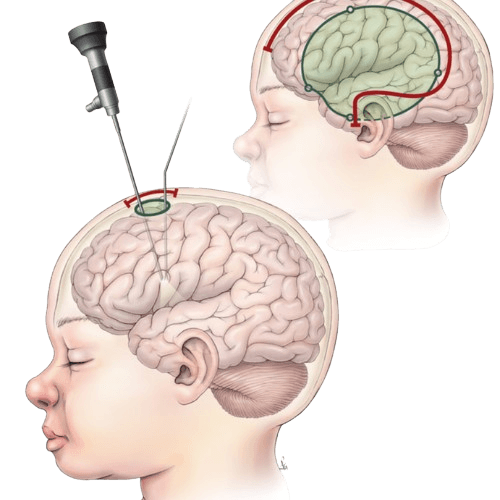
Lesionectomy is a targeted brain surgery designed to remove a specific lesion or abnormal tissue that triggers seizures or neurological symptoms.
It is commonly performed when imaging identifies a focal lesion such as a tumor, scar, or malformation.
CureU Healthcare’s neurosurgeons use advanced neuronavigation and real-time monitoring to ensure safe, accurate removal while preserving healthy brain tissue.
Overview And Clinical Background
Precision-Based Brain Surgery
Lesionectomy is indicated for focal epilepsy or neurological symptoms linked to a well-defined lesion.
The procedure focuses on removing only the diseased tissue while protecting surrounding areas.
- Purpose:: To eliminate the cause of seizures or neurological dysfunction.
- Used when MRI or CT identifies a discrete brain abnormality.
- Outcome goal:: Seizure freedom or symptom resolution with minimal functional loss.
Symptoms, Signs And Presentation
Patients may present with focal seizures, headaches, or localized neurological deficits depending on the lesion site.
Long-standing lesions may cause subtle behavioral or sensory changes.
- Common symptom:: Recurrent seizures or focal neurological symptoms like tingling or weakness.
- Headaches or mood changes can accompany deeper lesions.
- Red flag:: Rapidly worsening symptoms suggest tumor growth or bleeding requiring urgent care.
Diagnosis Methods And Investigations
Imaging And Electrocorticography
Accurate localization of the lesion is essential for safe surgery.
Neurologists collaborate with neurosurgeons to confirm functional boundaries before resection.
- Imaging:: MRI, CT, or PET scans determine lesion type, size, and exact location.
- Lab tests:: Preoperative assessments to ensure anesthesia and surgical safety.
- Intraoperative EEG or mapping confirms seizure focus during surgery.
Treatment Options And Surgical Techniques
Lesionectomy may be performed as part of epilepsy surgery or standalone resection.
Surgeons tailor the approach to the lesion type and depth.
- Conservative:: Anti-seizure medications before surgery if lesion is stable or non-progressive.
- Minimally invasive options:: Stereotactic or keyhole approaches for small, deep-seated lesions.
- Open microsurgery allows complete excision for large or surface lesions.
Recovery, Risks And Prognosis
Most patients recover within days to weeks.
Seizure control rates are high, with minimal risk of neurological deficits when performed with precision imaging guidance.
Why Choose Us
CureU Healthcare combines cutting-edge imaging, intraoperative mapping, and expert neurosurgical care to deliver the safest lesionectomy outcomes.
Our goal is maximum benefit with minimal brain impact.
Conclusion
Lesionectomy offers targeted relief for patients with identifiable brain lesions causing seizures or symptoms.
With expert planning and follow-up, CureU Healthcare helps patients regain normalcy and confidence.