
Overview
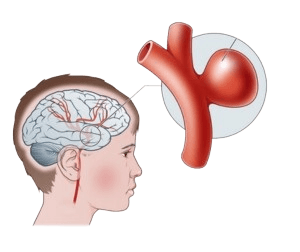
Cerebral aneurysm, also known as brain aneurysm, is a small and thin spot on the artery in the brain that bulges out and fills with blood. As a result, the bulging aneurysm leads to force or puts pressure on the nerves or brain tissue. This can also result in a burst, spilling blood surrounding tissue, known as hemorrhage. Consequently, a ruptured aneurysm can be a life-threatening condition, such as hemorrhagic stroke, brain damage, coma, or sometimes death.
However, some cerebral aneurysms do not bleed, and are very small in size or cause other complications. These types of aneurysms are diagnosed while imaging tests for different medical problems. Cerebral aneurysms can take place anywhere in the brain, but most develop in major arteries along the base of the skull.
Cerebral of brain aneurysms can develop at any age and anywhere in the brain. They are, however, most common in adults between the ages of 30 and 60 years, and are more common in females than males. Additionally, some patients are at high risk due to inherited disorders.
Symptoms of cerebral aneurysm
Unruptured aneurysm
Cerebral of brain aneurysm does not show any symptoms until they rupture or expand in size. Small consistent aneurysms do not show any symptoms
An expanded aneurysm that is developing faster, may press on tissues and nerves causing:
- Numbness
- Pain above and behind the eye
- Weakness
- Paralysis one single side of the face
- A dilated pupil in the eye
- Blurry or double vision
Ruptured aneurysm
Ruptured aneurysm or bursting of aneurysm experience sudden and severe headache, in fact it is a type of headache that no one could have ever experienced. This condition may develop:
- Double vision
- Nausea
- Vomiting
- Stiff neck
- Seizures
- Sensitivity due to light
- Loss of consciousness
- Cardiac arrest
Types of aneurysm
There are mainly three types of aneurysm that include:
- Saccular aneurysm: A saccular aneurysm is a sac of round shape that contains blood, it is connected to a main artery or one of its branches. This is also called a berry aneurysm, it is one of the most common types of cerebral aneurysm. It is typically found on arteries at the base of the brain. Saccular aneurysm happens most common in adults that are about 2% to 3% of the population.
- Fusiform aneurysm: A fusiform aneurysm balloons or bulges out on all sides of the artery.
- Mycotic aneurysm: A mycotic aneurysm takes place when an infection sometimes has a severe impact on the arteries in the brain. The infection weakens the artery wall, causing a bulging aneurysm to develop.
Causes of cerebral aneurysm
The development of cerebral aneurysm occurs when the walls of the arteries in the brain become thin and weaken. Aneurysm developed at the initial Or branch point in arteries because these points are the weakest. Cerebral aneurysm may develop by birth or that leads to abnormal artery wall.
Risk factors of cerebral aneurysm
Inherited risk factors of cerebral aneurysm include:
- Genetic connective tissue disorder
- Polycystic kidney disease
- Arteriovenous malformation
- History of aneurysm in a first blood relation members
Some of the other related risk factors that develop over time:
- Cigarette smoking
- Age over 40
- Untreated high blood pressure
- Drug abuse
Less common risk factors include
- Head trauma
- Brain tumor
- Infection in the arterial wall
Cost of Cerebral of brain aneurysms in India
The cost of Cerebral of brain aneurysms in India is affordable, yet there is no compromise on the quality of treatment. In fact, the cost of the treatment is way more cost-effective than in other nations.
However, the total cost of the treatment may vary depending on various factors, such as the choice of hospital, the length of stay at the hospital, the expertise of the surgeon, the type of surgery, the components used in the surgery, and more.
Moreover, India is a hub of medical treatments, with international patients approaching for advanced treatments at an affordable cost, and that too without compromising the quality of treatment.
Summary
Cerebral aneurysm, also known as brain aneurysm, is a small and thin spot on the artery in the brain that bulges out and fills with blood.
Cerebral of brain aneurysm does not show any symptoms until they rupture or expand in size.
Some cerebral aneurysms do not bleed, and are very small in size or cause other complications. These types of aneurysms are diagnosed while imaging tests for different medical problems.

B.U.M.S, M.D. (NAT) | Reg No. 9153 | Ex. Secretary & Treasurer, N.I.M.A.
Qualified healthcare professional in Unani and Naturopathic medicine with deep expertise in traditional healthcare systems, patient-centered clinical care, and medical content review.