Overview
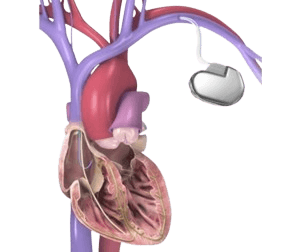
Automatic Implantable Cardioverter Defibrillator AICD implantation is a life saving procedure that prevents sudden cardiac death in patients with dangerous heart rhythm disorders. The device is placed under the skin and continuously monitors heart activity, delivering electrical therapy whenever a life threatening arrhythmia occurs.
Key Clinical Highlights
- Continuous Monitoring: Device continuously monitors heart rhythm and detects dangerous arrhythmias instantly.
- Minimally Invasive: Implanted under the skin using a small incision without open heart surgery.
- Smart Therapy: Automatically delivers pacing or shock therapy depending on rhythm abnormality.
When to Consider
AICD implantation is advised for patients who have experienced cardiac arrest, severe ventricular arrhythmias, weakened heart muscle, or inherited rhythm disorders. It is also recommended when medications alone are not sufficient to control abnormal heart rhythms and there is a high risk of sudden cardiac death.
Prevent Sudden Cardiac Death
The device provides immediate correction of life threatening arrhythmias and protects patients from sudden cardiac arrest.
- Immediate Protection: Detects and treats dangerous rhythms instantly.
- Automatic Response: Delivers shock or pacing without delay.
- Continuous Monitoring: Tracks heart rhythm at all times.
Symptoms and Indications
- Irregular Heartbeat: Abnormal rhythm or palpitations may indicate serious condition.
- Fainting Episodes: Sudden loss of consciousness due to rhythm issues.
- Dizziness: Lightheadedness from unstable heart rhythm.
- Breathlessness: Difficulty breathing during normal activity.
Types of Automatic Implantable Cardioverter Defibrillator (AICD)
Transvenous ICD
Leads are inserted through veins into the heart for monitoring and therapy delivery.
- Single Chamber: Uses one lead to treat ventricular arrhythmias.
- Dual Chamber: Uses two leads for better rhythm coordination.
Subcutaneous ICD
Placed under the skin without leads inside the heart.
- Standard S ICD: Delivers shock therapy without entering heart chambers.
Pre-Procedure Preparation
- Heart Tests: ECG and imaging to evaluate rhythm.
- Medication Review: Adjust drugs before procedure.
- Fasting: Avoid food before surgery.
- Sterilization: Prepare chest area for implantation.
Treatment Stages
- Pre Arrival (Day 1): Consultation and planning
- Admission (Week 1): Tests and preparation
- Implantation (Week 2): Device placement procedure
- Recovery (Day 15): Monitoring and discharge
Recovery Guidelines
- Limit Arm Movement: Avoid lifting arm on implant side.
- Wound Care: Keep incision clean and dry.
- Avoid Heavy Work: No heavy lifting initially.
- Follow Up: Regular device checkups required.
Life After Treatment
- Patients resume daily routine within weeks.
- Device protects continuously against arrhythmias.
- Regular follow ups ensure proper function.
The device works silently in the background to protect life at every moment.
Potential Risks
- Infection: May occur at implant site but manageable.
- Lead Issues: Rare movement or malfunction of leads.
- Unexpected Shock: Occasional unnecessary shock due to sensing error.
Cost Estimation in India
Estimated procedure package range: $5,000 to $9,000 USD.
Package Inclusions:
- Pre-surgery tests
- AICD implantation
- Hospital stay
- Surgeon fees
Global Cost Comparison
- USA: $45,000 USD
- UK: $30,000 USD
- Germany: $25,000 USD
- Thailand: $16,000 USD
- India: $8,000 USD

B.U.M.S, M.D. (NAT) | Reg No. 9153 | Ex. Secretary & Treasurer, N.I.M.A.
Qualified healthcare professional in Unani and Naturopathic medicine with deep expertise in traditional healthcare systems, patient-centered clinical care, and medical content review.