Overview
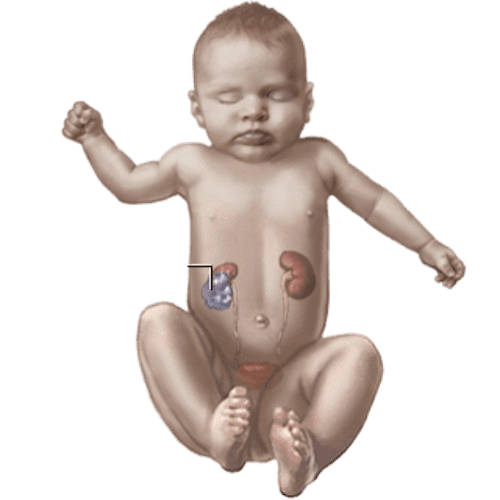
Wilms tumour is a childhood kidney cancer arising from embryonal renal precursor cells, most commonly presenting before age five.
Early detection, accurate staging, nephron-sparing surgical approaches when possible, and tailored chemotherapy protocols result in high cure rates and preservation of future renal function and growth.
Overview And Clinical Background
Pediatric renal embryonal malignancy
Wilms tumour originates from primitive nephrogenic rests and may be sporadic or associated with genetic syndromes (WAGR, Denys-Drash, Beckwith-Wiedemann).
Recognising syndromic features enables early surveillance and family counselling.
- Age group: Predominantly affects children under five years of age, with most cases diagnosed between 2–4 years, making paediatric surveillance essential for at-risk groups.
- Genetic associations: Syndromes such as WAGR and Beckwith-Wiedemann increase risk and warrant genetic evaluation and coordinated family screening programmes.
- Tumour biology: Wilms tumours are usually unilateral but can be bilateral; histology and staging influence the intensity of chemotherapy and surgical approach.
Symptoms, Signs And Presentation
Typical presentation includes an asymptomatic abdominal mass discovered by a parent or clinician; other signs may include abdominal pain, hematuria or hypertension.
Rapid assessment is necessary when a mass is palpated.
- Abdominal swelling or mass: A painless, unilateral abdominal or flank mass is the classic presentation and often prompts imaging such as ultrasound for further evaluation.
- Systemic signs: Fever, hematuria, poor appetite or weight loss may occur but are less common; hypertension can result from renin secretion by the tumour.
- Red flag: Any palpable abdominal mass in a child requires urgent specialist referral for imaging and oncologic assessment to avoid delay in therapy.
Diagnosis Methods And Investigations
Imaging, biopsy and genetic testing
Diagnosis typically begins with abdominal ultrasound followed by contrast CT or MRI for staging; genetic testing is considered in syndromic or bilateral disease.
Tissue diagnosis guides histologic classification when needed.
- Ultrasound and CT/MRI: Ultrasound is the first-line imaging to localize a renal mass; CT or MRI provides detailed staging information, vascular involvement and contralateral kidney assessment.
- Laboratory workup: Baseline blood tests including renal function, complete blood count and urinalysis help plan safe perioperative and chemotherapeutic care.
- Genetic evaluation: Chromosomal and gene testing is recommended for children with syndromic features or bilateral tumours to inform surveillance and family counselling.
Treatment Options And Surgical Techniques
Treatment uses multimodal protocols combining surgery and chemotherapy; radiotherapy is reserved for select higher-stage or recurrent cases.
Nephron-sparing surgery is favoured when bilateral disease or small contralateral kidneys warrant renal preservation.
- Surgery: Radical nephrectomy for unilateral tumours is standard when feasible; partial nephrectomy or nephron-sparing procedures are employed for bilateral or small lesions to preserve renal function.
- Chemotherapy: Adjuvant and sometimes neoadjuvant chemotherapy regimens significantly reduce relapse risk and are tailored by stage and histology following established paediatric oncology protocols.
- Radiotherapy and salvage: Radiotherapy is used for residual disease, high-stage tumours, or recurrence; salvage protocols and clinical trials are available at specialised centres.
Recovery, Risks And Prognosis
With modern treatment protocols, overall survival exceeds 90% for many early-stage Wilms tumours.
Long-term surveillance monitors renal function, growth, and late effects of therapy including secondary malignancy risk.
Why Choose Us
CureU Healthcare offers paediatric oncology expertise, experienced paediatric surgeons, genetic counselling, and family-centred supportive care to optimise cure rates while preserving organ function and developmental outcomes.
We coordinate long-term follow-up and survivorship care tailored to each child.
Conclusion
Wilms tumour is highly treatable when managed promptly by a specialised paediatric oncology team.
Early diagnosis, appropriate surgical planning and standardized chemotherapy produce excellent long-term outcomes for most children.

B.U.M.S, M.D. (NAT) | Reg No. 9153 | Ex. Secretary & Treasurer, N.I.M.A.
Qualified healthcare professional in Unani and Naturopathic medicine with deep expertise in traditional healthcare systems, patient-centered clinical care, and medical content review.