Overview
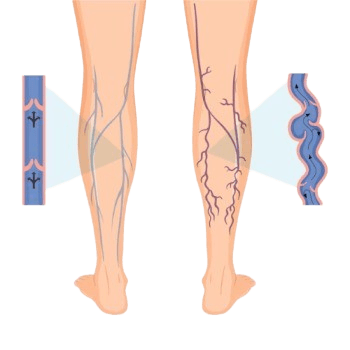
Varicose veins occur when the valves in the leg veins weaken, causing blood to pool and veins to enlarge.
This chronic condition can cause heaviness, pain, and swelling, and in severe cases, skin changes or ulcers.
Modern treatments provide effective, long-term relief with minimal invasiveness.
Overview And Clinical Background
Understanding Varicose Veins
Varicose veins are part of chronic venous insufficiency, where vein valves fail to keep blood flowing upward against gravity.
It’s more common in women, older adults, and those with jobs involving prolonged standing.
- Cause:: Weak or damaged venous valves cause blood to flow backward, creating pressure and vein dilation.
- Over time, veins become visibly enlarged, twisted, and raised under the skin, particularly in the legs.
- Complications:: Untreated cases can lead to skin thickening, ulcers, or clot formation requiring urgent care.
Symptoms, Signs And Presentation
Patients often notice bulging veins, aching, or a sense of heaviness that worsens throughout the day.
Symptoms can improve with leg elevation but worsen with inactivity.
- Common symptom:: Visible blue or purple bulging veins accompanied by mild leg pain or fatigue.
- Swelling around the ankles and skin dryness or itching near affected veins.
- Red flag:: Sudden pain, swelling, or redness may suggest thrombophlebitis, which requires immediate assessment.
Diagnosis Methods And Investigations
Ultrasound and Clinical Evaluation
Diagnosis is straightforward with physical inspection and Doppler ultrasound to confirm valve incompetence.
This helps tailor the treatment plan precisely to each patient’s needs.
- Imaging:: Venous Doppler ultrasound identifies reflux and maps vein anatomy for targeted therapy.
- Lab tests:: Basic tests may include clotting profile or screening for deep vein involvement.
- In advanced cases, additional imaging may be done to assess deep venous system health.
Treatment Options And Surgical Techniques
Treatment varies from lifestyle adjustments to advanced minimally invasive procedures.
The focus is on improving circulation and relieving symptoms effectively.
- Conservative:: Compression therapy and exercise improve venous return and ease early-stage symptoms.
- Minimally invasive options:: Laser or radiofrequency ablation offers fast, scar-free recovery and cosmetic improvement.
- Sclerotherapy or vein stripping may be performed for extensive varicose vein disease not suited for ablation.
Recovery, Risks And Prognosis
Most patients resume normal activity within 1–2 days after modern vein procedures.
Risks are rare but may include bruising, numbness, or recurrence if lifestyle factors persist.
Why Choose Us
CureU Healthcare’s vascular specialists combine advanced imaging, gentle ablation, and personalized care for long-lasting results.
We focus on safety, aesthetics, and patient comfort from consultation to follow-up.
Conclusion
Varicose veins are highly manageable with today’s medical and surgical options.
CureU Healthcare helps patients regain confidence, comfort, and mobility through expert vascular care.


