Overview
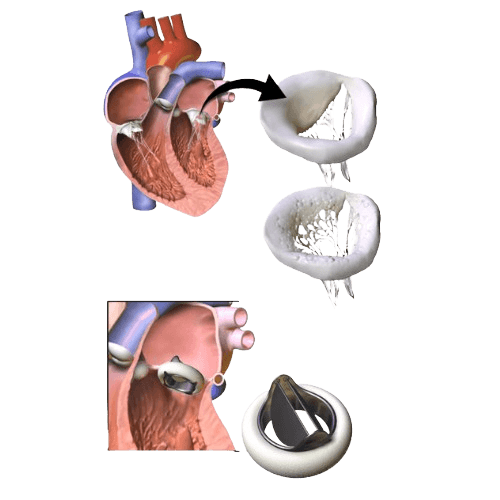
The heart has four valves – aortic, mitral, tricuspid, and pulmonary – which ensure that blood flows in the correct direction. When one or more of these valves are damaged or diseased, they may not open or close properly. This condition is known as valvular heart disease.
If valve repair is not possible, doctors may recommend valve replacement surgery, in which the damaged valve is replaced with a mechanical or biological (tissue) valve to restore normal blood circulation.
When is Valve Replacement Needed?
Valve replacement surgery is usually advised in cases of:
- Severe valve narrowing (stenosis) that restricts blood flow.
- Valve leakage (regurgitation) causing blood to flow backward.
- Congenital valve defects present from birth.
- Infective endocarditis (valve infection).
- Valve damage after rheumatic fever or degenerative disease.
Types of Valve Replacement
There are two main types of artificial valves used in surgery:
Mechanical Valves
- Made of durable materials like titanium or carbon.
- Last for decades.
- Require lifelong blood-thinning medication (anticoagulants).
Biological (Tissue) Valves
- Made from animal tissue (cow or pig) or donated human valves.
- Do not usually require lifelong anticoagulants.
- May need replacement after 10 to 20 years.
How is Valve Replacement Surgery Performed?
The procedure is performed under general anesthesia and may be done in two ways:
Open-Heart Surgery:
- The chest is opened, and the patient is connected to a heart-lung machine.
- The damaged valve is removed and replaced with a new one.
Minimally Invasive Valve Surgery / TAVR (for aortic valve):
- Performed through small incisions or catheter-based techniques.
- Suitable for high-risk or elderly patients.
Benefits of Valve Replacement Surgery
- Restores normal blood flow through the heart.
- Relieves symptoms such as fatigue, chest pain, and breathlessness.
- Prevents heart failure and stroke.
- Improves overall heart function and quality of life.
- Increases survival and long-term outcomes.
Risks and Complications
Like any major surgery, valve replacement carries some risks:
- Bleeding or infection
- Blood clots or stroke
- Irregular heart rhythms (arrhythmias)
- Reaction to anesthesia
- Valve degeneration (for tissue valves)
Recovery After Valve Replacement
- Hospital stay: 5 to 7 days (longer if complications occur).
- Initial recovery: 6 to 8 weeks.
- Regular follow-ups with a cardiologist.
- Blood-thinning medication may be required depending on valve type.
- Lifestyle changes such as a healthy diet, exercise, and no smoking.
Conclusion
Valve Replacement Surgery is a life-saving treatment that restores proper heart function and prevents complications from severe valve disease. At CureU Healthcare, our team of expert cardiac surgeons and interventional cardiologists provides state-of-the-art valve replacement procedures with the highest standards of safety and care.

