Overview
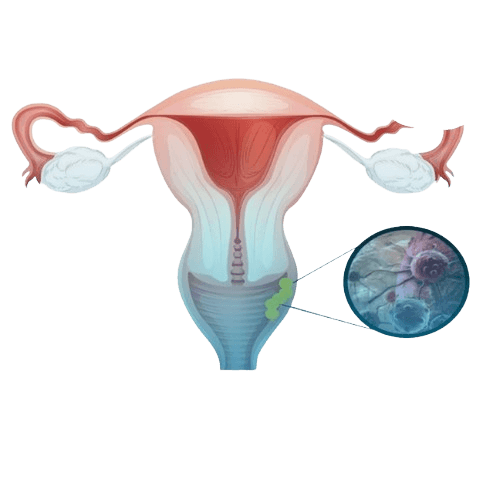
Vaginal cancer is an uncommon malignancy arising from the epithelial lining of the vagina.
Because it is rare and symptoms can be vague, diagnosis is often delayed unless patients or clinicians act on warning signs such as abnormal bleeding or a persistent mass.
Management is stage-directed and may include surgery, radiotherapy, or combined modalities; the care goal is local control with preservation of function and quality of life.
Overview And Clinical Background
Epidemiology and pathology
Primary vaginal cancer most commonly presents as squamous cell carcinoma; adenocarcinomas and rare histologies occur too.
It is typically seen in older women and is often related to persistent HPV infection or prior pelvic radiation.
- Common histology: Squamous cell carcinoma accounts for the majority of cases, developing from mucosal epithelial cells and often associated with high-risk HPV strains; recognizing histology guides both local and systemic treatment decisions.
- Risk factors: Persistent HPV infection, prior pelvic irradiation, smoking, and immunosuppression increase risk and should prompt earlier surveillance in symptomatic patients.
- Clinical significance: Although rare, vaginal cancer can invade adjacent structures (bladder, rectum) and metastasize to pelvic nodes, so accurate staging and multidisciplinary planning are essential.
Symptoms, Signs And Presentation
Symptoms are often subtle early on and may mimic benign gynecological conditions.
Prompt evaluation is required for persistent or unexplained findings.
- Abnormal bleeding: Postmenopausal bleeding, intermenstrual bleeding, or unusual vaginal discharge should be investigated promptly with pelvic examination and imaging to exclude malignancy.
- Palpable mass or ulcer: A persistent vaginal lump, ulcer, or non-healing lesion on speculum exam is a red flag that requires biopsy to confirm diagnosis and guide staging.
- Local symptoms: Voiding difficulty, pain during intercourse, or pelvic discomfort may indicate local invasion and need for comprehensive evaluation including cystoscopy or proctoscopy when indicated.
Diagnosis Methods And Investigations
Clinical assessment and staging
Diagnosis follows targeted local assessment and histologic confirmation.
Imaging and nodal evaluation determine extent and treatment planning.
- Biopsy: Directed punch or excisional biopsy of suspicious lesions provides definitive histology and tumour grade which determines local therapy and need for adjuvant treatment.
- Imaging: Pelvic MRI defines local tumour extent and involvement of adjacent organs; CT or PET-CT stage nodal and distant disease to inform definitive management.
- Ancillary tests: Cystoscopy, proctoscopy, and HPV testing are used selectively to assess organ invasion and viral etiology that may influence prognosis and follow-up.
Treatment Options And Surgical Techniques
Treatment is individualized by stage, tumour location, and patient goals — balancing oncologic control with functional preservation.
Local early lesions may be excised, while more advanced disease benefits from radiotherapy with or without surgery.
- Local excision: Wide local excision or vaginectomy for small, well-localised tumours aims to remove disease while preserving anatomy and function when oncologically safe.
- Radiation therapy: External beam radiotherapy and/or brachytherapy provide effective local control for many vaginal cancers and are commonly combined with surgery or used as primary therapy in unresectable cases.
- Combined modalities: For advanced or node-positive disease, a combination of surgery, radiotherapy, and systemic chemotherapy is coordinated by a multidisciplinary team to optimise survival and symptom control.
Recovery, Risks And Prognosis
Recovery and prognosis depend on stage and chosen treatment.
Early-stage disease treated appropriately often achieves good local control and functional outcomes; advanced disease has a more guarded prognosis and needs careful supportive care.
Why Choose Us
CureU Healthcare provides coordinated gynecologic oncology care with expert surgeons, radiation oncologists, and pelvic rehabilitation services.
We emphasise timely diagnosis, fertility/function-preserving options when relevant, and compassionate survivorship planning.
Conclusion
Vaginal cancer is rare but treatable, particularly when detected early.
If you notice persistent bleeding, lumps, or other worrying symptoms, seek prompt specialist evaluation to preserve outcomes and quality of life.