Overview
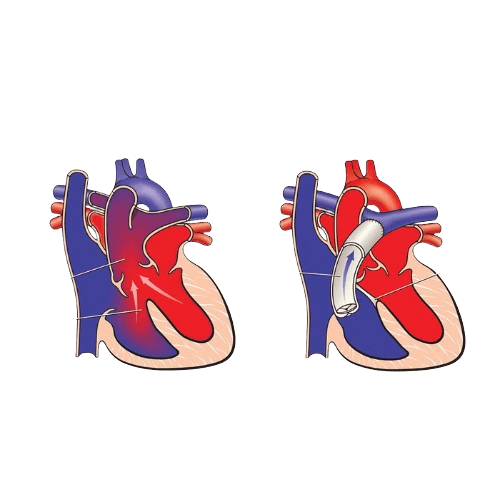
Truncus Arteriosus is a rare congenital heart defect where instead of having two separate blood vessels (the aorta and the pulmonary artery), the baby is born with a single large vessel coming out of the heart.
This defect also usually includes a ventricular septal defect (VSD) – a hole between the two lower chambers of the heart. As a result, oxygen-rich and oxygen-poor blood mix together, leading to low oxygen supply throughout the body.
Why is Surgery Needed?
Without surgery, truncus arteriosus can cause:
- Severe cyanosis (bluish skin due to lack of oxygen)
- Breathing difficulties and fatigue
- Heart enlargement and failure
- High blood pressure in the lungs (pulmonary hypertension)
- Risk of early death in infancy
How is Truncus Arteriosus Surgery Performed?
The surgery is performed under general anesthesia by a pediatric cardiac surgeon. The key steps are:
- Closing the Ventricular Septal Defect (VSD): A patch is placed to separate oxygen-rich and oxygen-poor blood.
- Separating the Pulmonary Arteries: The pulmonary arteries are detached from the single large vessel.
- Creating Two Outflow Tracts: 1. The large vessel is converted into the aorta, carrying oxygen-rich blood to the body. 2. A conduit (tube with a valve) is placed between the right ventricle and the pulmonary arteries to carry blood to the lungs.
Benefits of Truncus Arteriosus Repair
- Restores normal circulation
- Improves oxygen supply to the body
- Prevents heart failure and lung damage
- Enhances growth and development
- Provides long-term survival and improved quality of life
Risks and Complications
As with any open-heart surgery, there are risks, including:
- Bleeding or infection
- Narrowing of the conduit or pulmonary arteries
- Valve leakage or dysfunction
- Arrhythmias (abnormal heart rhythms)
- Need for additional surgeries as the child grows
Recovery After Surgery
- Initial stay in the pediatric cardiac ICU for close monitoring
- Hospitalization typically lasts 2 to 3 weeks
- Medications may be needed to support heart function
- Regular check-ups with a pediatric cardiologist are essential
- The child may require conduit replacements as they grow
Conclusion
Truncus Arteriosus surgery is a complex but essential procedure for infants born with this rare congenital heart defect. Early diagnosis and timely surgical repair are crucial for survival and long-term health. At CureU Healthcare, we provide advanced pediatric cardiac care with expert teams dedicated to giving children the best possible start in life.

