Overview
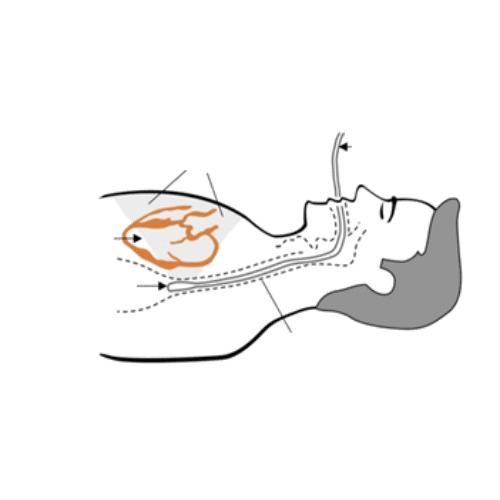
A Transoesophageal Echocardiogram (TEE) is a specialized cardiac ultrasound that uses sound waves to produce detailed images of the heart and its structures.
The probe is gently inserted into the oesophagus, which lies close to the heart, offering clearer and more accurate imaging than standard echocardiograms.
It helps diagnose valve disorders, clots, infections, and congenital defects.
Overview And Clinical Background
TEE is often used when a standard echocardiogram does not provide enough clarity.
It offers high-resolution visualization of the heart’s internal structures and nearby blood vessels.
- Purpose:: To assess heart valves, chambers, and blood flow with superior accuracy.
- Technique:: Ultrasound probe placed in the oesophagus behind the heart.
- Advantage:: Produces clear images unaffected by ribs or lungs.
Symptoms, Signs And Presentation
TEE may be recommended for patients with suspected endocarditis, blood clots, or unexplained heart murmurs.
It’s also used before surgery or catheter-based interventions.
- Common reason:: To evaluate heart valve function or detect blood clots.
- Other indications:: Assessment before cardioversion or cardiac surgery.
- Pre-procedure advice:: Fasting for a few hours and temporary throat numbing are required.
Diagnosis Methods And Investigations
Ultrasound Imaging Technique
TEE produces real-time, high-resolution images through sound wave reflection.
It can visualize structures missed by transthoracic echocardiography.
- Preparation:: Sedation and throat anesthesia before probe insertion.
- Imaging:: Live ultrasound captures heart structure and function.
- Duration:: The test typically lasts 20–40 minutes.
Treatment Options And Surgical Techniques
TEE is a diagnostic tool and not a treatment.
It guides cardiac surgeons and cardiologists during procedures such as valve repair or closure of defects.
- During surgery:: Used to monitor real-time cardiac function.
- In catheterization labs:: Assists in device placement and defect closure.
- Follow-up:: Repeats may be performed post-procedure for evaluation.
Recovery, Risks And Prognosis
Patients can eat or drink after the numbing effect wears off.
Minor throat soreness may occur temporarily.
The procedure is safe and provides critical diagnostic clarity for complex cardiac issues.
Why Choose Us
CureU Healthcare offers advanced echocardiography technology operated by expert cardiologists.
We ensure accurate, safe, and comfortable diagnostic experiences for every patient.
Conclusion
A Transoesophageal Echocardiogram delivers detailed cardiac imaging that supports accurate diagnosis and treatment planning.
It’s a cornerstone in modern cardiac evaluation.